E-Paper



‘MDBs right vehicle to support planet, people’
IEG has already submitted the first volume of its report “The Triple Agenda” to the international body earlier this month and the second volume is expected in October

 Prefer HTon Google


New Delhi Multilateral Development Banks (MDBs) are the right vehicles to support the planet and its people as they alone provide the necessary combination of expertise, staying power, low-cost financing, leverage, and knowledge-sharing capabilities, Lawrence H Summers and NK Singh have written in an article that calls for MDBs to first transform themselves in order to transform the future of developing countries.
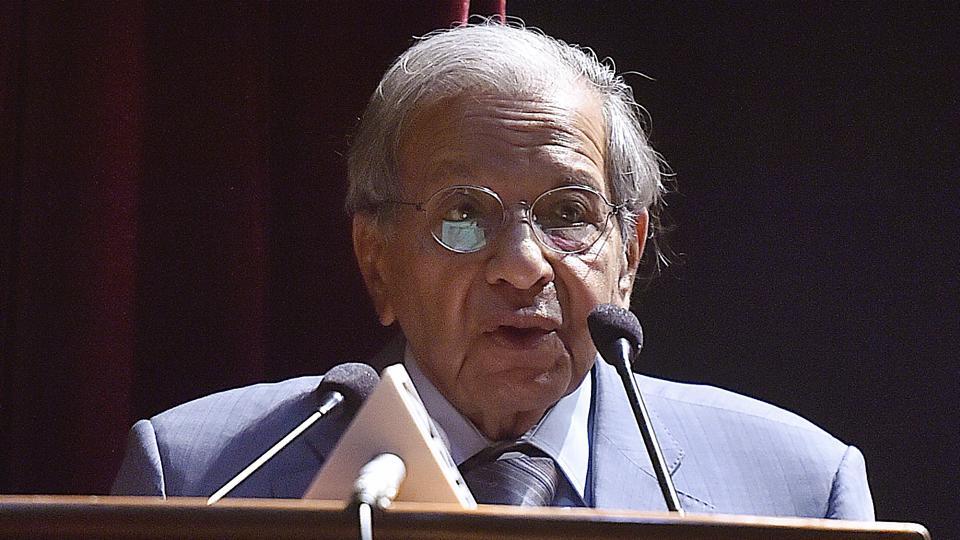
Summers, a former US treasury secretary and president emeritus of Harvard University, and NK Singh, the chairman of Fifteenth Finance Commission of India, are the co-conveners of the Independent Expert Group (IEG) constituted by Indian G20 Presidency in March 2023 to suggest measures to strengthen MDBs.
Their article, “The Multilateral Development Banks the World Needs”, published on Monday by Project Syndicate, which features exclusive commentaries of scholars, policymakers and civic activists, stressed on the need to have robust MDBs underscoring global vulnerabilities, particularly of developing countries and least-developed nations.
“The world is literally on fire this summer. Experts estimate that another Covid-level public health threat is likely to emerge in the next generation. Rising interest rates have left dozens of countries with unmanageable debt burdens. And for the first time in nearly half a century, the global economy is fracturing rather than coming together,” the authors wrote.
On what MDBs should do, the authors called upon them to “embracing a wholesale culture of change to become more client-responsive, and to operate better together – including through joint financing, risk sharing, and standard-setting”.
IEG has already submitted the first volume of its report “The Triple Agenda” to the international body earlier this month and the second volume is expected in October.
MDBs are supranational institutions set up by two or more sovereign states to foster global economic and social progress particularly with focus on developing and least developed countries. Some of the prominent MDBs include the World Bank, Inter-American Development Bank, Asian Development Bank (ADB), Arab Bank for Economic Development in Africa, African Development Bank, European Bank for Reconstruction and Development, and Islamic Development Bank.
In Volume-1, IEG stressed on the urgency to recast MDBs because of rising inequality, poverty, hunger and devastations due to climate change. “Radically reformed and strengthened MDBs are essential to address the immense global challenges in today’s world,” the report said.
“The welfare of billions of people and the health of the planet, the foremost example of a global public good (GPG), are under threat. To make matters worse, the problems are getting bigger; the SDGs are badly offtrack, with over 600 million people still living in extreme poverty, and there is an intense urgency to address problems of climate change and nature conservation and protection in all countries,” it added.
In the article mentioned in the first instance, the co-authors said that disbursement by MDBs have not kept pace even as developing countries face much larger financing needs to meet development and climate goals. The degree to which they now transfer resources to developing countries is unacceptably low, they added.
Summers and Singh proposed the urgent implementation of the “triple mandate” envisaged in the IEG report -- formally add global public goods (GPGs) to the existing goals of eliminating extreme poverty and boosting shared prosperity while addressing climate challenges. GPGs include key issues pertaining to developing countries such as water security and pandemic preparedness.
“Triple the sustainable lending levels of the MDB system by 2030, reaching $300 billion per year in own-account non-concessional finance and $90 billion per year in concessional finance,” IEG recommended in Volume 1 of its report submitted at the third meeting of G20 finance ministers and central bank governors (FMCBG) in July.
Proposing resource mobilisation through the private sector, it also suggested that MDBs should change their approach in their engagements with the private sector.
“Once the recommendations on leverage and private capital mobilisation are fully implemented, each dollar of new equity could reasonably be expected to support at least $15 of additional external financing for sustainable investments: $7 in direct MDB lending and $8 in additional direct and indirect mobilisation of external private capital. If complementary investments from national development financial institutions are included, leverage would be even higher,” the report said.