E-Paper



MEA reacts to reports of Nepal’s new custom rule causing outrage at Indo-Nepal border
The move has sparked widespread outrage, with videos circulating on social media showing people expressing anger over the checks.

 Prefer HTon Google


MEA spokesperson Randhir Jaiswal responded to reports of stricter customs checks by Nepali authorities along the Nepal–India border, which have triggered protests among locals dependent on cross-border markets for daily essentials.
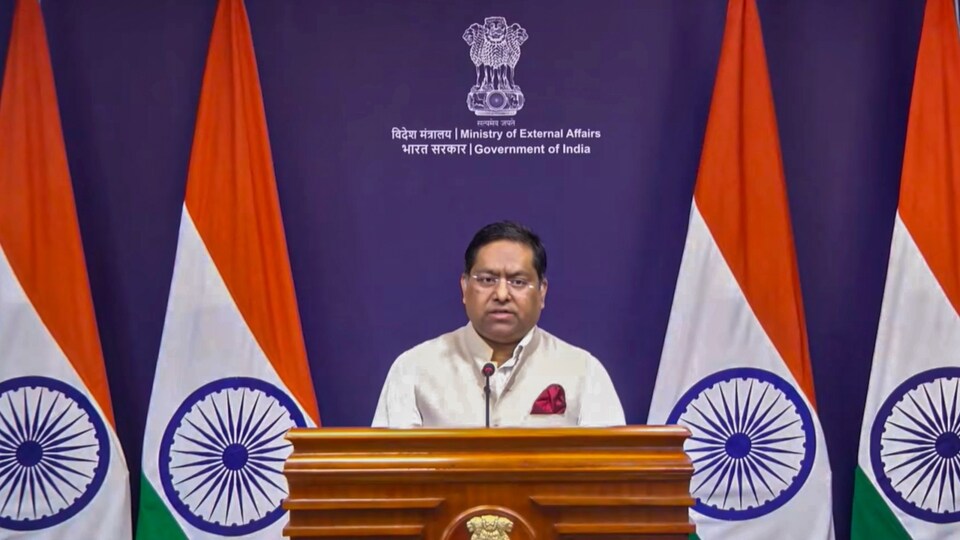
The checks follow a rule that imposes customs duty on goods worth over NPR 100 brought from India.
Responding to the situation, MEA spokesperson Jaiswal said:
"We are aware of reports about the enforcement of an existing rule by Nepali authorities, under which customs duty is levied from passengers crossing the border if they are carrying goods purchased in India valued at more than 100 NPR.
“We understand that the Government of Nepal has taken this step primarily with the intention of curbing informal trade and smuggling. We have also seen a statement from a senior Nepali official that ordinary people carrying household goods for personal use will not be stopped.”
Also Read | ‘That's where…': How MEA responded to Trump's ‘hellhole’ repost for India
What is the new rule?
The rule, introduced around mid-April on the occasion of Baisakh 1, 2083, the Nepali New Year, has significantly impacted daily life in the Terai region bordering India.
The regulation mandates customs clearance for goods valued above 100 rupees brought in from India.
Also Read | Spiked drink, wifi cut: US woman ‘raped’ at Karnataka homestay, case reaches MEA | Shocking details
Why the outrage?
Residents who previously brought small quantities of food items, clothing, and household goods for personal use say the new regulation has made this difficult.
The move has sparked widespread outrage, with videos circulating on social media showing people expressing anger over the checks. Items such as rice and sugar are now under scrutiny, affecting those who routinely cross the border for basic purchases.
Madhesi youths staged a protest on Saturday, opposing the government’s decision to impose customs duty on goods worth over NPR 100 brought from India. Several lawmakers from border regions have also called for easing the restrictions.
Also Read | India-Nepal border to be shut from March 2 as Nepal holds first election since Gen-Z protests
Demonstrators gathered at Kathmandu’s Maitighar Mandala, holding placards and raising slogans such as "Cancel customs duty," "Respect Madhesi people," and "Don't kill the poor people."
"The imposition of tax on small items being brought from across the border by people living in the border area have not only obstructed free movement of people across the border but also damaged our centuries-old relations with the southern neighbour," Kaushal Kumar Singh, president of Other Backward Class (OBC) Federation, Nepal, told PTI.