
 E-Paper



3 reasons why PM Modi is popular, set for 3rd term: The Economist explains
Titled 'Why India’s elites back Narendra Modi', the magazine article said Prime Minister Narendra Modi bucks several global political trends.

 Prefer HTon Google


New Delhi: Prime Minister Narendra Modi isn't an "ordinary strongman" and is expected to win a third term, an Economist article has said. Titled 'Why India’s elites back Narendra Modi', the magazine article said PM Modi bucks several global political trends.
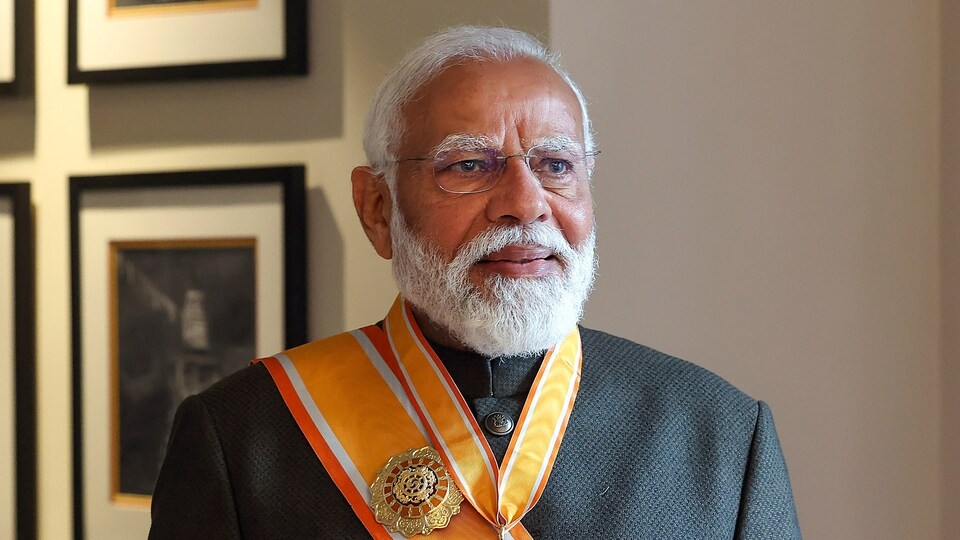
"...The prime minister, who is expected to win a third term after India goes to the polls in April, is no ordinary strongman," the article's introduction reads.
"A study in 2020 by Cristóbal Kaltwasser and Steven van Hauwaert, two political scientists, of Britain, Turkey, eight countries in the European Union and five in Latin America, confirmed the inverse relationship between higher education and support for populist leaders...Mr Modi bucks this trend altogether," the article observes.
"In 2017 66% of Indians who had no more than a primary-school education told Pew Research that they had a “very favourable” view of Mr Modi. The number rose to 80% among Indians with at least some higher education. After the previous general election, in 2019, Lokniti-CSDS, a pollster, found that around 42% of Indians with a degree supported Mr Modi’s Bharatiya Janata Party (BJP), while around 35% of those with only a primary-school education did," it added.
Also read: PM Modi slams Congress for 'callously giving away' Katchatheevu island to Sri Lanka
The magazine said PM Modi enjoys support among other groups as well.
"In 2020 Sanjay Kumar of the Centre for the Study of Developing Societies found that between 2014 and 2019 support for the bjp increased among rural, lower-caste, young and poor voters. It grew especially quickly among “other backward classes”, which make up nearly half of the population. Among them, the BJP's support rose from 34% to 44%, compared with an increase of 31% to 37.5% among all voters," it said.
The article attributed Modi's success to class politics, economics and elite admiration.
The US magazine said the BJP is known to be business friendly and the Bania trader community supports it.
"Tycoons such as Mukesh Ambani and Gautam Adani, India’s richest men, fall into this group. Upper-caste Hindus, including Kshatriyas and Brahmins, are also part of the core support base," it said.
Also read: PM Modi tells Bill Gates why he called for clanging utensils in Covid pandemic
He said PM Modi has branded the BJP as a caste-agnostic "pan-Hindu" party, which allows him to retain high-caste groups. It also helps him to reach out to other groups.
The article said India has been growing blazing fast under PM Modi's rule, which is increasing the size and wealth of the upper-middle class.
"It is not surprising that Mr Modi has retained the support of those who have become richer. The Congress Party enjoyed strong support among the upper-middle class during the fast-growing late 2000s. It took a slowdown and a series of corruption scandals in the 2010s to change things," it said.
The magazine said India's economic and geopolitical standing in the world increased during PM Modi's tenure.
The third reason for Modi's rise is his popularity among the elites.
"They point to China and the East Asian tigers, the experiences of which they believe show that muscular governance can tear down barriers to economic growth. One industrialist in south India says that the country is “probably too democratic” given its level of income," the magazine reports.
The article says the country's elites see PM Modi's foreign policy as pragmatic.The magazine article said PM Modi is likely to enjoy the support of these groups "until a credible alternative appears".
It also claimed that Congress and Rahul Gandhi have lost the faith of elites.


