
 E-Paper



Modi govt's key ally says Cockroach Janta Party 'triggered by unemployment': ‘Need to consider concerns’
Andhra Pradesh Telugu Desam Party (TDP) chief Palla Srinivasa Rao says social media movement reflects concerns; also praises PM Modi, CM Naidu

 Prefer HTon Google


The BJP's key ally at the Centre and Andhra Pradesh's ruling party TDP sees “aspirations of the youth” as a key driver behind the rise of the satirical online outfit Cockroach Janta Party. TDP's state unit president Palla Srinivasa Rao said on Sunday, "After seeing this movement, it appears that we need to recalibrate our policies.”
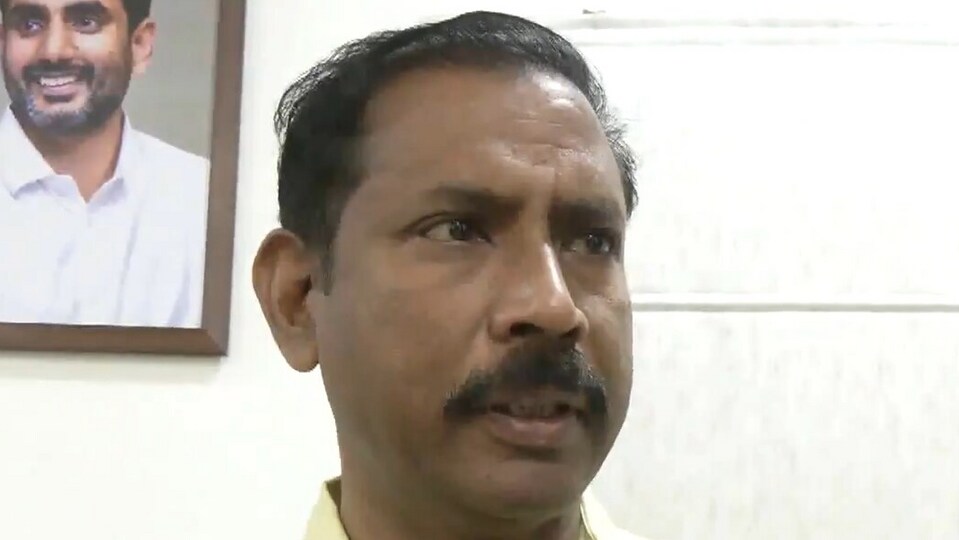
Rao stressed that Prime Minister Narendra Modi and the Telugu Desam Party (TDP) supremo, Andhra CM N Chandrababu Naidu, “are always thinking about the youth”, and that “their policies are very much towards job creation, economic development, digital India and the attraction of investment."
He noted, though, “I have seen and heard about this Cockroach Janata Party, the social media sensation. They are rising on the aspirations of the youth.” He further said, speaking to ANI in Vijayawada, “We will definitely take to the notice of our policymakers and see that the aspirations of the public are met.”
He said some of the concerns that they have raised, “especially the Cockroach Janata Party”, have to be “taken into consideration”.
He was then asked by the news agency if he saw any difference between NDA allies BJP and TDP on the issue, since the BJP-led Centre has issued blocking orders against the CJP's social media handles, as alleged by its founder Abhijeet Dipke, a US-based student.
Some BJP ministers and top leaders have even deployed phrases like “foreign hand” or “followers from Pakistan” to question the CJP's authenticity.
‘Need to caution the youth’
“As NDA partner, we always think that and our priority in policymaking is to create jobs,” Rao then said, "But I would also like to caution the youth that the influence of the external forces in an unrefined media may play a crucial role."
He added, “See, unemployment and some of these statements might have triggered this,” referring purportedly to a statement by Chief Justice of India Surya Kant in which he used the words “cockroaches” and "parasites" when talking about fake degree-holders.
“I would also like to caution the youth since social media being an unrefined media, there may be influence of the external forces and the cross-border forces. So, that has to be checked,” he further said.
Praise for Modi, Naidu
“Today, under the able leadership of our Honourable Prime Minister, the world is considering India as the leader. But most of the countries that are not liking this…. their influence on the social media may also play a part of that. But after asking the youth to be a bit cautious, we will also recalibrate our policy on the youth aspirations,” he explained.
“Of course, we will definitely recalibrate our policy and see that youth are not deceived; and their aspirations are met," he asserted. And then re-asserted, “As NDA partners, BJP and TDP are allied and we have a common goal of providing youth a better employment.”
The TDP has 16 seats in the Lok Sabha, making it a key ally for the BJP which fell short of the 272-majority mark in the 2024 polls, ending up with 240.
The CJP has within a week gathered over 20 million followers on Instagram alone, highlighting issues within the education and employment sectors, before facing a sudden government crackdown. Its X account @CJP_2029 was withheld in India "in response to a legal demand", according to the social media company. Founder Abhijeet Dipke has alleged death threats, and his family home in Maharashtra now has police security cover as the authorities said they did not want crowding there after the CJP went viral.


