
 E-Paper



Cong’s Nana Patole elected Maharashtra speaker after BJP withdraws candidate
Nana Patole represents Sakoli Assembly segment in Vidarbha while Kathore is the BJP MLA from Murbad in Thane district.

 Prefer HTon Google


Congress’s four-time lawmaker, Nana Patole, 57, was on Sunday elected unopposed as the Maharashtra assembly Speaker minutes after Bharatiya Janata Party (BJP)’s Kisan Kathore withdrew his candidature following a rare consensus between the ruling alliance and the opposition after a month-long bitter power struggle.
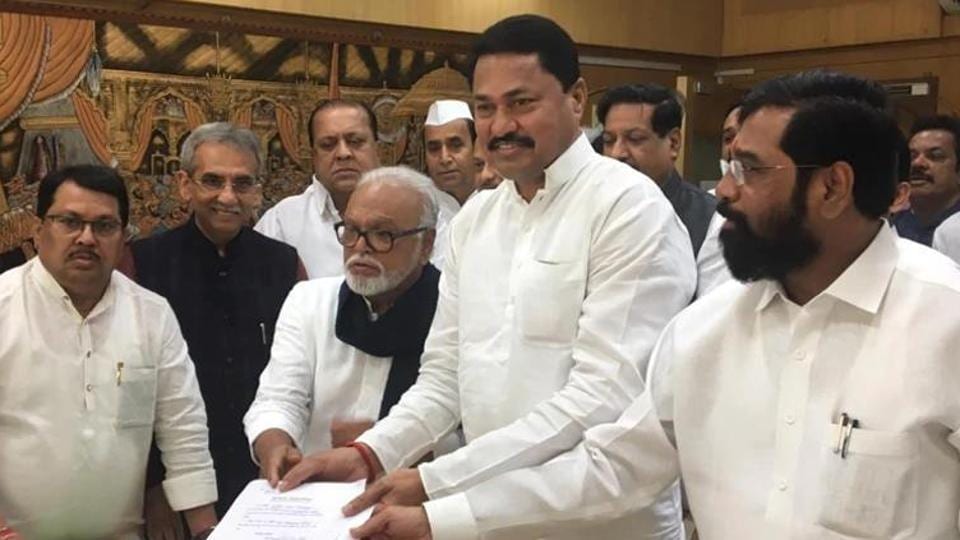
“We decided to withdraw Kathore’s nomination following a request from the ruling side. Maharashtra has a healthy tradition of electing the Speaker unopposed…,” state BJP chief Chandrakant Patil said.
Pro-tem Speaker Dilip Walse Patil earlier met Devendra Fadnavis, the leader of the opposition, over tea and requested him to follow the tradition of electing the Speaker unopposed.
“…at an all-party meeting, other parties requested us and it has been a tradition that the Speaker is appointed unopposed… we accepted the request and withdrew our candidate’s name,” Fadnavis said.
The ruling Maharashtra Vikas Aghadi (MVA) on Saturday fielded Patole for the Speaker’s post after the three-party alliance agreed to offer the deputy chief minister’s post to the Nationalist Congress Party (NCP).
Patole, who succeeds the BJP’s Haribhau Bagade, represents the Vidarbha region’s Sakoli assembly segment. He is the first Maharashtra Assembly Speaker from the region in over two decades.
Patole started his political career as a student leader in 1987 at the Nagpur University. He joined the Congress later and became Bhandara Zilla Parishad member in 1991. Patole was first elected to the Maharashtra assembly in 1999. He was reelected in 2004 and 2009. Patole joined the BJP and won the 2014 Lok Sabha election before returning to the Congress citing differences with Prime Minister Narendra Modi and Fadnavis in December 2017.
Patole won his fourth term from Sakoli by defeating former minister Parinay Phuke. He was elected as the Speaker a day after chief minister Uddhav Thackeray-led MVA coalition government sailed through in the floor test in the assembly. The MVA got 169 votes, above the halfway mark of 145 in the 288-member assembly.
Thackeray lauded Patole’s work as a lawmaker and a farmer leader as he escorted him to the Speaker’s chair along with some senior members of the House following his election. “I am happy that the son of a farmer has occupied this post [of the Speaker],” Thackeray said.
Fadnavis echoed Thackeray and also appreciated Patole’s work.
NCP minister Jayant Patil appreciated the spirit of the BJP’s understanding in withdrawing its candidate and ensuring that Patole was elected unopposed.
The consensus over the Speaker’s election was reached a day after the BJP staged a walkout from the House ahead of the floor test as it took exception to a Pro-tem Speaker presiding over the trust vote before the election of a regular Speaker. The BJP was also unhappy over the ruling alliance’s move to replace the BJP’s Kalidas Kolambkar with NCP’s Dilip Walse Patil as the Pro- tem Speaker ahead of the trust vote.
The MVA was formed after the Shiv Sena’s bitter parting of ways with the BJP amid disagreements over equal power-sharing following the October 21 assembly elections.
The BJP initially opted out of the government formation as its oldest ally, the Sena, insisted also on a rotational chief ministership.
The MVA moved the Supreme Court and sought a floor test within 24 hours after Fadnavis was sworn in as chief minister at an early morning ceremony on November 23.
Fadnavis was called to form the government with the support of a splinter group led by the NCP’s Ajit Pawar, who took the oath of office as deputy chief minister. The two were was forced to resign on Tuesday after the Supreme Court ordered a floor test for the following day and it became clear that Fadnavis did not have the numbers.
The BJP emerged as the single largest party in the assembly by winning 105 seats, followed by the Sena with 56, the NCP 54 and the Congress 44. Smaller parties and independents won 29 seats.


