
 E-Paper



How a strategically deployed INS Chennai thwarted hijack
On Friday, Indian marine commandos intercepted, then boarded the hijacked ship, and rescued the crew

 Prefer HTon Google


INS Chennai, the guided missile destroyer that intercepted the hijacked vessel MV Lila Norfolk and rescued 21 crew members, was able to do so simply because it had been deployed strategically by Indian naval planners, and for the very purpose, people familiar with the matter said.
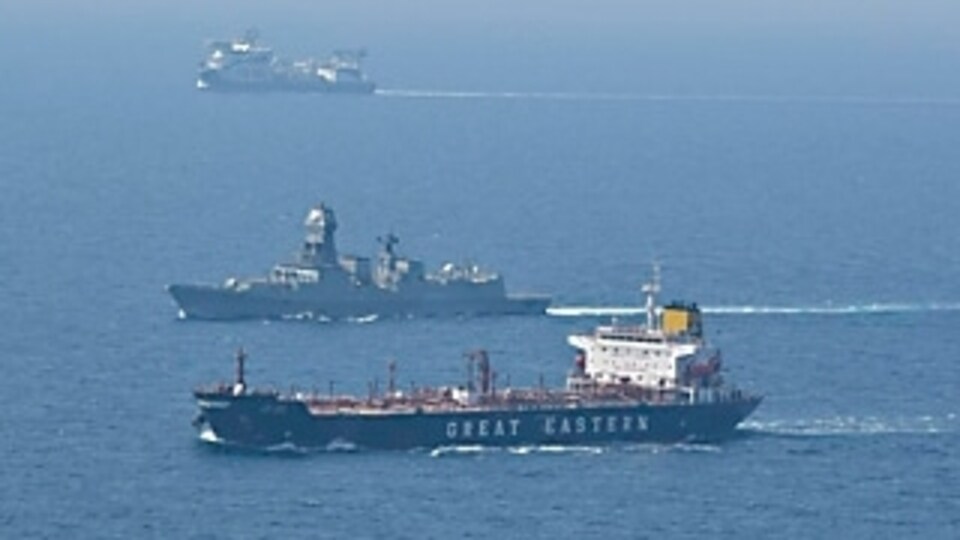
On Friday, in a daring operation, Indian marine commandos intercepted, then boarded the hijacked ship, and rescued the crew.
INS Chennai, the people cited in the first instance said, was among the warships deployed off the African seaboard, south of the Red Sea, and in the Arabian Sea, by naval planners under direction from the Narendra Modi government, since October 2023.
Also read: First video of Indians rescued by Navy from pirates-hijacked ship surfaces: ‘Bharat Mata ki Jai’
New Delhi has always been clear that it is committed to keeping sea lanes safe from Somali pirates, an objective that has expanded in recent weeks to deal with the challenge posed by Houthi militia against commercial shipping in north Arabian sea.
Thanks to the proactive action taken by the Naval Headquarters, front-line guided missile destroyers INS Kochi and INS Kolkata are now deployed off the Gulf of Aden. Besides, destroyers Murmogao, Chennai, and frigates Talwar and Tarkash have been deployed off the Straits of Hormuz and Gulf of Oman under the Operation Sankalp of the Indian Navy. Destroyer Visakhapatnam along with tanker INS Deepak are deployed off the Duqm port in Oman.
It is understood, given the gravity of the situation in the Arabian Sea, that the Indian Navy is now planning to move a guided missile frigate and an off-shore patrol vessel from Eastern Command to the Western seaboard to ensure that commercial shipping and merchant tankers are not targeted by asymmetric forces backed by players in West Asia as the Israel-Hamas conflict escalates and widens.
HT learns that soon after the October 7 terror attack by Hamas, the Indian Navy moved two ships to the Red Sea and the Gulf of Aden on October 8 and 9. The Red Sea unit was withdrawn on October 25 but two warships belonging to Kolkata and Visakhapatnam class were deployed in the Gulf of Aden to defend against possible missile attacks by the Houthis.
All Indian warships carry missiles, long-range guns and helicopters. In addition, India has also deployed a multi mission Boeing P 8 I and unarmed Predator drones over the Arabian Sea for enhanced surveillance.
When South Korean tanker MV Ruen was hijacked off the coast of Somalia on December 14, the Western Navy tasked INS Kochi to trail the ship from December 15 to 18 with the destroyer evacuating an injured crew member from the hijacked ship to Salalah port in Oman.
In an effort to augment forces against pirates and increase maritime domain awareness, the Indian Navy deployed INS Kolkata in the Gulf of Aden.
It was INS Mormugao that first responded to the distress call from MV Chem Pluto, which was hit by Iranian Shahed 136 drone on December 23 off the coast of Dwarka. The ship was escorted safely to Mumbai harbor where it is currently undergoing repairs.
While India is not part of the US-led Operation Prosperity Guardian, aimed at protecting the Red Sea shipping lane, the Indian Navy has been at the forefront to of providing maritime security to commercial traffic and take action against Somali pirates off the coast of Socotra islands in Yemen and off the African eastern seaboard.


