
 E-Paper



Need to shun populism, balance subsidies, says Arun Jaitley
Arun Jaitley’s comments come on the back of political demands to ease sharply rising fuel prices by cutting taxes. A large hike in minimum support prices announced in July by the central government itself forms a big part of farm subsidies.


Benefits from populist policies are short-lived and subsidies alone can’t sustain a sector for long, unless “blended” with investments, finance minister Arun Jaitley said on Friday.
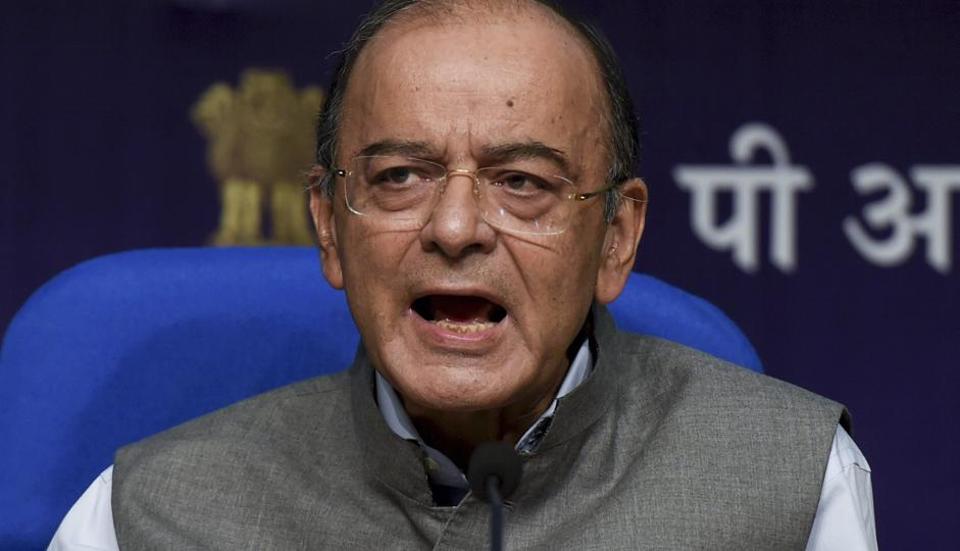
Jaitley was speaking largely in the context of India’s crisis-prone agriculture, while releasing the book, “Supporting Indian Farms the Smart way” by economists Ashok Gulati, Marco Ferroni and Yuan Zhou, but his comments also come on the back of political demands to ease sharply rising fuel prices by cutting taxes. A large hike in minimum support prices announced in July by the central government itself forms a big part of farm subsidies.
“How do we choose between when to stop at subsidies and when to concentrate on investment and I think that’s an eternal choice before policymakers,” he said. Making a case for a focus on investments rather than only subsidies, the finance minister said the country’s public expenditure traditionally was geared more towards subsidies because of cash crunches. That’s not the case anymore. “The state of inadequacy of resources in India which used to be cited as a reason for limiting investments…I think we are growing out of it,” he said.
Governments — in states and at the Centre — are armed with more resources because of greater tax compliance and increasing formalisation of the economy, he said. “Public discourse occasionally gets impacted by populism; it gets impacted by sentiments that a particular move will generate, even though the impact of that move or that policy or decision will not be long-lasting enough.”
The book by edited by Gulati, chair professor at the think-tank ICRIER, concludes that farmers are tied to poor incomes mainly because of higher spending on inefficient subsidies but declining capital investments, frequent ban on farm exports and low spending in research for new technologies in agriculture.
For instance, gross capital formation in agriculture -- a measure of spending on fixed assets -- has dwindled from 18% levels about six years ago to 13% currently, Gulati said. Most growth theories posit that GDP growth is a direct result of investment, necessary for new capital requirement and to replace old worn-out assets, known as depreciation.
“To have a model which sustains indefinitely only on subsidies may not be a sustainable model, investment will make the Indian farmer self-sufficient in the long run… that with much lesser subsidies, a self-sufficient farmer will be able to serve the cause of India’s agriculture and the country as a whole much better,” Gulati wrote.
The workforce that shifted to service and manufacturing and various other sectors of the economy were “certainly much better placed that their counterparts who continued to stay in agriculture”. “Therefore, good politics will have to blended with sound and rational policy”.


