E-Paper



No good or bad terrorists, all countries have to stand up to them: Cameron
Terrorists cannot be segregated into “good” and “bad” camps and all countries have to ensure they are brought to justice, former British prime minister David Cameron said at the 14th Hindustan Times Leadership Summit on Saturday.

 Prefer HTon Google


Terrorists cannot be segregated into “good” and “bad” camps and all countries have to ensure they are brought to justice, former British prime minister David Cameron said at the 14th Hindustan Times Leadership Summit on Saturday.
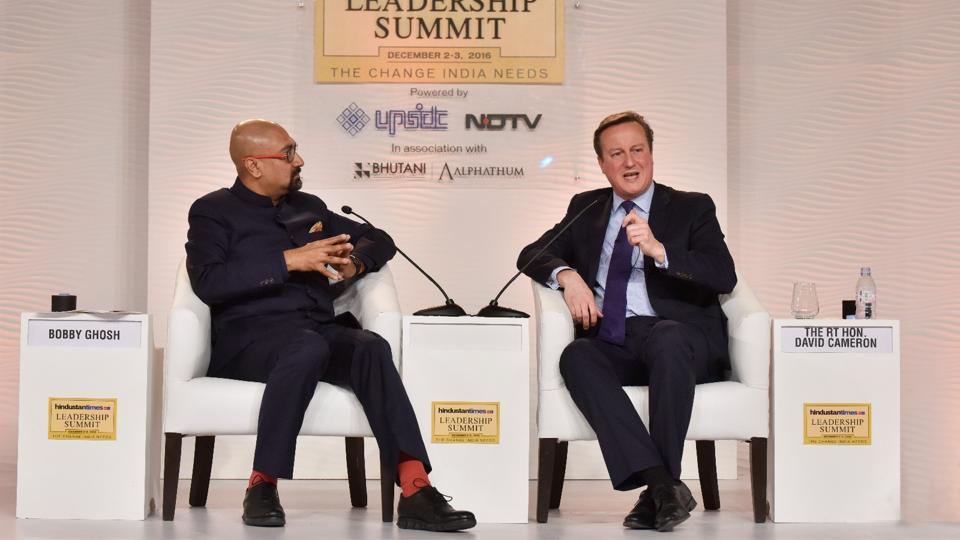
In a wide-ranging conversation with Hindustan Times editor-in-chief Bobby Ghosh, Cameron said the rise of populist and extremist political forces around the world could be countered by addressing the concerns of people who feel they have not benefited from globalisation.
Cameron, who stepped down after Britons voted to exit the European Union in a referendum in June, called for the strengthening of the India-UK partnership he had overseen along with Prime Minister Narendra Modi.
Read: Need to kidnap Sachin Tendulkar to train England cricket team, says David Cameron
An essential element of this modern partnership was the “appalling threat” faced by Britain and India in “fighting and defeating terrorism, particularly Islamist extremist terrorism”, he said.
“I admire what your prime minister has said about wanting a clear and common definition of terrorists. There are no more good terrorists or bad terrorists, there are simply terrorists and whatever country they are in, all countries have a responsibility to stand up to them, to bring them to justice and put an end to what they do,” Cameron said.
During a subsequent interview, Cameron acknowledged that Pakistan was among the countries he was referring to when he spoke about the need for action against all terrorists.
Speaking during the session with the theme “The western world in crisis”, Cameron dwelt at length on the rise of populist and extremist political forces in Europe and acknowledged he had lost his job because of a “populist upsurge”.
While globalisation had benefited people around the world, the belief that “the rising tide will raise all the boats” had not come true, and there were many people who thought they had been left out of the economic benefits of globalisation or that the mass movement of migrants were leading to too many cultural changes, he said.
Read: Does the England cricket team suck? This is what David Cameron said
There was, Cameron said, a need to make “major course corrections” to address the concerns of these people.
Brexit, however, did not mean the end of globalistaion and free trade and travel were not going to go away, Cameron said.
“Brexit is not a dead end for Britain. We were inside the EU but out of many of its elements …We are now out but in some of its elements,” he added.
The election of a right-wing leader such as Marine le Pen in France could deal a “body blow to the European project” and Britain “will leave the EU”, such developments did not mean the bloc would “fall apart”, he said.
Cameron responded to a question on the Indian government’s controversial demonetisation drive, saying it could help address key issues such as corruption, getting more people into the banking network, growing the digital economy and increasing the tax base to fund infrastructure, which he described as one of the “greatest constraints” for India.
The objectives of demonetisation were “worthy”, he added.
Cameron, who was among the harshest critics of US president-elect Donald Trump while in office, said there was now a need to look at the “positives” following the real estate mogul’s victory in the presidential election.
“As a free trade man, as a NATO man, I am concerned about some of the things Donald Trump has said. Modern leaders have to make most of the circumstances. Let’s start to look for the positives,” he said.
Among the positives was the move to bring investments and jobs back to the US to drive economic growth and Trump’s call for European countries to increase defence spending, Cameron said.