E-Paper



No leniency in recovering bad loans, especially from big defaulters: Nirmala Sitharaman
ED has investigated around 1,105 bank fraud cases, which resulted in the attachment of proceeds of crime amounting to Rs.64,920 crore, said finance minister

 Prefer HTon Google


New Delhi: There has been “no leniency” in recovering bad loans from large defaulters and the process is ongoing, finance minister Nirmala Sitharaman on Friday said, adding that the Enforcement Directorate (ED) has so far attached properties worth Rs.64,920 crore from 1,105 such defaulters under its scanner.
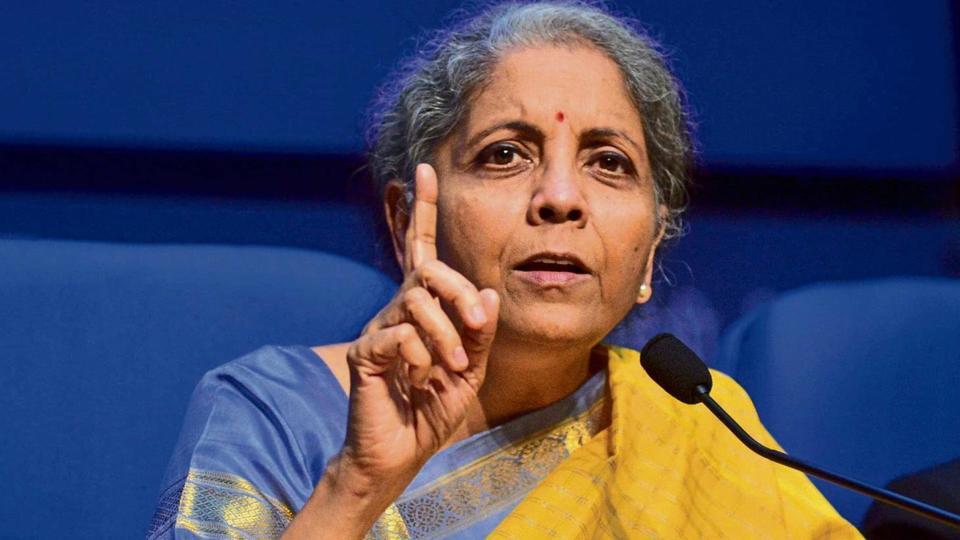
In a string of posts on X, the finance minister refuted the Opposition’s charge that there has been a waiver of loans given to industrialists during the Modi government.
“The Opposition, habituated to spreading lies, wrongly claims that there has been a ‘waiver’ of loans given to industrialists. Despite claiming to be ‘experts’ in finance and economy, it’s a pity that opposition leaders are still unable to distinguish between write-offs and waivers. After the ‘write-offs’ as per RBI’s guidelines, banks actively pursue the recovery of bad loans. And, there has been no ‘waiver’ of loans for any industrialist. Between 2014 and 2023, banks recovered more than Rs.10 lakh crore from bad loans,” Sitharaman said.
ED has investigated around 1,105 bank fraud cases, which resulted in the attachment of proceeds of crime amounting to Rs.64,920 crore. As of December 2023, assets amounting to Rs.15,183 crore have been restituted to the Public Sector Banks (PSBs), she said. “There has been no leniency in recovering bad loans, especially from large defaulters, and the process is ongoing.”
She said the exploitation of the banking sector by the previous regime to benefit “cronies” through imprudent lending and keeping actual non-performing assets (NPAs) under wraps saw the balance sheets of both banks and corporates under stress. “We’ve turned banks from being ‘NPA-laden nightmares’ into ‘Pillars of Jan Kalyan’. From having a ‘Twin Balance Sheet Problem’, we now have a ‘Twin Balance Sheet Advantage’,” she added.
“Various measures by our Government and the RBI [Reserve Bank of India], such as the Asset Quality Review (AQR), disclosed hidden mountains of NPAs and ended the accounting tricks used to hide them. Congress-era reckless and imprudent lending created the disgraceful legacy of the ‘Twin Balance Sheet’ problem, which we inherited in 2014,” the finance minister said.
She said that under the United Progressive Alliance (UPA) regime, obtaining loans from banks often depended on powerful connections rather than a solid business proposition. “Banks were forced to neglect proper due diligence and risk assessment before sanctioning these loans,” she alleged.
After banks transparently began disclosing their NPAs for loans lent before 2014, the gross NPAs of PSB rose to a high of 14.6% in 2017-18, she said.
Citing views of former RBI governors Raghuram Rajan and Urjit Patel (who have been critical of the current government) she said the two top functionaries of the Indian banking system had also raised the NPA crisis created by the UPA regime and “openly exposed” the level of decay in the system left by the then government.
Rajan, who also participated in @RahulGandhi’s ‘Bharat Jodo Yatra’, described the NPA crisis during the UPA era as a “historic phenomenon of irrational exuberance.” Similarly, Patel noted that the functioning of PSBs under the UPA suffered from “a perennial shortcoming on account of bureaucratic inertia and political meddling,” Sitharaman said, quoting them.
Prime Minister Narendra Modi-led government in 2015 prompted the RBI to launch a thorough AQR to stop the evergreening of bad loans and unearth hidden NPAs, which saw a spike in gross NPAs to Rs.10,36,187 crore by March 2018.
Before the AQR, the gross NPA was Rs.2,16,739 crore (on March 31, 2014) as most of the NPAs were hidden in the balance sheet of banks due to evergreening. The government then adopted a four ‘R” strategy – recognition, resolution, recapitalisation and reforms – to bring back banks into good health. While banks were recapitalised (Rs.3.10 lakh crore), other reforms such as the Insolvency and Bankruptcy Code (IBC) resolved loans over ₹3.36 lakh crore rupees as of March 2024.
“Our reforms addressed credit discipline, recognition and resolution of stress, responsible lending and improved governance. We replaced political interference in banks with professional integrity and independence. Banks Board Bureau (BBB) was created for a transparent selection of non-executive Chairpersons and whole-time directors,” Sitharaman said.
Giving details of banking sector reforms she said, “Our govt, in 2015, issued a framework for the timely detection and investigation relating to large value bank frauds. Insolvency & Bankruptcy Code was brought for faster recoveries. The Fugitive Economic Offenders Act of 2018 was enacted for the seizure of fugitive economic offenders’ property. SARFAESI Act was amended to make it more effective. During the last five years, banks have recovered ₹1.51 lakh crores through SARFAESI.”
Measures helped to strengthen banks included – doubling pecuniary jurisdiction of the debt recovery tribunals (DRTs) to ₹20 lakh to focus on high-value cases, creation of stressed asset management verticals by PSBs for stringent recovery, segregation of monitoring roles from sanctioning roles in high-value loans, deployment of specialised monitoring agencies for effective monitoring of loans above ₹250 crore, online end-to-end one-time settlement (OTS) platforms to ensure timely and better realisation.