
 E-Paper



Not every virus mutation is issue of concern, say experts
Not every mutation creates a new strain, which is used to describe a lineage that is significantly different from earlier viruses.


Has Sars-CoV2, the virus that causes coronavirus disease (Covid-19), mutated to become more deadly and contagious? Researchers around the world have identified dozens of mutations that they said has made the virus more lethal or transmissible, or both, which has fuelled uncertainty about the future, but experts say there is no significant mutation to suggest change in viral behaviour.
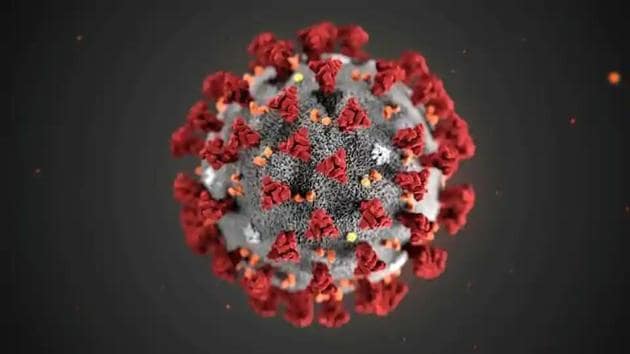
Researchers at the Los Alamos National Laboratory in the US recently caused alarm when they identified 14 mutations, of which “the mutation Spike D614G is of urgent concern; after beginning to spread in Europe in early February, when introduced to new regions it repeatedly and rapidly becomes the dominant form”. The study, published in pre-print server, bioRxiv, on April 29, has not been peer-reviewed.
Independent experts say these findings have no clinical significance. All viruses mutate. A virus causes infection by entering the host cell and making copies of itself, which it does by duplicating its genes. Small errors in the duplication become mutations, which usually have no effect on viral behaviour.
“It is normal for viruses to change over time and to become more or less transmissible, cause more or less fatalities. The virus causing Covid-19 disease remains relatively stable so far,” said Dr Poonam Khetrapal Singh, regional director, World Health Organization (WHO), South-East Asia region, of which India is apart.
Not every mutation creates a new strain, which is used to describe a lineage that is significantly different from earlier viruses. “In my opinion, there is no clear evidence of any different strains of clinical significance. By sequence, one can identify phylogenetic clades, some of which show mutations of possible significance. Until proven by clinical, or, at the very least, experimental studies, one should avoid speaking of strains in the clinical sense of the word,” said Dr Anurag Agrawal, director, Council of Scientific & Industrial Research-Institute of Genomics and Integrative Biology (CSIR-IGIB), New Delhi. CSIR-IGIB, along with the National Centre for Disease Control in Delhi, has submitted 53 sequences of Covid-19 genomes to Global Initiative on Sharing All Influenza Data (GISAID), which is the largest submission by any group in India.
“All viruses mutate all the time, there’s no significant mutation,” said Dr Soumya Swaminathan, chief scientist, WHO. Mutations that affect transmissibility, virulence, antigenicity, and resistance to available treatment are the ones that affect how a virus spreads, how deadly it is, its ability to evade the immune system and drugs and vaccines used to treat it.
“Once more sequences to be made available from all countries with identified cases, an analysis of the virus that shows these adaptations will inform WHO’s advice to countries,” said Dr Khetrapal Singh.
“Mutations in themselves are not a bad thing and there is nothing to suggest SARS-CoV-2 is mutating faster or slower than expected. So far we cannot say whether Sars-CoV-2 is becoming more or less lethal and contagious,” said Professor Francois Balloux, from University College London Genetics Institute, UK, and co-lead author of a study that identified 198 recurring mutations to the virus, in a statement. The study was published in the journal, Infection, Genetics and Evolution on May 6.
The viruses without the D mutation? include the one that emerged in Wuhan, China, while viruses with the G mutation? first appeared in February, and, by April, had become dominant strains across most parts of the world. But this could just be because people with the G mutation travelled more, met more people, and took fewer precautions, leading to super spreading.
Past studies of coronaviruses that cause Severe Acute Respiratory Syndrome (Sars) and Middle East Respiratory Syndrome (Mers), show that this family of viruses change at one-tenth the speed of influenza viruses, and scientists believe Sars-CoV-2 also has a slow mutation rate.
Developing a vaccine against viruses that mutate quickly is a huge challenge. In the case of flu viruses, the vaccine has to be changed every year to protect against the three to four specific strains causing most of the infections.
Most work on vaccines and drugs against Sars-Cov-2 target the spike protein to prevent it from entering human cells to cause infection. At least 120 vaccine projects are in various stages of development , of which seven have entered clinical human trials to test the safety and efficacy of the vaccine on healthy volunteers, according to the WHO. Another 82 are in the pre-clinical animal trial phases, and at least two have been found to protect monkeys from infection.
“We need to develop drugs and vaccines that cannot be easily evaded by the virus,” said Professor Balloux.


