
 E-Paper



Not inflation or fiscal numbers, policy should focus on demand boost
Many will see an increase in inflation numbers as a vindication of the RBI’s decision. There is also talk of the Indian economy entering a period of stagflation – low growth, high inflation – phase.


The Consumer Price Index (CPI), India’s benchmark inflation measure, accelerated 5.5% in November -- the fastest pace since July 2017 and just 50 basis points less than the upper bracket of the maximum permissible inflation range under the inflation targeting framework of the Reserve Bank of India (RBI). One basis point is one-hundredth of a percentage point. These statistics came days after the RBI’s Monetary Policy Committee (MPC) decided to hold back on reducing policy rates for the sixth consecutive time.
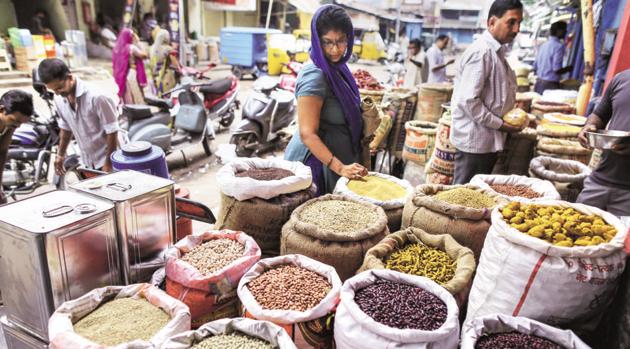
Many will see an increase in inflation numbers as a vindication of the RBI’s decision. There is also talk of the Indian economy entering a period of stagflation – low growth, high inflation – phase.
Such a prognosis would call for a prolonged pause in the rate cut cycle or even a rate hike.
And a decline in nominal gross domestic product (GDP) growth is bound to dampen tax collections even with similar levels of tax buoyancy. Tax buoyancy is defined as an increase in taxes per unit increase in GDP. A decline in nominal GDP growth adversely affects taxes because taxes are a proportion of nominal incomes rather than real incomes.
Both these developments are likely to embolden the hawks on the fiscal and monetary side. They would argue that the RBI should start raising rates to control inflation and the government should cut back on spending to ensure minimum deviation from its fiscal targets. There is good reason to believe that taking either route would be counter- productive to the Indian economy at the current juncture. Here’s why.
Why is Inflation growing?
The philosophy of raising interest rates to control inflation is premised on the fact that raising the cost of capital or personal credit would increase the cost of consumption and investment and hence ease the excess demand leading to inflation. This reasoning is ill-suited for the current situation in India. Food prices, especially those of vegetables, are the main driver of inflation today. Vegetable price inflation in November grew 36% on a year-on-year basis.
The main reason for this is large-scale crop destruction due to unseasonal rains. As people do not take loans to buy onions and other vegetables, there is hardly anything which a rate hike can do to control vegetable price inflation.

In fact, there is reason to believe that the Indian economy is actually facing a crisis of deficient rather than excess demand, which has led to a crash in non-food prices. Both core inflation – the non-food non-fuel component of the CPI – and the Wholesale Price Index (WPI), which has a much lower weight of food prices than the CPI, have been declining.
Core inflation is at an all-time low, while WPI is less than 1%. This is also reflected in the nominal GDP growth crashing to 6% in the quarter ending September.
It is the non-food demand which is more sensitive to cost of capital and raising interest rates will only bring it down further.

Cutting spending may not help fiscal math
Also, if the nominal GDP growth rate continues to decline, it has been 8% and 6% in the June and September quarter against the 12% figure assumed in the budget, no amount of fiscal prudence is going to help the government realise its fiscal targets. So fears of a higher fiscal deficit leading to higher inflation are pretty much misplaced today.
In fact, a slightly higher inflation rate might actually help the fiscal situation by pushing nominal incomes and hence taxes.

Fundamental challenge is different
None of this should be allowed to distract policy focus from the basic question of giving a sustainable push to economic growth. There is good reason to believe that boosting demand is the key to addressing this challenge. Data from the RBI’s Consumer Confidence Surveys (CCS) is instructive in this regard. This survey is conducted in 13 major cities of the country. The CCS shows that anxiety about employment has been brewing for a long time in the economy.
However, the perception on income, and non-essential spending did not enter into negative territory for a large part of this period. It is only this year that things have started going downhill at a rapid pace.

Unless these perceptions revive, economic activity would not pick up pace anytime soon. It is necessary that those at the helm of policy making pay attention to boosting consumer sentiment at all costs rather than placate the inflation and fiscal hawks, which could end up hurting economic activity even more.


