E-Paper



Number Theory: Can India become self-sufficient in pulses?
Pulses are an important source of protein in non-meat-eating households

 Prefer HTon Google


“Grow pulses, don’t worry about prices. We will procure at MSP. By December 2027, the country should become self-reliant in pulses. We will not import even one kilo of pulses from January 2028,” Amit Shah, the Minister of Home Affairs and Co-operation said on January 4. “Tur (pigeon pea) will be procured from farmers and it is Prime Minister Narendra Modi’s guarantee,” he added. Shah was inaugurating a portal for procuring tur (or arhar), a kind of pulse, from farmers. He suggested that a similar portal for two other pulses – urad (black gram) and masoor (red lentil) – is expected in the future. This idea assumes significance because pulses are an important source of protein in non-meat eating households. Here are four charts that explain the challenge of making India self-sufficient in pulses.
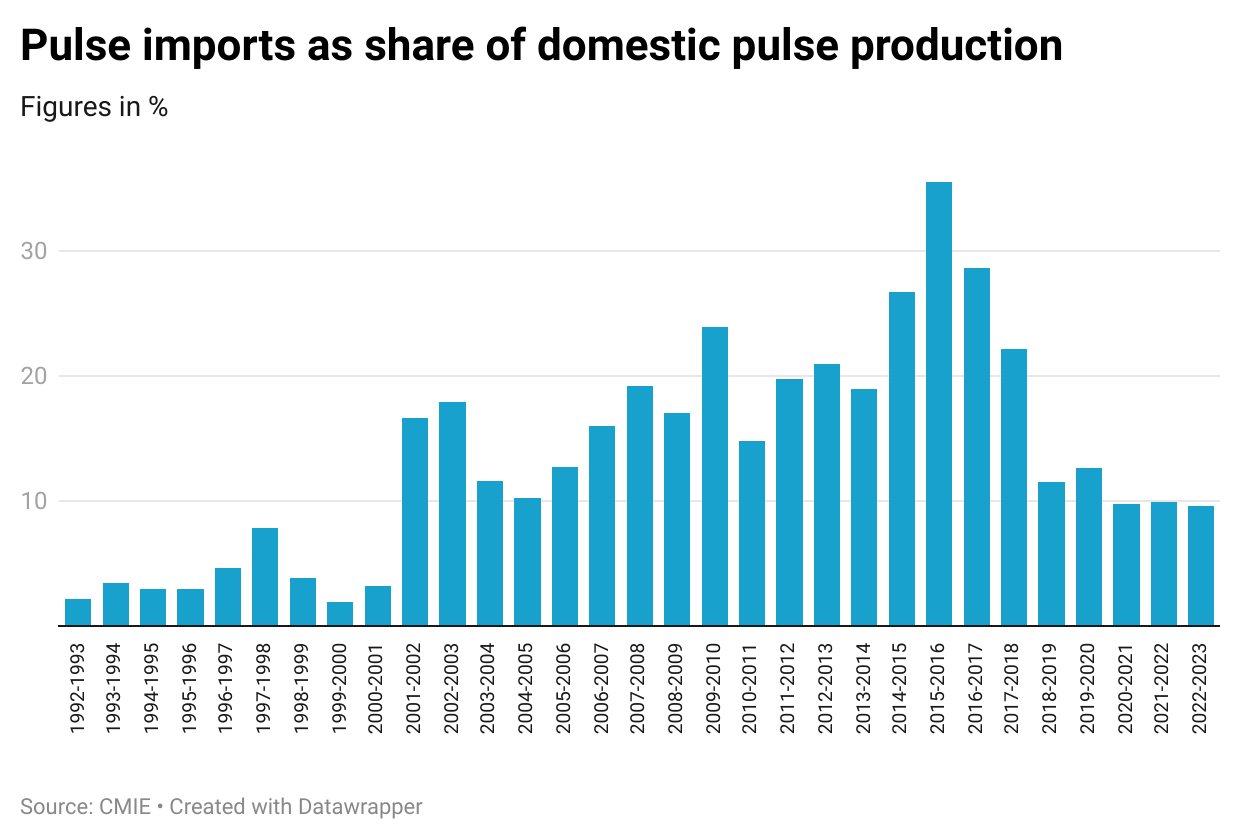
 Import dependence in pulses is already fallingIndia produced 26 million tonnes of pulses in 2022-23, according to data from the Centre for Monitoring the Indian Economy (CMIE). Imports of this important crop category were only 9.6% of the production in 2022-23. A long-term analysis shows that this figure has been falling almost every year since 2015-16, and is now the lowest since 2001-02. This suggests that the need to import pulses is already decreasing.
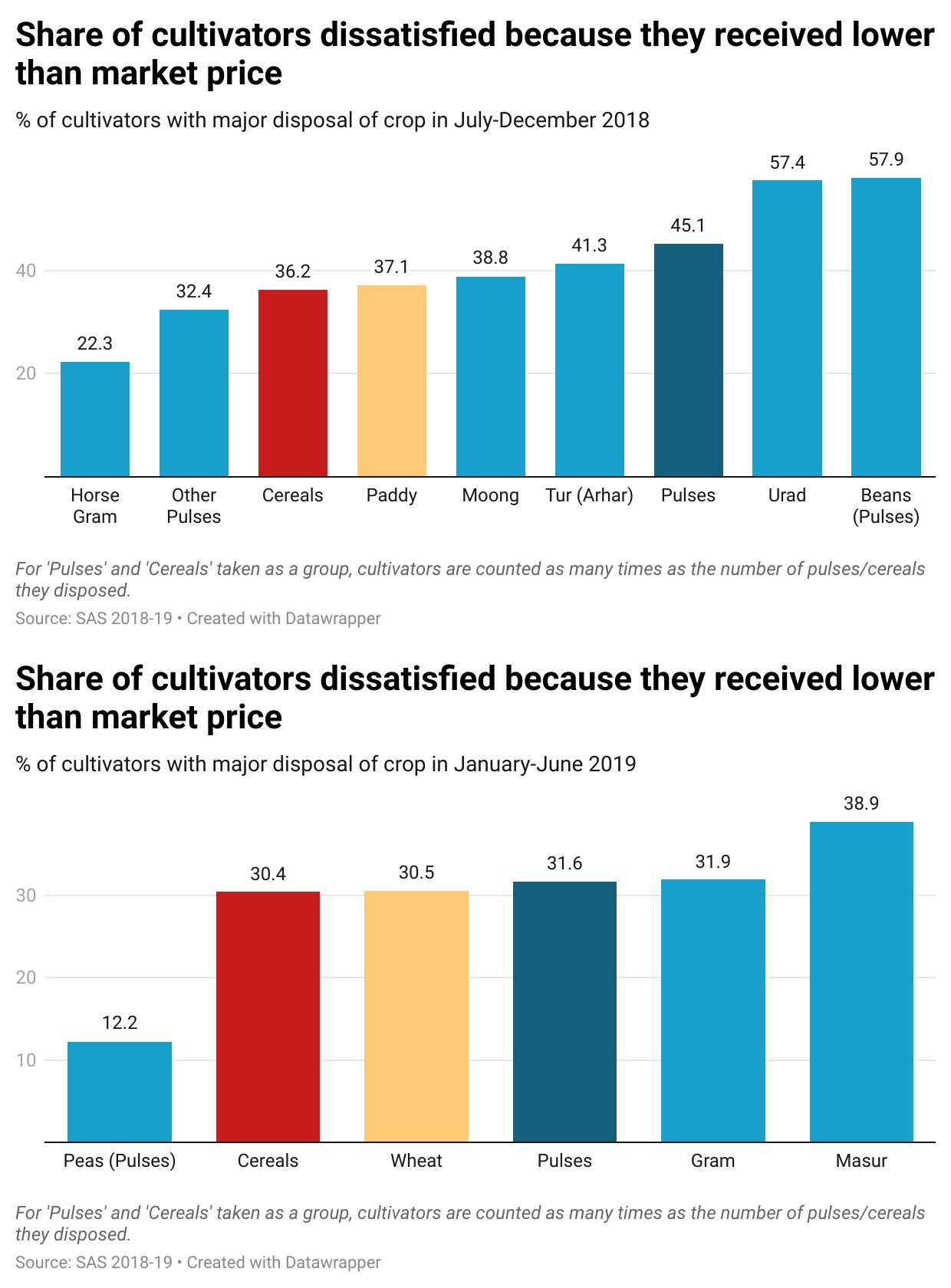
- And remunerative prices could help increase the cultivation of pulsesThe incentive Amit Shah proposed while encouraging pulse cultivators to grow the crop is that the government will procure pulses at MSP (minimum support price). Are remunerative prices a problem for pulse farmers in the country? According to the Situation Assessment Survey (SAS) in agriculture conducted in 2018-19, urad, tur, and moong (green gram) cultivators were unhappy with the price at which they were able to sell their crop -- and more so than the average paddy and cereal cultivator in the kharif (monsoon crop) season. Similarly, masoor and gram cultivators were more dissatisfied with prices than the average wheat and cereal cultivators in the rabi (winter crop) season. While these are slightly dated numbers, they do suggest that bringing pulses under the ambit of Minimum Support Prices (MSPs) could lead to an increase in their cultivation and production.
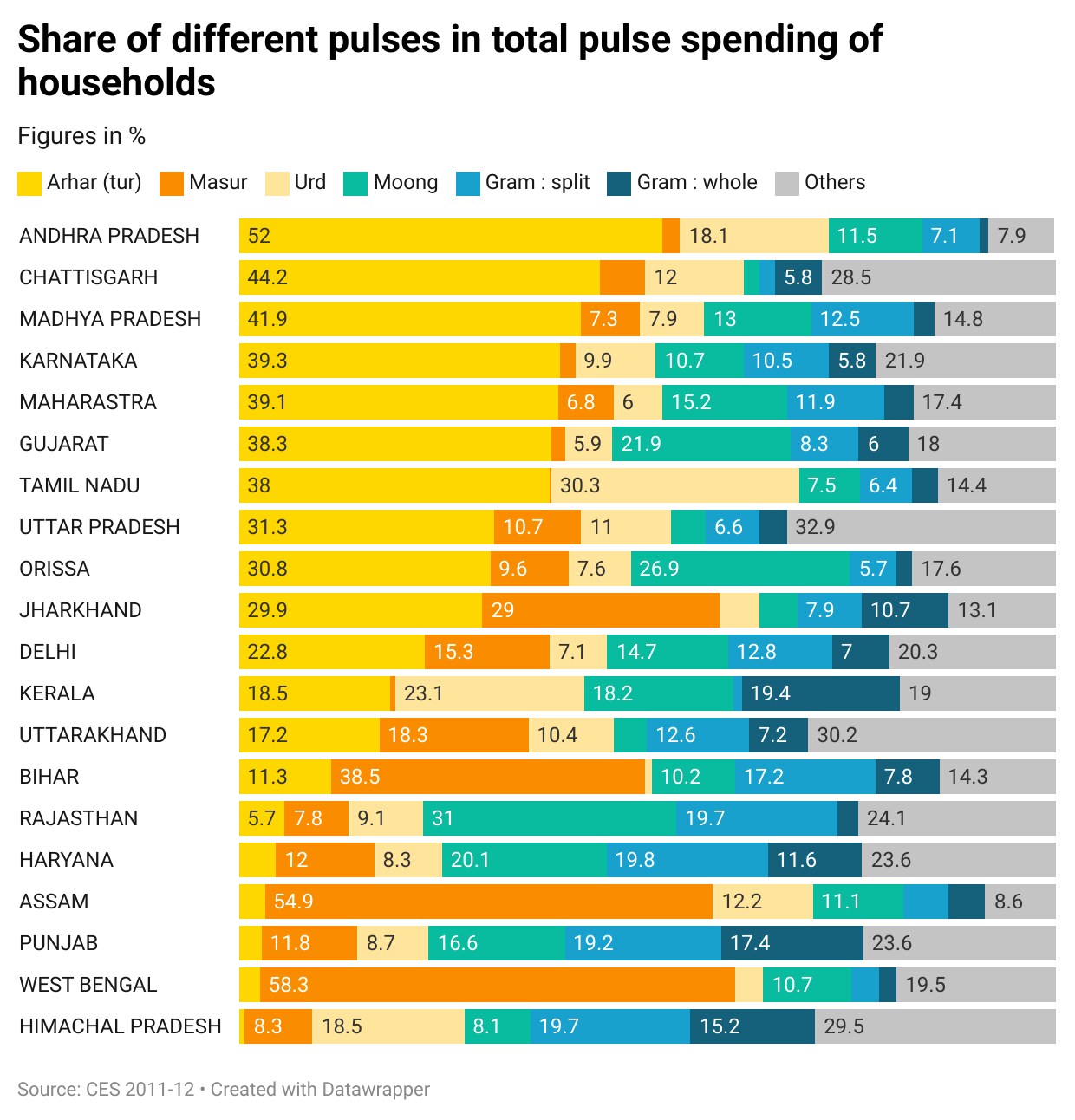
- But pulses, unlike rice or wheat, cannot have a one-crop solutionThis is the most important factor to keep in mind while pursuing self-sufficiency in pulses. Consumption habits for pulses vary a great deal across different kinds of pulses in various parts of the country. For example, arhar, masoor, and urad – the three pulses for which government plans to create procurement portals – constitute only 56% of the household spending on pulses in India, according to the last Consumption Expenditure Survey (CES) conducted in 2011-12. CES data also highlights a large regional variation in consumption of various kinds of pulses in the country. For example, arhar has a share of 40% of total pulse consumption in states such as Madhya Pradesh, Chhattisgarh and Andhra Pradesh but less than 5% in states such as West Bengal and Punjab. While Tamil Nadu belongs to the group of states where arhar is the most popular pulse, the share of urad in state’s pulse consumption (30%) is not matched by any other state. In neighbouring Kerala, urad is the most popular pulse although it has just 23% share in total pulse consumption. An HT analysis in August 2023 pointed out -- it was based on an Economic and Political Weekly paper by Praduman Kumar, Surabhi Mittal, and P K Joshi -- that one pulse becoming more affordable does not make people abandon another pulse that they usually consume.
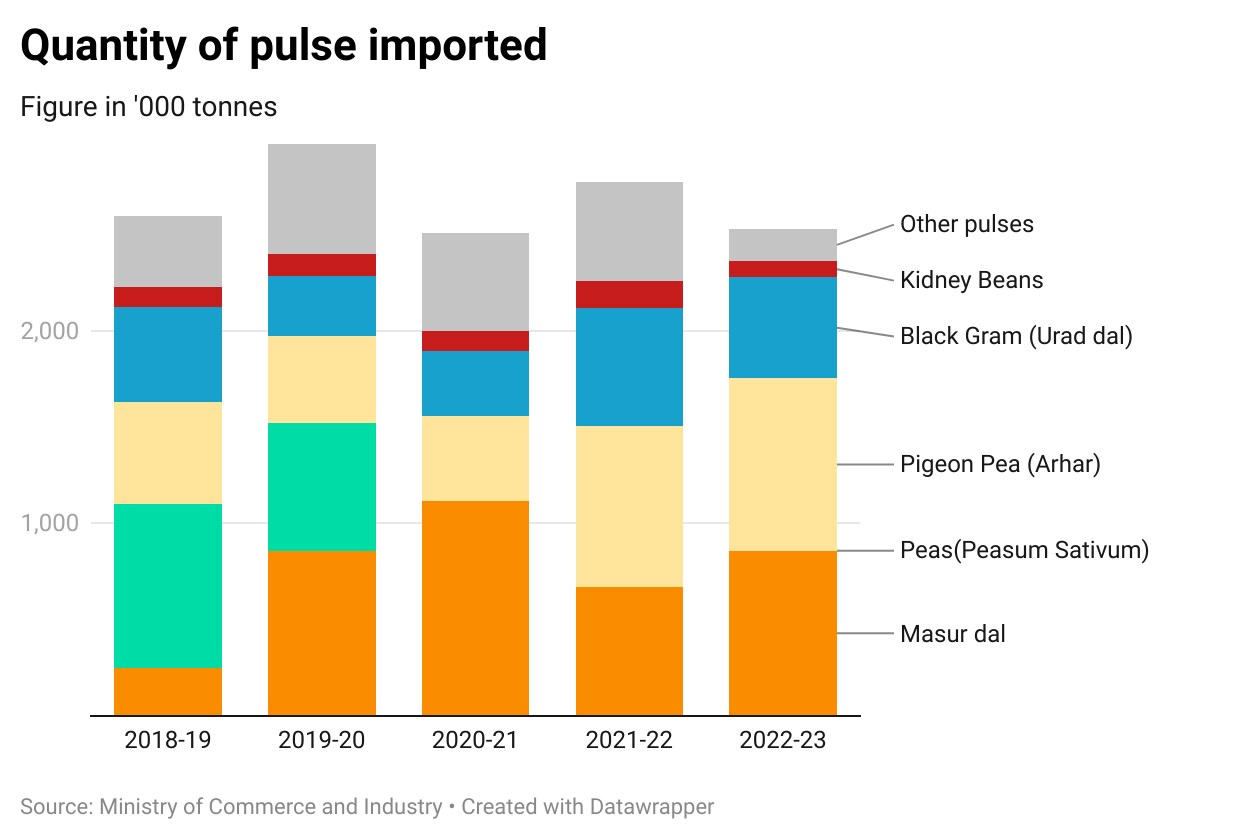
- And individual crops can drive the need for imports in a particular yearThe regional variation in consumption habits around pulses means that the shortfall of any particular variety can lead to a demand for imports of pulses even if other kinds of pulses are readily available in the domestic market. This can be seen from the variation across sub-catgeory in pulse imports in trade data published by the ministry of commerce in the last five years. The data clearly shows that intra-pulse imports vary significantly across the years even though the overall pulse import quantity might not change by a large extent. These numbers show that complete self-sufficiency in pulses will need a wider policy push than focusing on just two or three main pulse crops.