E-Paper



Odisha man arrested for vandalising Jagannath temple kitchen, motive unclear: Cop
The Puri Police said they are still working to establish the motive of the man arrested for vandalising the kitchen of Jagannath temple

 Prefer HTon Google


BHUBANESWAR: A 30-year-old man has been arrested on charges of vandalising the kitchen of 12th century Jagannath temple, police said on Wednesday, three days after 43 chulhas, or clay stoves, in the kitchen of the 12th century Jagannath temple were found damaged.
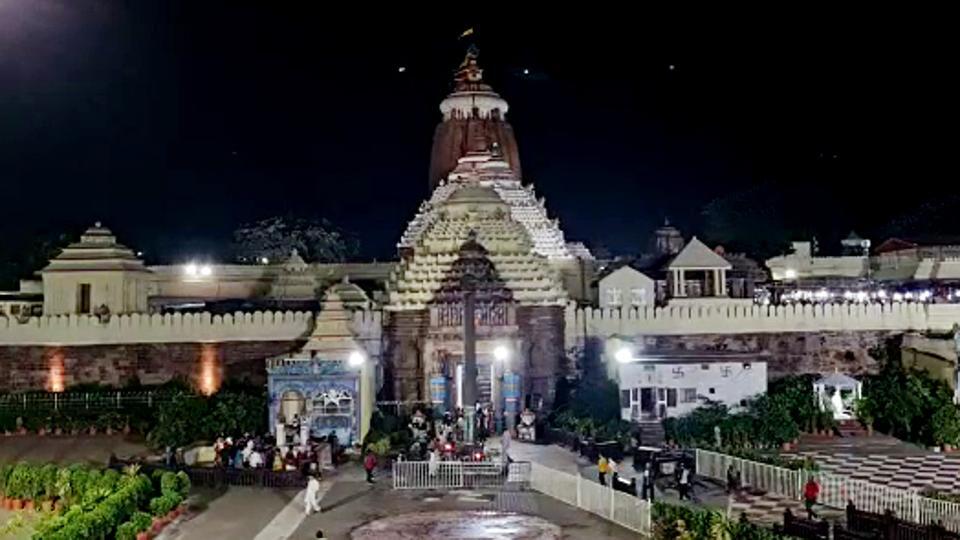
Puri superintendent of police (SP) Kanwar Vishal Singh said a J Mohapatra of Khurda district was arrested for vandalising the clay stoves in Roshaghara or the divine kitchen of the temple.
“The identification of the person was done after inspection of the CCTV footage. He had come to Puri on Saturday and visited the temple. He said he felt uneasy about something which is why he went to the kitchen of the temple and ransacked the chulhas,” Singh said.
However, his statement is too vague and we are still interrogating him to establish his exact motive,” Singh added.
The man was caught after the police formed multiple teams to track him down and released a sketch of the accused. Police said the man told investigators that he went straight to the beach after leaving the temple and took a bath before boarding a train to Jatni.
Also Read: Temple town Puri murder puts spotlight on saga of greed and revenge
Temple servitors on Sunday morning found 43 of the 240 earthen chullahs of the temple kitchen vandalised when they returned to the kitchen to cook the Mahaprasad. The kitchen is normally locked at around 10.30pm every night after preparing food. But this wasn’t done on Saturday night.
The Roshaghara or the kitchen of Puri’s Jagannath temple is the largest and the biggest kitchen in any shrine in the country.
But the police version has not convinced everyone.
A senior servitor of the temple said the vandalism could be linked to the temple administration’s decision to give away part of the Kothabhoga or the first cooked meal of the temple to orphanages in Puri town.
Kothabhoga, also called Sakala Dhupa, comprises items such as rice, fried vegetables and different sweets that are offered to Lord Jagannath by 10am. The cost of this cooked meal is borne by the temple administration.
“The prime aim was to damage the earthen chullahs where Kothabhoga is cooked. As it is the first cooked meal of the temple and is offered to the Lord, everyone wants to partake it. The servitors who were in charge used to sell it at a premium to devotees and are hurt by the temple administration’s decision to give it to orphanages in the temple town… They did not want to take the decision lying down and wanted to hit back at the temple management,” said the servitor, not wishing to be named.
Temple officials did not comment on the allegation, saying police are investigating the case.
Congress leaders, on the other hand, alleged that the incident was an attempt to divert the attention of people from the alleged illegal construction being carried out under the heritage corridor project.
“The breaking of chulhas of Srimandir kitchen is a government-sponsored act to divert people’s attention from the main issue. The government was criticised across the state, including in the Parliament, because of the digging works near the shrine,” alleged Congress spokesperson Nishikant Mishra.
Senior BJP leader Bijoy Mohapatra didn’t comment on the police probe but blamed the state government for not taking enough steps. Mohapatra said the incident could have been prevented if the state government implemented the orders of the Supreme Court in 2019 following a PIL by lawyer Mrinalini Padhi.
“The SC in November 2019 directed the state government to appoint a permanent temple administrator and tighten temple security. Two months ago, a mock drill spotlighted glaring holes in the way security was handled. The state government has been very lackadaisical in its efforts in ensuring the security of the temple,” alleged Mohapatra.