
 E-Paper



Offline classes in Odisha schools begin amid Covid containment norms
Officials said offline classes were necessary as the Odisha government was able to reach out to only 40% of the students via online teaching and 150 days of regular teaching days have been lost.

 Prefer HTon Google


After being closed for three months due to rising Covid cases, high schools and higher secondary schools across Odisha reopened on Monday for class 10 and 12 students with adherence to Covid containment guidelines.
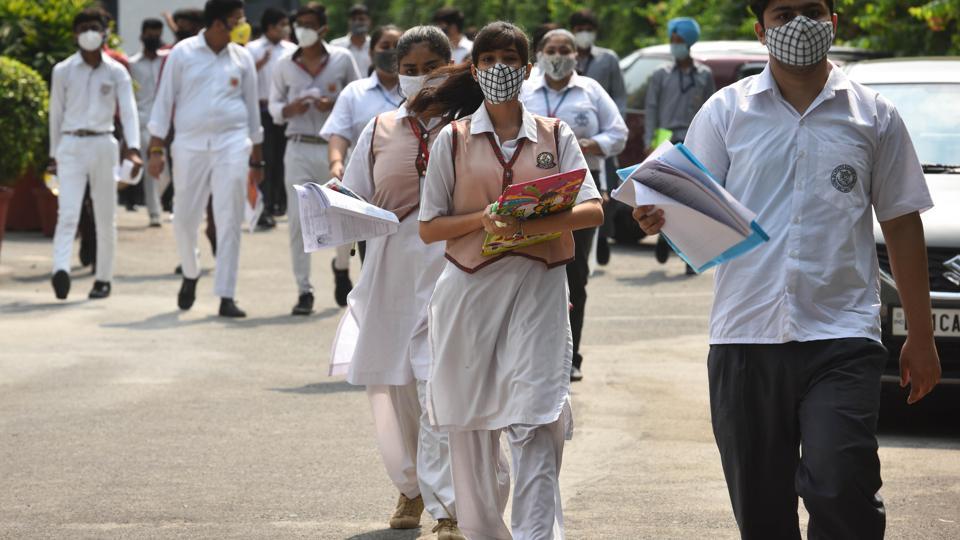
The classes began from 10 am on Monday and will continue till 1.30 pm without a break after the schools were sanitised and necessary infrastructure to enforce Covid containment measures was put in place.
Odisha school and mass education minister Samir Ranjan Dash said the offline classes will continue with online learning. “The offline classes are not compulsory and students will need to bring a consent letter from their parents and guardians before attending classes. No student should be coerced to come to school. Only those who feel comfortable attending school should do so. There will be no attendance system,” said Dash, adding that every school has to determine its functioning depending on the number of students and the size of classrooms available.
“Maximum 20-25 students should be allowed to sit in a classroom to ensure safe distancing among students. For schools with an adequate number of classrooms, all students may be accommodated on a daily basis. All students have to wear masks,” he said. Students have been advised not to bring food with them.
Officials said offline classes were necessary as the government was able to reach out to only 40% of the students via online teaching and 150 days of regular teaching days have been lost. As both the Board of Secondary Education and Council of Higher Secondary Education have reduced syllabuses, resumption of physical teaching in classrooms has become a necessity.
The reopening of schools came as the number of new Covid cases declined on Monday with the state reporting 1,637 infections in the last 24 hours and Test Positivity Rate of 2.19%. However, the number of fatalities continued to be high with 62 new deaths reported in the past 24 hours, taking the Covid death toll to 5,574. This year Odisha has reported 3,698 Covid deaths compared to 1,876 deaths last year.
The minister said schools that don’t have 100% access to potable drinking water and adequate functional toilets will not be allowed to reopen.
The state government in its guideline has said that there has to be adequate soap (solid/liquid) and running water in all washrooms and toilets in schools. Hand sanitizers for the teachers, students, and staff must be available mandatorily in each classroom. The schools will also have to display the state helpline and numbers of local health authorities etc. in case of any emergency. A separate isolation room will have to be kept ready in case a student or staff develops Covid symptoms.
The Odisha government is also planning to reopen class 9 and 11 from August 16 and September 15, respectively.



