
 E-Paper



‘One nation, One election’ panel holds 3rd meet, focus on feedback received
The high-level committee on one nation, one election led by former president Ram Nath Kovind chaired its third meeting on Sunday

 Prefer HTon Google


NEW DELHI The high-level committee on one nation, one election led by former president Ram Nath Kovind chaired its third meeting on Sunday and discussed the feedback and suggestions received from several political parties and the public, the law ministry said.
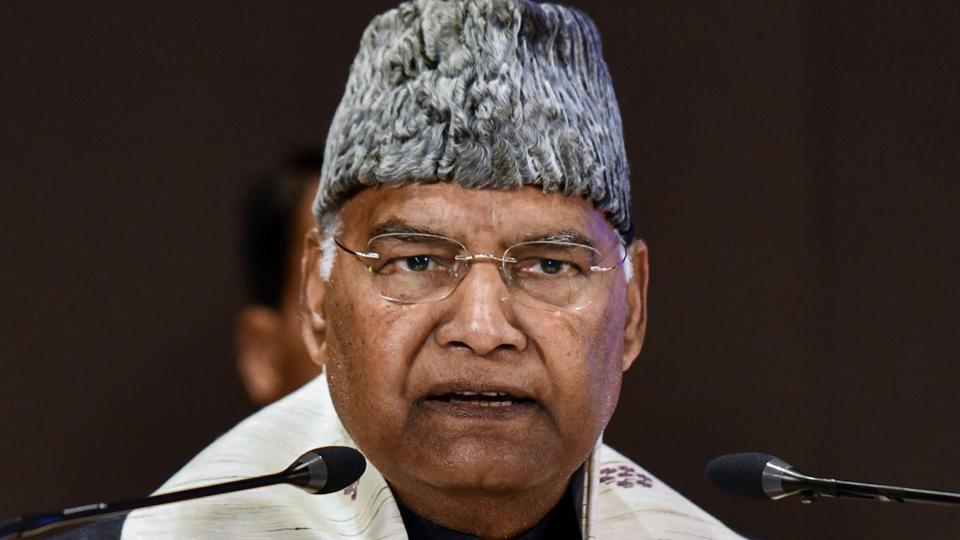
“Panel secretary Niten Chandra apprised the committee members about the various follow-up actions on decisions taken in the second meeting and during the intervening period,” one of the officials in the ministry said.
The committee, after its second formal meeting, in October 2023, had written to six national parties and 33 state parties and asked for their suggestions on the possibility of holding simultaneous polls.
Several opposition parties including the Congress, the Communist Party of India (CPI), the CPI(M), the Dravida Munnetra Kazhagam (DMK), the Trinamool Congress (TMC) and the All India Majlis-e-Ittehadul Muslimeen (AIMIM), and the Aam Aadmi Party (AAP) wrote letters to the committee’s secretary Niten Chandra and opposed the idea of simultaneous elections.
Congress president Mallikarjun Kharge opposed the idea of simultaneous polls, underlining that the composition of the committee was highly biased, and urged Chandra to “not allow his persona and the office of a former president to be abused by the Union government.”
“…suggestions have been received from 17 political parties. Suggestions by the Election Commission of India were also noted by the committee during the meeting today,” an official said.
Till January 15, the committee received more than 20,972 responses, of which 81% affirmed the idea of simultaneous elections, the law ministry said.
A member of the committee told HT that after evaluating the responses it appeared that the public was in favour of holding simultaneous polls.
HT had reported earlier that the committee was planning to submit its report, which is in the final stages, to the Union government before the upcoming Lok Sabha polls are announced.
The major task before the panel in finalising its report will be to include suggestions from various stakeholders, including the Election Commission (EC), prominent jurists such as former judges of constitutional courts, former chief election commissioners, various political parties, citizens and the report of the 22nd Law Commission, the official cited above said.
The Election commission had reportedly written to the government on Saturday and said that it would require an estimated ₹10,000 crore every 15 years to procure new Electronic Voting Machines (EVMs) if simultaneous polls are held for Lok Sabha and state assemblies.
A consultation process has already been initiated by the committee, with its chairperson Kovind on Wednesday meeting Justice Munishwar Nath Bhandari, former chief justice of the Madras high court, in Delhi.
“On January 18, Kovind and Chandra held discussions with Justice Gorla Rohini, the former chief justice of the Delhi high court, and Sushil Chandra, the former chief election commissioner of India,” the official said.


