
 E-Paper



Salwar kameez or saree: Rajasthan college dress code for women draws flak
The education directorate’s circular, sent to all 219 government colleges, has been criticised by the People’s Union for Civil Liberties, which termed the move “unconstitutional, retrogressive, patriarchal and authoritarian step.”

 Prefer HTon Google


Rajasthan college education directorate’s recent guidelines on dress code to be followed in government-run colleges across the state has drawn flak from a section of civil society, which termed it “shocking and outrageous” and demanded its immediate withdrawal.
The directorate sent out a circular to all 219 government colleges in the state on March 4 giving details of the uniforms male and female students need to wear from the next academic session.
According to the circular, male students should wear only shirt and trousers while the attires for their female counterparts should be salwar kameez or saree and blouse.
There are around 400,000 students, including 175,000 women, in government colleges in Rajasthan.
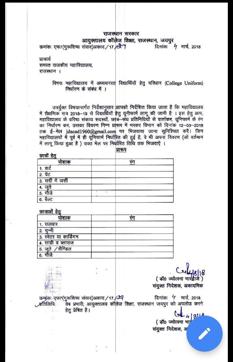
The directorate, however, left it to the college administration to decide the colour of the uniform. The colleges were asked to inform the directorate about their choice by March 12.
The People’s Union for Civil Liberties (PUCL) said the decision to implement a particular dress code in colleges was “unconstitutional, retrogressive, patriarchal and authoritarian step”.
“How dare the directorate issue this circular and clip the students’ freedom to wear what they want. To limit the clothing to just salwar and saree blouse in these times when girls are wearing trousers, jeans, t-shirt, skirts, ghaghara, palazzos etc is throttling their freedom to choose how they wish to express themselves,” PUCL general secretary Kavita Srivastav said.
“It’s ridiculous that you don’t let them (youth) choose what they wish to wear while they have the right to choose whichever party they wish to vote for,” she added.
Terming the directive a Rashtriya Swayamsevak Sangh (RSS) agenda, Srivastav alleged, “the sangh is imposing its values and determining the acchi and buri aurat (good and bad women) in its terms.”
Former chairperson of Rajasthan State Commission for Women Lad Kumari Jain too criticised the move.
“Tomorrow the government may ask women to come to colleges in veils. Which age are we living in? Do we want to push our women back to medieval times,” she said.
State higher education minister Kiran Maheshwari, however, defended the decision by saying it has been done based on students’ demand.
“During a youth dialogue programme, students demanded that uniform should be introduced to check entry of outsiders to college campuses. For women, saree is not compulsory. They can also wear salwar suit,” she said.
The school uniforms for boys were changed last year to light brown colour shirts and dark brown colour trousers. Critics alleged it was similar to the uniform of the RSS, the ruling BJP’s ideological fount.


