
 E-Paper



‘Pained’: PM Modi tweets to ‘dear friend’ Shinzo Abe, praises his leadership
PM Modi credited PM Abe with playing a lead role in strengthening relations between the two countries. “In recent years, with your wise leadership and personal commitment, the India-Japan partnership has become deeper and stronger than ever before,” PM Modi said.


Prime Minister Narendra Modi, who shares personal chemistry with Japanese Prime Minister Shinzo Abe, said he was “pained” to hear about the outgoing Japan prime minister’s ill health and credited him for cementing relations between the two countries.
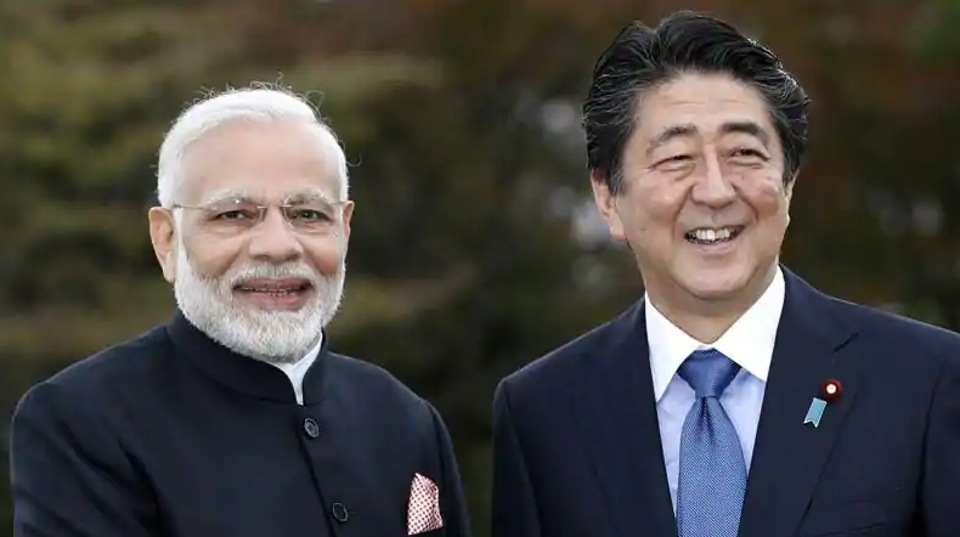
PM Modi tweeted to PM Abe hours after the Japanese prime minister announced his decision to resign from the top post due to his health condition. “Pained to hear about your ill health, my dear friend @AbeShinzo,” PM Modi said in a tweet.
PM Modi also tweeted a 2018 photograph of the two leaders at an informal meeting during the 13th India-Japan Summit that took place at a resort near Mount Fuji in Japan in October 2018.
The next summit level meeting was scheduled to be held in December in Assam’s Guwahati but was deferred due to the protests against the anti-citizenship law. PM Abe and PM Modi were expected to hold the 14th India-Japan Summit via video conference on 10 September. But there is no clarity if the two countries, who were expected to seal a crucial military logistics pact, would be able to stick to this schedule in view of PM Abe’s health condition.
PM Modi credited PM Abe with playing a lead role in strengthening relations between the two countries. “In recent years, with your wise leadership and personal commitment, the India-Japan partnership has become deeper and stronger than ever before. I wish and pray for your speedy recovery,” PM Modi said.
PM Modi is known to have been an admirer of the Japanese prime minister long before he moved from Gujarat to New Delhi in 2014. By all accounts, it was mutual.
PM Abe was one of the first global leaders to congratulate Narendra Modi for his gigantic victory in 2014 well before all the votes were counted. Modi was also only one of the three people that PM Abe followed on Twitter back then. That number has still gone up to 18. Defence Minister Rajnath Singh has been the other addition from India since then. As prime minister, Modi had made Japan his first port of call outside south Asia in September 2014 once he assumed charge in New Delhi.
PM Abe’s announcement to step down comes just days after he surpassed a record for longest consecutive tenure as premier set by his great-uncle Eisaku Sato half a century ago. He had then stressed that what was important was what a leader did in the top post, not the duration.
As PM Abe announced his decision to exit the government at a news conference on Thursday, he underlined that he could not be the prime minister if he could not make the best decisions for the people.
“I cannot be prime minister if I cannot make the best decisions for the people. I have decided to step down from my post,” Abe, 65, told a news conference.
Abe has battled the disease ulcerative colitis for years and two recent hospital visits within a week had fanned questions on whether he could stay in the job until the end of his term as ruling party leader, and hence, premier, in September 2021.


