
 E-Paper



Pak’s secret tunnel to push terrorists for 8 years in Jammu detected by BSF
It is important to detect all the cross-border tunnels on the Pakistan border because they nullify the impact of soldiers at the LoC blocking infiltration attempts

 Prefer HTon Google


The Border Security Force on Saturday found a 150-metre long underground tunnel in Jammu and Kashmir that had been used by Pakistani intelligence to infiltrate terrorists into India. This is the second tunnel to be spotted in 10 days by the border guarding force that last year went on campaign mode to detect and destroy a web of tunnels believed to have been built by Pakistan’s deep state, a senior BSF official said on Saturday.
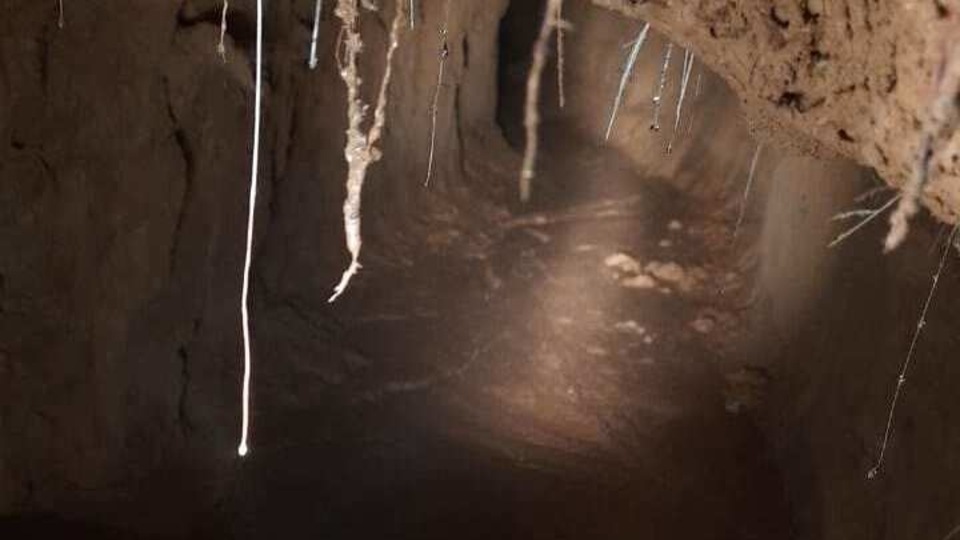
The 30-feet deep tunnel has been detected between Border Post number 14 and 15 near BSF’s outpost at Pansar, Kathua district. On the other side of the fence are Pakistani border outposts of Abhiyal Dogra and Kingre-de-Kothe in Shakargarh district.
Pakistan’s Shakargarh, the area across the fence, is home to a terror training facility overseen by one of Jaish-e-Mohammed’s operational commander Kasim Jan who, Indian intelligence believes, was involved in the November 19 Nagrota encounter in Jammu and is the principal accused in the 2016 Pathankot airbase attack. Jan is also one of the main launch commanders of Jaish terrorists into India.
“This is huge,” a senior BSF official said. Because the tunnel appears to be at least 6 to 8 years old and would have been used for infiltration for a long time. Also, it is located in a place that has seen action in the past, right from 2012 when Pakistan had mounted a heavy fire assault on the forward duty point and constructed a new bunker on the zero line in the vicinity.
Not far from where the tunnel was found, a BSF assistant commandant Vinay Prasad who was leading a border domination patrol was killed by sniper fire from across the border in January 2019. Ten months later, a group of terrorists was noticed in the same area in November 2019.
Also Read: Tunnels, drones part of Pakistan’s strategy to keep Jammu sector active
It is very important to detect all the tunnels built by the Pakistani military and its terrorists because the infiltration of terrorists through them practically nullifies the utility of deployment of soldiers along the Line of Control. When it becomes too difficult to cross the LoC, Pakistani terrorists use these tunnels, a senior counterterror official said in Delhi.
Watch: BSF officer enters tunnel used by Jaish terrorists in Nov, nails Pakistan role
Border Security Force director general Rakesh Asthana had ordered the force to step up efforts to detect tunnels after the Nagrota encounter in November when security forces were able to trace the route taken by the terrorists who had crossed over using one of the many tunnels that the Pakistani military have built for the terrorists to sneak into India.
Security officials underscore that proper engineering effort had gone into the construction of the tunnels that had been detected in recent times, pointing to the involvement of the Pakistani military along the heavily-guarded border.
BSF seizes weapons
Meanwhile, the BSF carried out an intelligence-backed raid in Poonch district that led to the seizure of one AK-47 rifle, three China-made pistols, an under-barrel grenade launder and a radio set.


