E-Paper



Partially reopen Shambhu border: Supreme Court to Punjab, Haryana
SC directed the DGPs of Punjab and Haryana, along with senior superintendents of police and deputy commissioners from Patiala and Ambala, to convene within week

 Prefer HTon Google


The Supreme Court on Monday asked Haryana and Punjab to partially reopen the Shambhu border, which has been blocked due to farmers’ protests, even as it refused to stay a judicial inquiry into the death of a farmer during a clash between protesting farmers and Haryana security personnel in February.
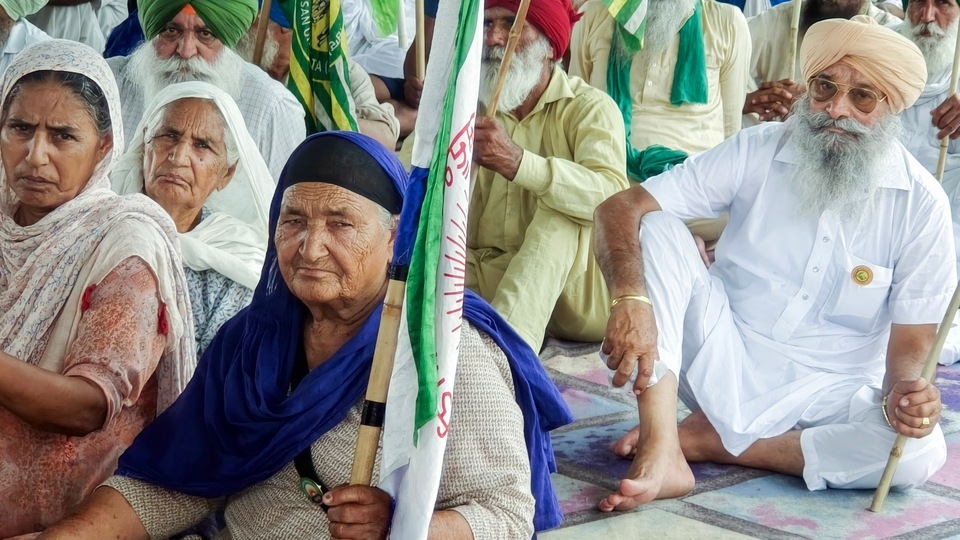
Addressing the blockade on the national highway at the Shambhu border, a bench led by justice Surya Kant directed the directors general of police of Punjab and Haryana, along with senior superintendents of police and deputy commissioners from Patiala and Ambala, to convene within a week. The meeting, the court said, should be aimed at setting up the modalities for a partial reopening of the highway, ensuring passage for ambulances, senior citizens, women, students and other essential services.
ALSO READ- Arvind Kejriwal moves SC seeking release from prison
The bench, also comprising justice Ujjal Bhuyan, encouraged both states to resolve the issue independently and implement any agreed-upon resolution immediately, without waiting for further orders.
In February, the Haryana government had set up barricades on the Ambala-New Delhi national highway after the Samyukta Kisan Morcha (Non-Political) and the Kisan Mazdoor Morcha announced a march to Delhi to support various demands, including a legal guarantee of minimum support price (MSP) for crops.
During the hearing, Punjab’s advocate general, Gurminder Singh, requested directions to relax the blockade, allowing vehicles engaged in essential services and daily commutes to pass through. Responding, the bench suggested that Punjab first persuade the farmers to remove tractors and trolleys blocking the highway, reminding them that highways are not meant for parking. “Why don’t you persuade the farmers...because highways are not parking space for tractors, trolleys etc,” it told Singh.
ALSO READ- SC seeks CBI, ED response on bail petition of BRS leader K Kavitha
The court also advised the Haryana government to consider keeping at least one lane open for vehicles carrying vulnerable passengers, such as senior citizens and those seeking medical treatment. Solicitor general Tushar Mehta, representing Haryana, supported the idea of a coordinated meeting between the DGPs of both states to find a solution.
The court directive on Monday followed submissions from both states, proposing names for a panel that the top court intends to form for negotiating between the government and the protesters.
In an effort to resolve the ongoing impasse, the bench had on July 24 mandated the formation of a committee to mediate between the protesting farmers and the government to address the farmers’ various demands, including a legal guarantee of MSP for crops. During the previous hearing, both Punjab and Haryana were asked to submit a list of potential committee members. The states submitted their names on Monday, which the court will consider before issuing a detailed order regarding the committee’s composition and mandate on the next date of hearing.
The bench also declined to stay the Punjab and Haryana high court’s March 7 order for a judicial inquiry into the death of a protesting farmer. The Haryana government has assailed this order in its petition before the top court. The high court had set up a committee, headed by a former high court judge, to probe the death of farmer Shubhkaran Singh during a clash between protesting farmers and Haryana security personnel. Singh, 21, a native of Bathinda, was killed and several police personnel were injured in clashes at Khanauri on the Punjab-Haryana border on February 21. The incident occurred when some protesting farmers tried to move towards barricades at the border and were stopped by security personnel from marching to Delhi.
During the proceedings on Monday, Mehta sought to halt this probe, arguing that it could demoralise the police force and questioning the judicial commission’s ability to assess whether the police’s use of force was proportionate.
But the bench dismissed these concerns, stating that the inquiry could strengthen the police by ensuring transparency and accountability. It stressed that the commission’s findings would be considered as an opinion, leaving it to the high court to decide whether to accept the conclusions.