
 E-Paper



Pedestrians not following norms for walking, crossing roads cause deaths: Govt to Rajya Sabha
The ministry also placed on record that the government has, so far, not conducted any study to analyse the causes of pedestrian deaths in the country

 Prefer HTon Google


New Delhi: Pedestrian deaths in the country occur mostly because people do not follow the norms laid down for walking and crossing roads during traffic, the Union government has told Parliament, evoking sharp criticism from experts, who questioned the Centre over lack of adequate walking infrastructure.
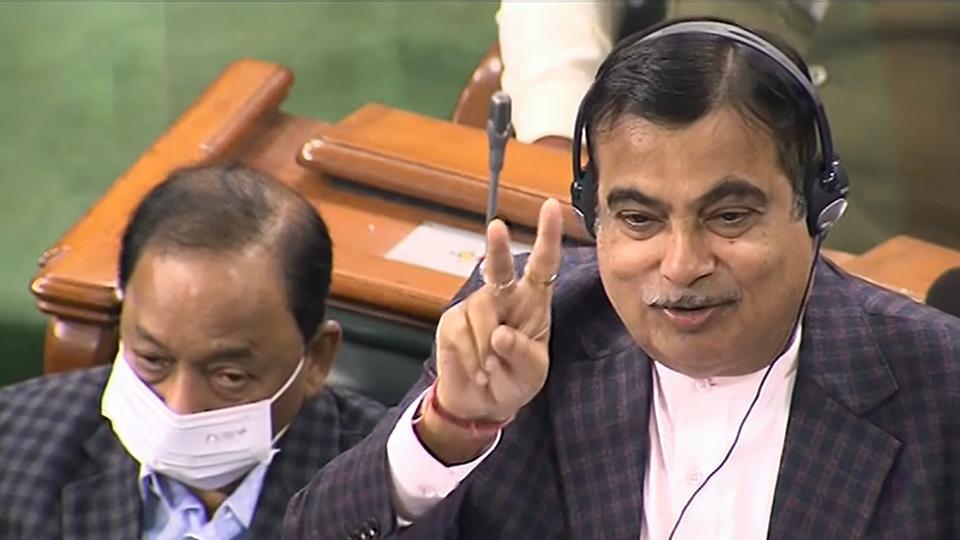
“Generally, such deaths occur due to pedestrians not following norms laid down for walking along roads or trying to cross roads during traffic. Accidents also occur due to over-speeding vehicles,” Union road transport and highways minister Nitin Gadkari told the Rajya Sabha on Wednesday, in a written reply to a question by Bharatiya Janata Party (BJP) MP from Uttar Pradesh, Brij Lal.
The ministry also placed on record that the government has, so far, not conducted any study to analyse the causes of pedestrian deaths in the country. “To prevent road accidents and save lives, the Motor Vehicle (Amendment) Act, 2019 passed by Parliament, focuses on road safety and includes, inter-alia, hike in penalties for traffic violations, electronic monitoring of the same, enhanced penalties for juvenile driving, computerisation/automation of vehicle fitness and driving, tests, recall of defective vehicles, streamlining the third-party insurance and payment of increased compensation for hit and run cases etc. The Amendment has strengthened the law to improve the road safety scenario and reduce loss of lives. However, no study on why pedestrian deaths happen is available or has been conducted,” the reply stated.
According to data provided by the Centre to the Rajya Sabha, a total of 23,483 pedestrian deaths due to road accidents were recorded in 2020. Despite the Covid-19 pandemic and subsequent lockdown, the number of pedestrian deaths last year saw a marginal dip from 2019, when 25,858 pedestrians were killed in road accidents. In 2018, as many as 22,656 pedestrian deaths were reported from across the country.
Overall, 131,714 people were killed in road accidents across the country in 2020 calendar year, down from 151,113 recorded in 2019, according to the government data.
Reacting sharply to the Centre’s reply on pedestrian deaths, Kamal Soi, member of the National Road Safety Council, said the government’s approach to urban and safe mobility was wrong.
“This is a ridiculous and absurd answer and I, despite being a member of the government of India’s road safety council, do not endorse this. We have not created the necessary infrastructure for pedestrians and still we have the audacity to blame them for their own deaths. It is the sole responsibility of all the agencies to create and ensure adequate infrastructure for safe pedestrian movement. The world is moving towards walking and cycling as a last-mile connectivity mode and here we have lawmakers having such a fundamentally wrong approach to policies,” Soi added.
Shreya Gadepalli, managing trustee at Urban Works Institute, said designing cities for people rather than cars could ensure that “streets are full of life, not deaths”.
“Road crashes have become so common that they hardly evoke any reaction in us anymore. There is disconnect in the way we design our streets and the way we want our drivers to behave. You may have often come across road signs that read: “speed thrills but kills”. But if we want people to drive slower, why do we design streets as racing tracks? Why do we have highways within cities that become barriers for people to cross? Why is an attempt to even slightly widen footpaths seen as an encroachment on space that “rightfully” belongs to motorists,” she added.
Piyush Tewari, founder & CEO of SaveLIFE Foundation, said almost 72,000 pedestrians have lost their lives on Indian roads in the last three years, which points towards a dangerous trend. “In a bid to make roads safer for pedestrians, states must urgently implement the Motor Vehicles Amendment Act, 2019 and in particular, Section 138(1A) of the MVAA 2019, which deals with pedestrian safety. Since pedestrians have the first right of way on roads, there must be mandatory walking infrastructure for pedestrians and this must be incorporated at the stage of road design,” Tewari added.


