
 E-Paper



PM Modi in J&K today: 10 points on key visit, 1st since scrapping of Article 370
This visit assumes significance as it is the first visit by the Prime Minister after the government revoked the J&K special status by abrogating Article 370 in 2019.

 Prefer HTon Google


In the first visit since the scrapping of Article 370, Prime Minister Narendra Modi will be in Jammu and Kashmir on Sunday to launch development projects worth over ₹20,000 crore. He will also address the representatives of gram sabhas (village bodies) across the country from an event organised to mark the National Panchayati Raj Day. Tight security is in place after the union territory saw two terror attacks in 48 hours.
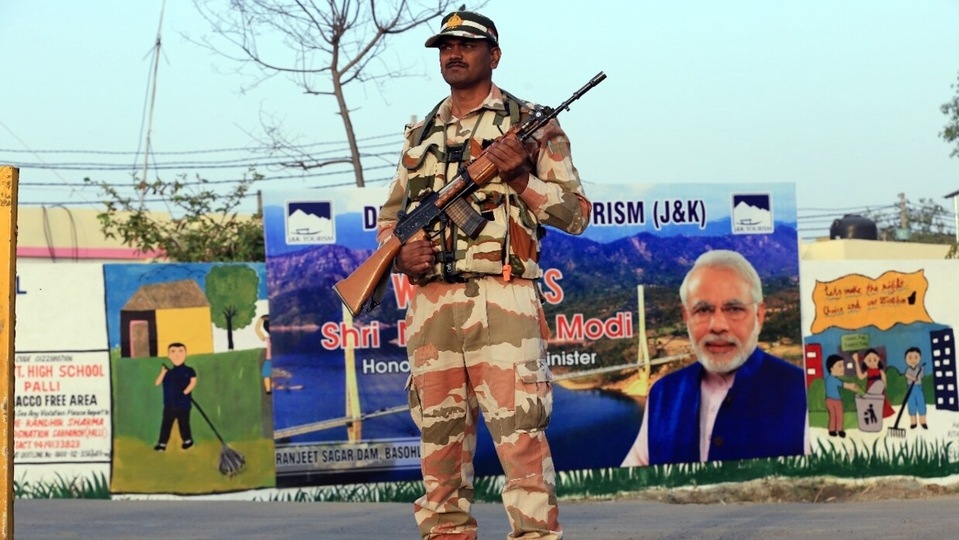
While two Jaish-e-Mohammed terrorists were gunned down in the Sunjwan area of Jammu after a bus with security personnel on board was attacked. The terrorists are believed to be either from Aghanistan or Pakistan. They were part of a "big conspiracy" to sabotage PM Modi's visit to the union territory, J&K's director general of police Dilbag Singh, said on Friday.
Also read | Ahead of PM Modi's J&K visit, blast heard 8 km from rally venue; probe on
Two terrorists were gunned down on Saturday in Kashmir’s Kulgam.
Here are the key points on the Prime Minister's J&K visit:
1) This visit assumes significance as it is the first visit by the Prime Minister after the government revoked the J&K special status by abrogating Article 370 in 2019.
2) In view of the recent encounters, the security in the union territory has been heightened ahead of the Prime Minister's arrival.
3) The date - April 24, 1993 - marks a defining moment in the history of decentralisation of power to the grassroots, with the institutionalization of Panchayati Raj, through the Constitution (73rd Amendment) Act, 1992 which came into force with effect from that day.
4) Panchayat Palli in Jammu has been selected for the Panchayati Raj Diwas event this year and an exhibition - showcasing latest innovations - will be put up enabling farmers, sarpanchs and village heads to improve their income and their produce.
5) In the statement, the Prime Minister's office (PMO) said the government has been focused on bringing about wide-ranging reforms to substantially improve governance and enhance ease of living for the people of the region at an unprecedented pace following the "constitutional reforms" of August 2019.
6) To encourage the rejuvenation of water bodies, PM Modi will launch a new initiative named Amrit Sarovar, aimed at developing and reviving 75 water bodies in each district of the country.
7) He will also inaugurate the Banihal Qazigund Road Tunnel, a key developmental project in J&K, built at a cost of over ₹3,100 crore. The tunnel features state-of-the-art twin tubes, exhaust system and several other features to make it an ‘all-weather’ transportation route.
8) The Qazigund tunnel is 8.45 Kilometres long. It reduces the road distance between Banihal in Jammu province and Qazigund in south Kashmir by 16 km, and cuts journey time by around one and a half hours.
9) The tunnel would help establish an all-weather connection between Jammu and Kashmir and bring the two regions closer.
10) Furthermore, the Prime Minister will also lay the foundation stone of three road packages of the Delhi-Amritsar-Katra Expressway. They are for the construction of four and six-lane access-controlled Delhi-Katra-Amritsar Expressway.
(With agency inputs)


