E-Paper



Strong and sensitive judiciary important in fulfilling India’s dream: PM Modi
Speaking about the “unlimited scope” of the use of technology in the justice delivery system, he said, today technology has become a powerful tool in promoting ease of living


Prime Minister Narendra Modi on Friday said that a strong and sensitive judiciary is important in fulfilling the dreams and aspirations of Indians in the 21st century. He was speaking at the concluding ceremony of Gauhati high court’s platinum jubilee celebrations.
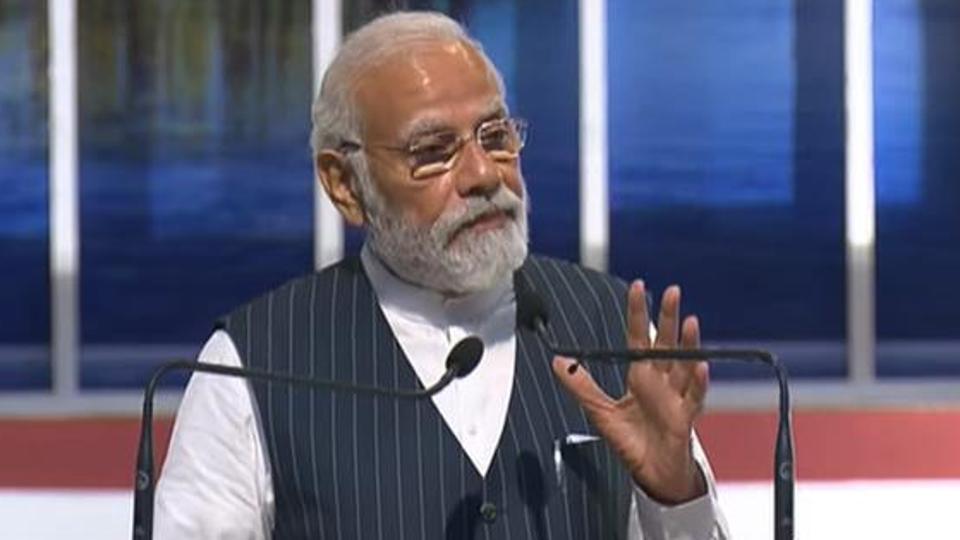
“In the 21st century, the dreams and aspirations of all Indians are unlimited. In fulfilling those dreams, as a pillar of democracy, the role of a strong and sensitive judiciary is important,” Modi said.
He added, “We need to have a vibrant, strong and modern legal system. It is the responsibility of the legislature, executive and judiciary in fulfilling the needs of aspirational India.”
Also Read: PM Modi inaugurates AIIMS Guwahati, three other medical colleges in Assam
The prime minister said that the Centre has scrapped nearly 2,000 laws and over 40,000 compliances continuing since the British era, which were no longer in use.
Speaking about the “unlimited scope” of the use of technology in the justice delivery system, he said, technology has become a powerful tool in promoting ease of living in today’s world.
“We are trying to make use of the full potential of technology in all possible fields like DBT (direct benefit transfer), Aadhar and Digital India Mission. These missions are playing the role of an important medium in delivering rights to the poor,” he said.
Modi stated that for a remote and hilly area like the Northeast, “the use of technology in the justice delivery system is even more important”.
“To improve efficiency and to make justice accessible, legal systems across the world have started making use of artificial intelligence (AI),” the PM said, adding, “Even we should use AI to make court procedures simpler for the common public and promote ease of justice.”
He added that the government is making efforts to write laws using a language which is easier for the people to understand, and a similar approach will also prove very beneficial in the Indian courts.
Earlier this month, Union minister of law and justice Kiren Rijiju expressed the central government’s commitment to focus on e-courts to deal with the high pendency of cases.
“This year, we have approved ₹ 7,000 crore in the budget for the e-courts project. I can firmly believe and say that this will transform the Indian judiciary in a true sense,” Rijiju had said.
The Gauhati high court was established in 1948, and it served as the common court for the seven north-eastern states until March 2013, when separate high courts for the state of Manipur, Meghalaya and Tripura were created.
At present, the Gauhati high court has its principal seat at Guwahati and three permanent benches in Kohima (Nagaland), Aizawl (Mizoram) and Itanagar (Arunachal Pradesh).
Prime Minister Modi is on a day-long trip to Assam. Earlier in the day, he inaugurated the All India Institute of Medical Sciences (AIIMS) in Guwahati and announced three other medical colleges in Assam during his one-day visit to the state on the occasion of ‘Rongali Bihu’.
He also laid the foundation stone of the Assam Advanced Health Care Innovation Institute (AAHII) at IIT-Guwahati, and launched a healthcare scheme to provide free medical treatment worth Rs. 5 lakh each year to 11 million beneficiaries.
In the evening, he will attend a Bihu dance performance by over 10,000 participants.