
 E-Paper



PM Narendra Modi's Russia visit: Ukraine war on agenda for talks with President Putin
During PM Modi's three-day visit to Moscow and Vienna, the key focus will be Ukraine war, green fuel and clean energy.

 Prefer HTon Google


New Delhi: Prime Minister Narendra Modi will have one-on-one private dinners with Russian President Vladimir Putin on July 8 and with Austrian Chancellor Karl Nehammer the next day to protect India’s energy security and secure clean and green technologies from Moscow and Vienna respectively. The last dinner cum private PM Modi had with President Putin in the Kremlin in 2015 extended into the early hours of the next morning and this time the Indian PM is being hosted at the private residence of the Russian President.
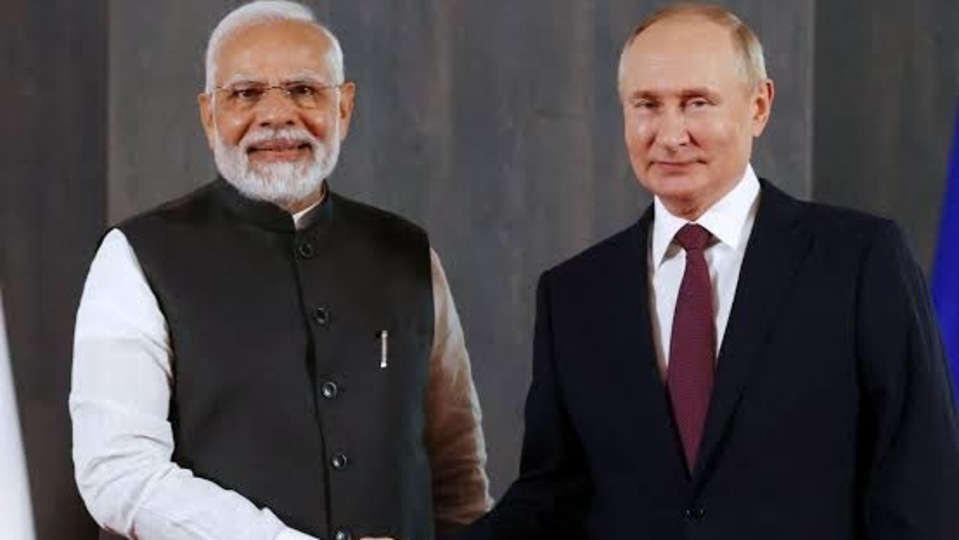
While PM Modi will be physically conferred the Order of St Andrew the Apostle the First, the highest state decoration by Russian Federation, the visit to Moscow assumes significance as India seeks to deepen as well as strengthen its energy ties with the Federation with Europe procuring energy supplies from West Asia at higher prices due to Ukraine war. India will also be looking at various routes including the Arctic route to evacuate energy from Russia as well as investing more money into the energy sector of the Federation.
However, the key discussion between the two leaders will be on the Ukraine war as the long drawn war continues to destabilize the global markets and security situation. Given that PM Modi has first-hand view of the G-7 leaders on the Ukraine war during the Italy summit last month, he will be able to impress upon President Putin the futility of carrying on a long drawn campaign and urge him to return to the negotiating table. PM Modi is one of the few global leaders who have an excellent personal equation with the Russian leader and both have mutual respect for each other.
While PM Modi will ask President Putin to put an end to recruitment of Indians to fight the war against Ukraine, he will also seek to deepen cooperation with Russia in the field of Space and Nuclear Energy. India is seeking to activate Kudankulam Reactors III and IV with the help of Russia in the next two years and begin work on Reactor V and VI for the 6000 MW plant.
India is also looking for Russian help in Gaganyaan space mission to send Indian astronauts into space and back apart from future establishment of a space station as well as landing on the moon.
After visiting the Rosatom exhibition, showcasing Russian nuclear technology, in Moscow with President Putin, PM Modi will fly to Vienna to have a private dialogue with the Austrian Chancellor on July 9 evening. Despite PM Modi being the first Indian PM to visit Vienna after 1983, Austrian has a deep connection with India historically with Indologist Joseph Tieffenhaler 1740 travelogue (cartographer of Ganges) quoted in the Supreme Court judgement in the Ayodhya Ramjanambhoomi case. Tieffenhaler was a Jesuit missionary, reportedly proficient in Arabic, Persian and Sanskrit, who travels between 1743 to 1785 were recorded and his visit to Ayodhya was made available in the course of trial in French. The English translation was provided by the Government in pursuance of the order of the High Court.
With Austria part of EU and non-NATO country, the Ukraine war will be the centerpiece of dialogue between the two leaders as both countries can play a role in putting an end to the conflict, which has serious economic ramifications on the Global South. While Austrian companies are playing a huge role in Indian infrastructure in tunneling through frozen and glaciated mountains in the north, Vienna is also a leader in clean and green technologies like conversion of used cooking oil into green fuel. If the focus of the Russian visit is energy and the Ukraine war, the trip to Vienna is all about high technology and the role of centrist powers in dispute resolution.


