
 E-Paper



PM Oli doesn’t budge an inch in Nepal standoff, party stares at a possible split
Chinese ambassador Hou Yanqi has been meeting Nepal communist party leaders to secure PM Oli and stop the party from splitting

 Prefer HTon Google


A meeting of the Nepal Communist Party’s standing committee scheduled to meet on Wednesday was deferred at the last minute, dimming hopes that Prime Minister KP Sharma Oli and his rival faction led by Pushpa Kamal Dahal might be able to reconcile their differences soon. Pushpa Kamal Dahal, a former prime minister better known by his nom de guerre Prachanda, wants PM Oli to step down, insisting that his continuation is detrimental to Nepal’s interests.
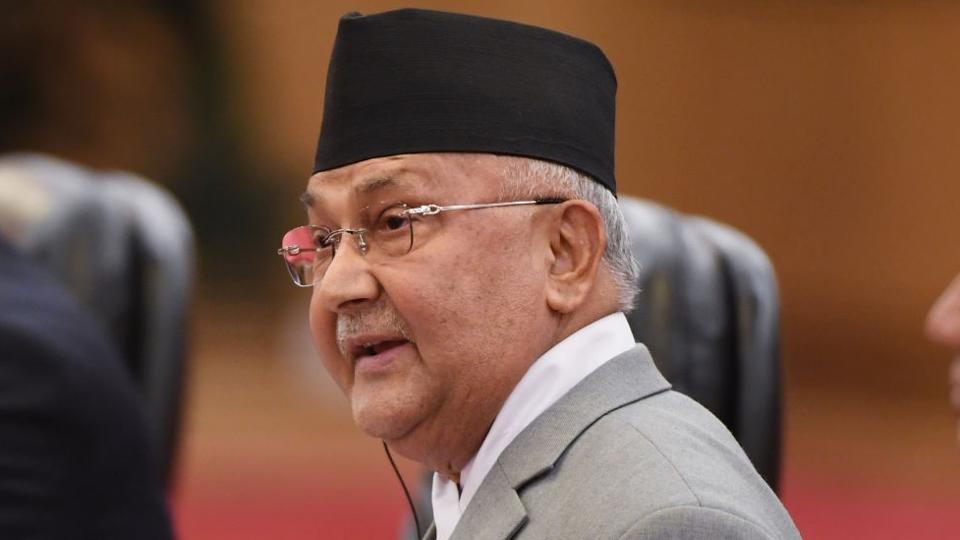
PM Oli and Prachanda, who are co-chairs of the communist party, met on Tuesday afternoon to find some meeting ground. PM Oli, who has dug in his heels, refused to give up either his party post or the PM office.
The only forward movement at the end of the two-hour-long meeting was that the two leaders agreed to go ahead with the standing committee meeting on Wednesday. This was interpreted to imply that PM Oli was ready to face the 44-member standing committee, possibly with a resolution. Nearly 30 of them want him to go.
People familiar with the developments, however, told Hindustan Times that PM Oli is determined to hold on to power and has warned that if he is pushed to the wall, he could split the Nepal Communist Party formed in 2018 by unifying Nepal’s two leftist parties, Communist Party of Nepal (Unified Marxist–Leninist) and Communist Party of Nepal (Maoist Centre).
That is one eventuality China, which has backed PM Oli, wants to avoid. Over the last week or so, Chinese ambassador Hou Yanqi has held one-on-one meetings with NCP leaders Madhav Kumar Nepal and Jhala Nath Khanal - two former prime ministers who are backing Prachanda - apart from President Bidhya Devi Bhandari to figure a way out to keep PM Oli in the saddle, and the party united.
The meetings have sparked a huge row in Nepal seen as interference by China in its internal affairs. The Chinese embassy was upfront about its interest in the political standoff in Nepal. This week, the embassy confirmed envoy Hou Yanqi’s meetings with political leaders and said China wanted the Nepal Communist Party leaders to resolve their differences and stay united.
The buzz in Nepal’s political circles is that Beijing might not be averse to letting PM Oli go if it does not end up splitting the country’s communist party.
But the wily Oli, a Kathmandu watcher said, is determined to brazen it out. Oli, who started his second term as prime minister in February 2018, has managed to stay in power for over 850 days, a record of sorts in a country that has been politically unstable for years. The last prime minister to have had a longer tenure was 25 years ago; Girija Prasad Koirala of the Nepali Congress who was PM from May 1991 to November 1994.
NCP leaders who back PM Oli despite the criticism about his governance record, said his rivals were making too much of the standing committee meetings. Any adverse resolution of the standing committee would have to be vetted by the 400-member central committee of the party. “But PM Oli (who is the co-chairman) would need to sign off on the resolution. If he doesn’t, it doesn’t really matter what the numbers in the standing committee are,” he said.


