
 E-Paper



Pranab Mukherjee, India’s former president who never became PM
Valued for his ability to build consensus by exerting his charm to bring together disparate groups, Mukherjee never won the top job, despite decades of loyalty to the Congress party.

 Prefer HTon Google


During five decades in Indian politics, Pranab Mukherjee, who died on Monday after a lung infection, led some of the nation’s most powerful ministries and eventually became its president, but the ultimate prize still eluded him: the prime ministership.
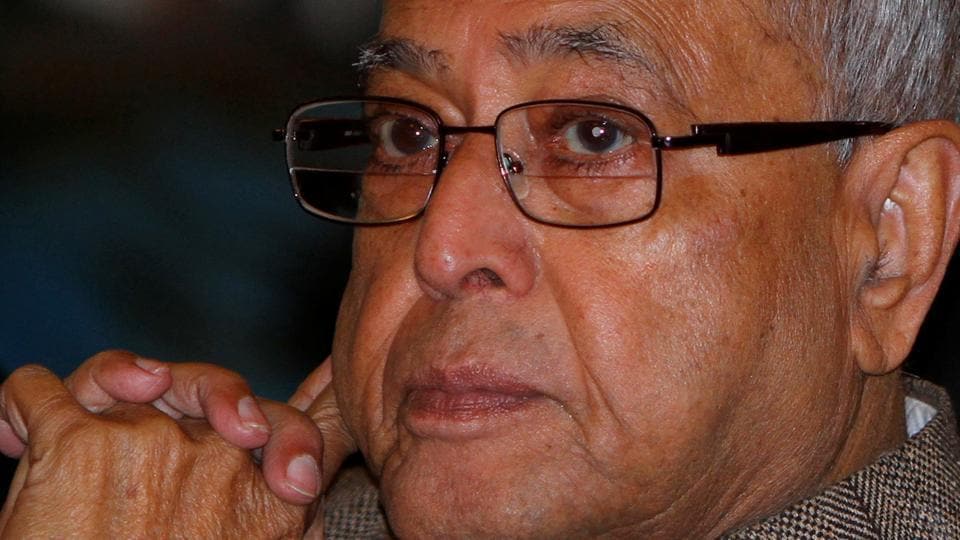
Mukherjee tested positive for Covid-19 on August 10 and had been in hospital since. He was 84.
Valued for his ability to build consensus by exerting his charm to bring together disparate groups, Mukherjee never won the top job, despite decades of loyalty to the Congress party.
The former college teacher and journalist lacked a grassroots political base, but held more than a dozen federal portfolios between 1973 and 2012, ranging from commerce and finance to defence and foreign affairs.
But he could also raise hackles, as when finance minister in 2012, he demanded a $2-billion payment from Vodafone, then India’s largest overseas corporate investor, as part of a retrospective tax on long-concluded corporate deals.
Mukherjee entered parliament in 1969, following his father into the Congress party led by Indira Gandhi, just as she steered the country on a sharp turn towards socialism.
He rose under Gandhi’s mentorship, only to be sidelined by her son, Rajiv, after elections in 1984.
But Mukherjee managed to regain his proximity to the Congress leadership and the Gandhi family, becoming one of India’s most influential politicians during the 1990s and 2000s, by building a deep network of inter-party relationships.
“Everybody realised he was so clever that they would rather have him as a number two than a number one,” said Sanjaya Baru, a former adviser to Manmohan Singh, the architect of India’s financial reforms who beat Mukherjee to the top job in 2004.
“He had a tremendous role on policies, right from the 1980s.”
Mukherjee’s reward then should have been a stint as prime minister, by his own estimation as well as that of some others, but he was passed over by Rajiv’s Italian-born widow, Sonia, who gave it instead to Singh, an Oxbridge-trained economist.
In 2012, Mukherjee resigned from parliament to take the largely figurehead role of head of state. He was sworn in as India’s 13th president, with cross-party support that underlined his wide acceptability, an attribute rare in Indian politics.
A corruption scandal two years into his presidency led to a defeat in general elections for Congress, which has ruled India for most of its independent history, and Mukherjee had to swear in BJP’s Narendra Modi as prime minister.
Born on Dec. 11, 1935 in the village of Mirati, in the eastern state of West Bengal, Mukherjee studied history, political science and law.
“My passion has been the service of the people of India,” Mukherjee said in a speech summing up 50 years in public life when he left the office of president in 2017.


