
 E-Paper



‘Proof of Balakot success conclusive,’ says former IAF chief BS Dhanoa
The former IAF chief, under whose leadership the force carried out the attack and who monitored the pre-dawn raid from his house, said military victory is measured by whether you have achieved the stated political objective, which was successfully done in the Balakot operation.

 Prefer HTon Google


Former Indian Air Force (IAF) chief BS Dhanoa has said there was conclusive proof that the 2019 Balakot air strike on a Jaish-e-Mohammed camp was a military success, and warned that the Indian government could hit cross-border terrorists harder if they launched a strike similar to the one in Pulwama on February 14, 2019.
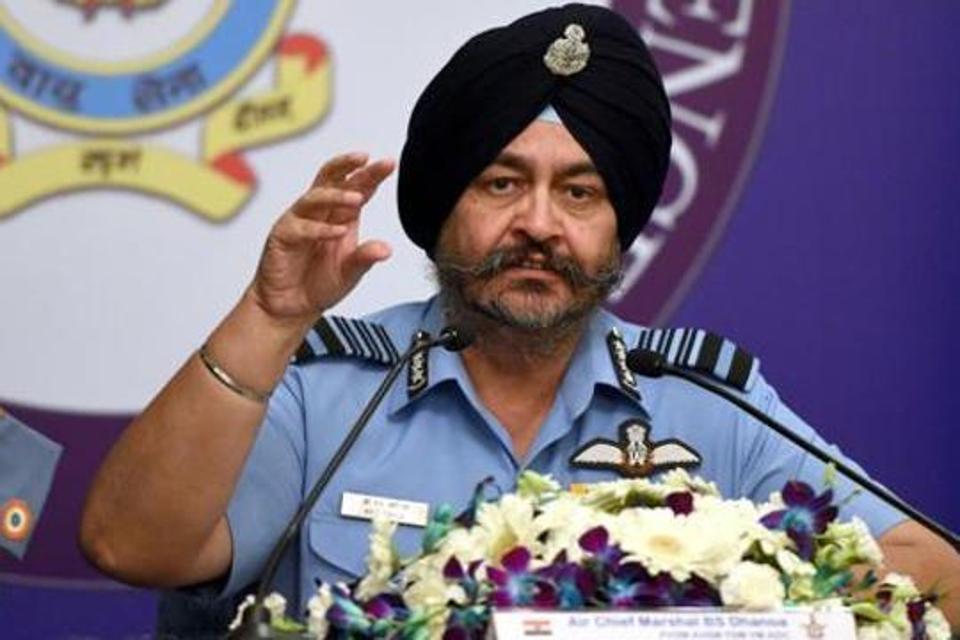
Speaking to Hindustan Times almost a year after IAF’s February 26 strike in Pakistani territory, Air Chief Marshal (retd) Dhanoa said: “I think the government will hit them again. This time harder, and take out the buildings also so that there is no doubt in anyone mind.”
He was responding to a question on what the Indian response could be to a possible Pulwama-like attack.
The former IAF chief, under whose leadership the force carried out the attack and who monitored the pre-dawn raid from his house, said military victory is measured by whether you have achieved the stated political objective, which was successfully done in the Balakot operation.
“We hit the target with five stand-off weapons. The ‘target hit’ information was delayed as weapons for video recording the kill failed, and the satellite pass at 8.30am could not pick up much due to clouds. The first confirmation came through synthetic aperture camera, showing penetration in the roof of Balakot buildings. We hit three buildings and left one deliberately. The weapon is designed in such a way that building survives but the occupants don’t,” he said.
On the future of IAF’s response capabilities, he said: “With the induction of the S-400 missile system and the Rafales, we will be in position to effect a behavioural change within the Pakistan establishment. If we had these two platforms or only Rafale with us on February 27, and we had shot down four or five of their aircrafts, the behavioural change would have taken place immediately.”


