
 E-Paper



Rajasthan elections: Multiple civic issues plague Gehlot’s stronghold
The constituency with 212 polling stations comprises around 254,572 voters, out of which 129,869 are men and 124,703 are women

 Prefer HTon Google


Located in the heart of Jodhpur in Rajasthan, Sardarpura was named after Maharaja Sardar Singh who built a 300-year-old Ghanta Ghar and Sardar Market near the six-century old Mehrangarh fort.
One of the important seats in the upcoming Rajasthan assembly polls, the Sardarpura constituency has remained in the limelight in the last 25 years, since chief minister Ashok Gehlot won from the area consecutively since 1998.
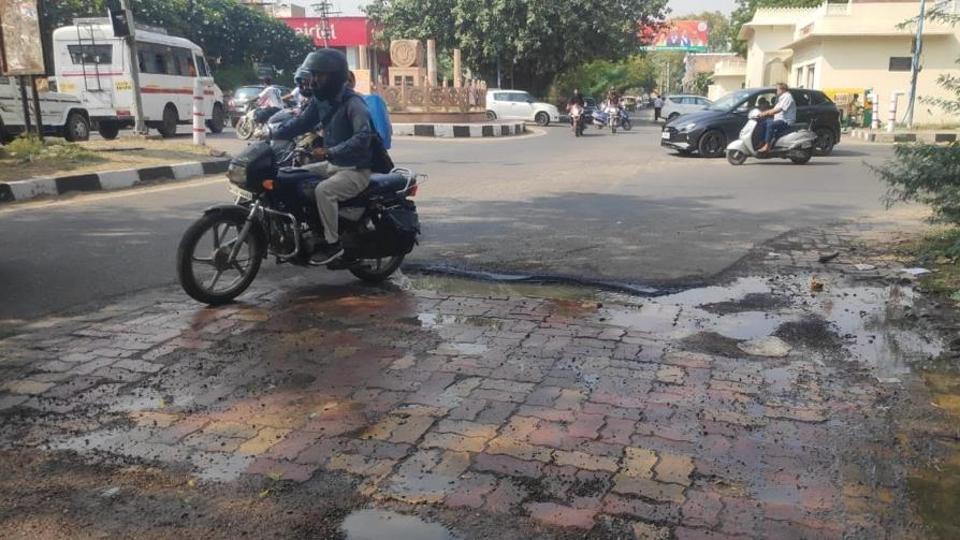
Despite being politically significant, the constituency has been marred by several civic issues, including damaged roads, continued waterlogging, lack of rainwater drainage shortage of drinking water, and several public health issues. The constituency with 212 polling stations comprises around 254,572 voters, out of which 129,869 are men and 124,703 are women. Around 8,295 first-voters are also all set to cast their ballot in the upcoming election due on November 25.
The incumbent MLA, CM Gehlot, first won the seat in a by-poll in 1998 when Congress appointed him as the chief minister following the party’s victory on 153 out of 200 constituencies in the assembly election under his state presidentship. The Congress has won from the seat eight times compared to the Bharatiya Janata Party’s two wins. According to a political expert, Gehlot’s steady rise in Sardarpura took place at a time when the BJP started building a stronghold in the area with two consecutive victories bagged by Rajya Sabha MP Rajendra Gehlot in 1990 and 1993.
Post 1998, the other parties, including BJP started losing popularity in Sardarpura “failing to beat the growing Gehlot-factor”, said the expert. CM Gehlot’s influence was so strong that the BJP’s constant change in their candidate faces also seemed to fail, said the expert, on the condition of anonymity.
While the two-time BJP Sardarpura MLA Rajendra Gehlot lost to CM at a margin of 15% votes in 2008, the party’s candidate in last two elections Sambhu Singh Khetsar was also defeated at 13% votes in 2013, and over 30% in the last election in 2018, according to the data from election commission.
Despite being such a major constituency, the multiple civic issues, including bad condition of roads, lack of rainwater drainage, and threat to public health have been areas of concern.
Talking about the civic issues, Sardarpura resident Shiv Singh Rathore said, “The damaged roads and clogged sewage causes severe waterlogging in major parts of the area in every monsoon. There are no concrete efforts to permanently solve the problem of rising groundwater levels. The administration has so far paid little attention to these issues.”
Another resident of the area, Gopal Singh, also recalled how several colonies in Sardarpura were submerged due to the overflowing sewage water during monsoon in 2021 following which the army had to be called in for a rescue operation. “People still have the same fear as no concrete action has been taken to resolve the issue permanently,” he added.
Meanwhile, Rathore also expressed concern over the public health condition in Sardarpura as “in some areas ... vegetables are being grown using sewage water, which is a big threat to public health.”
Another resident Shyam Lal seconded the same, saying: “To ensure maximum yields, many people use contaminated water for irrigation putting the public health at risk. Despite the practice being going on for a long-time practice, the government has failed to take necessary action.”
BJP leader Khetsar, meanwhile, alleged: “The chief minister has insisted on getting development work done only in a few certain caste-dominated areas. Rest of the areas have been left in a dilapidated condition...this can be seen when the rain water floods the colonies and are not drained for months.”
Sardarpura is considered mostly a Mali-dominated area followed by many different communities belonging to Other Backward Categories. The area’s local population also comprises a large proportion of minority communities, Jat, Rajput, Mahajan, and Scheduled Caste.
State livestock development board chairman and Congress leader Rajendra Singh Solanki who also contested the poll from Sardarpura once in 1993, however, refuted the allegations, saying the chief minister has worked for “overall development”.
Solanki said, “The chief minister has implemented many schemes for the welfare and development of all castes. Mandore Garden has been rejuvenated, while Surpura Dam has been developed as a tourist destination. Many new higher educational institutions have also been established in the area. The CM’s vision has not only been limited to Sardarpura, but he has focused on the overall development of Jodhpur city.”
Political observer Dinesh Ramawat said, “Sardarpura is considered a safe seat for Congress and especially Ashok Gehlot because the caste equation here is in his favour. Along with the majority of Mali votes, Congress also gets the advantage of Gehlot being in the race for chief minister’s post in every election”.


