
 E-Paper



Rate hike may hit housing demand
The Monetary Policy Committee’s (MPC) decision to hike the policy rate by another 50 basis points (one basis point is one hundredth of a percentage point) on September 30 has taken the rate to 5.9%. In the current rate hike cycle the policy rate has increased by 1.9 percentage points from the 4% level in April . Since this is the rate at which the central bank lends to banks, it will have a cascading effect, including an increase mortgage payments. Will this hurt demand due to higher debt servicing costs?


The Monetary Policy Committee’s (MPC) decision to hike the policy rate by another 50 basis points (one basis point is one hundredth of a percentage point) on September 30 has taken the rate to 5.9%. In the current rate hike cycle the policy rate has increased by 1.9 percentage points from the 4% level in April . Since this is the rate at which the central bank lends to banks, it will have a cascading effect, including an increase mortgage payments. Will this hurt demand due to higher debt servicing costs?
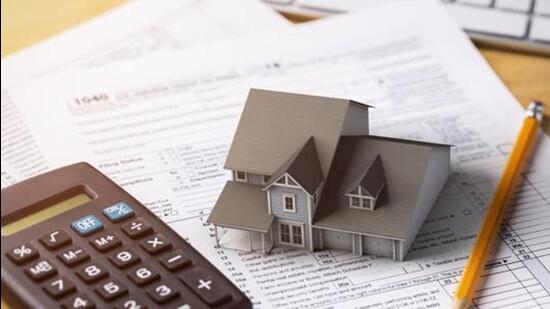
For instance, a back of the envelope calculation shows that on a ₹20 lakh (outstanding) loan for 15 years (remaining) period, the equated monthly instalment, or EMI, would increase by a little over ₹2,000 when the interest rate goes up from 7% (a rate at which some banks give out home loans; others charge higher rates) to 8.9%.
To be sure, not all banks insist on increasing the EMI and simply extend the tenure. In the example dealt with above, this would mean an increase in the loan tenure by five years.
For some mortgage payments, there might have been a full transmission of the increased policy rates. In 2019, RBI implemented external benchmark based lending rates (EBLR), which makes interest rates tethered to benchmark policy rates such as the policy rate. “The implementation of external benchmark-based lending rates (EBLR) scheme in 2019 has greatly enhanced the pass-through of policy impulses to retail interest rates in the economy. In this segment, policy rate transmission has been almost instantaneous, with RBI noting that major banks have adjusted their EBLRs by a full 140bp during the period,” an MPC preview research note dated September 23 by Rahul Bajoria, MD & Head of EM Asia (ex-China) Economics, Barclays , noted. Simply put, it means that some pre-existing mortgage payments might have seen a concomitant increase in debt servicing costs with the rise in the policy rate.
HDFC, for instance, took up its home loan rates by 50 basis points on Friday, a few hours after the RBI announcement.
This does not apply to fixed rate mortgages (which are usually more expensive).
Vehicle loans will also become costlier although some do have a built-in margin at the time of borrowing, which means lending rates on pre-existing loans might not increase, although new loans might become more expensive. Industry executives see this as a source of potential headwinds to new housing demand.
“A rise in home loan rates will further impact affordability across the markets. As per Knight Frank, the affordability index will deteriorate by another 2%. This might slowdown home buying decision for a short to medium term”, Shishir Baijal, Chairman & Managing Director, Knight Frank India, a real estate consultant firm, said in a statement. “Any further hike in interest rate compounded with commodity inflation will act as a market dampener. The postpone consumption (sic) will hurt the housing market which is currently on the upward growth curve,” Niranjan Hiranandani, managing director, Hiranandani Group, said in a statement.
To be sure, real estate companies also recognised the potential benefits of central bank’s actions to curb inflation in the medium to long term.
“We welcome RBI’s prudent decision to hike rates, as it will help keeping the rising inflation in check. The recent correction in global commodity prices if sustained may ease cost pressures in coming months. This will eventually benefit the developers and the advantage will be passed on the homebuyers. Going forward India’s real estate will witness more high -ticket purchases with consistent demand from wealthy buyers. Today inflation is flying around 7% and we believe the government is doing whatever it takes to cool inflation,” Ram Raheja, managing director, S Raheja Realty, said in a statement.


