
 E-Paper



Rise in student numbers may pose infra challenges: Experts after Supreme Court's EWS verdict
Institutions across the country started enrolling students and hiring faculty members under the EWS quota in 2019.

 Prefer HTon Google


Educationists and officials at several higher education institutions (HEI) on Monday said that the Supreme Court’s judgment on 10% reservation for people from economically weaker sections (EWS) in the general category will not impact their implementation of the quota, which has been in place since 2019, but raised concerns over future infrastructure challenges with the total number of students rising as a result of the policy.
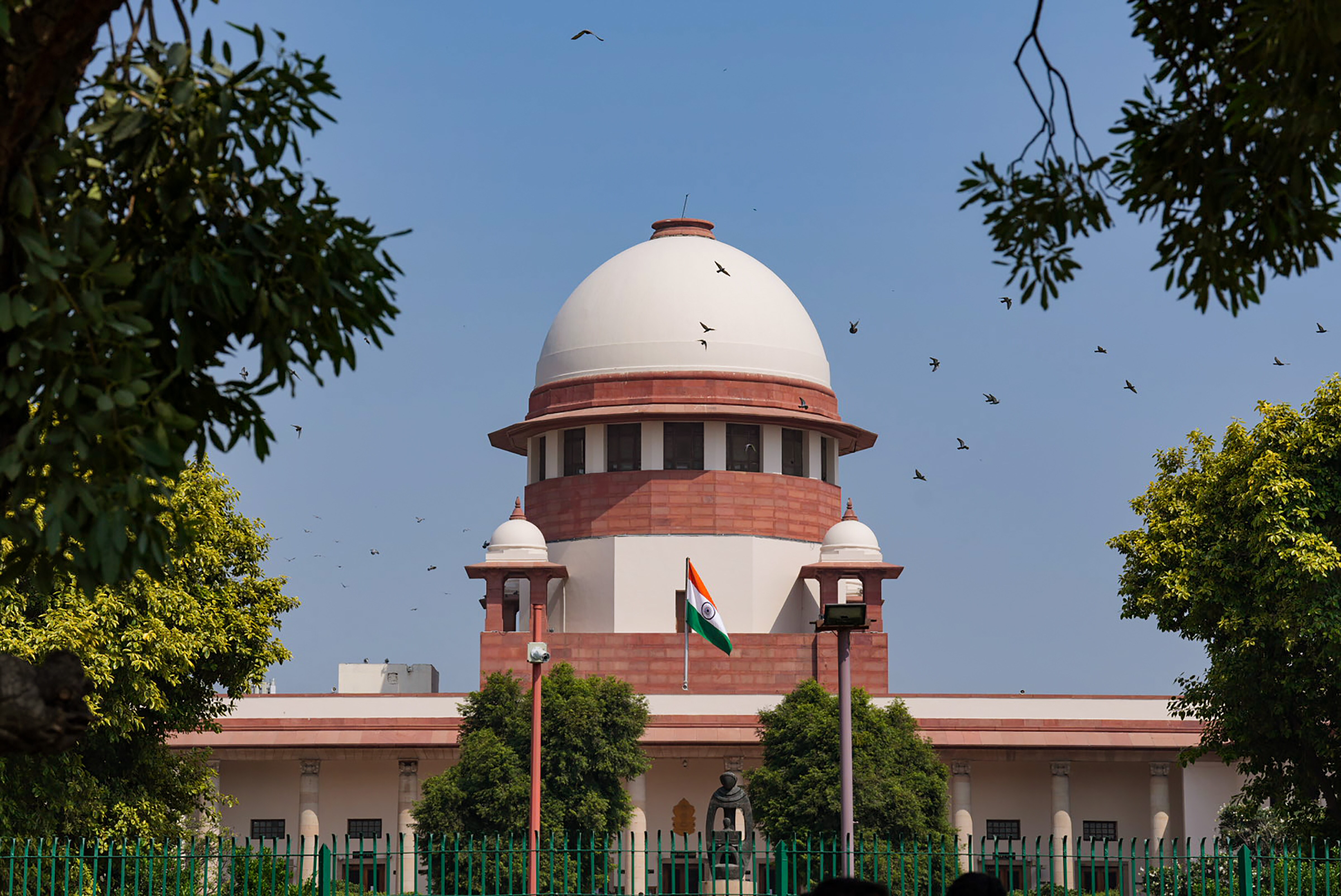
In January 2019, the National Democratic Alliance government passed a legislation seeking to grant 10% reservation in jobs and higher education to members of EWS among the general category.
The ministry of social justice and empowerment notified the Constitution (103rd Amendment) Act, 2019, via a gazette notification on January 14, 2019. The Act amends Articles 15 and 16 of the Constitution, by adding a clause which allows states to make “special provision for the advancement of any economically weaker sections of citizens”.
These “special provisions” would relate to their admission to educational institutions, including private educational institutions, whether aided or unaided by the State, other than minority educational institutions.
To accommodate 10% reservation, the Centre approved the creation of 214,766 additional seats in central educational institutions so that respective quotas for other categories are not affected, and also earmarked a budget of ₹4,315 crore for implementation.
Institutions across the country started enrolling students and hiring faculty members under the quota in 2019.
On Monday, after a Constitution bench of the Supreme Court upheld the central law for 10% reservation benefits, officials at several HEIs said for them it will be “business as usual”.
IIT-Delhi director Rangan Banerjee said that the institute is already enrolling students under the quota. “There won’t be any change in the way we are implementing the EWS quota. But we should understand that augmenting the infrastructure to accommodate more students takes time. We are trying to enhance the number of rooms in hostels and departments but it will take some time,” he said.
Officials at IIT-Bombay seconded Banerjee’s statement. “ IIT-Bombay has fully implemented the quota. However, the institute is also witnessing infrastructure challenges,” said a senior official at the institute, requesting anonymity.
At Delhi University (DU), officials said that the challenges of accommodating additional students with limited infrastructure will be felt this year onwards. Manoj Sinha, principal of DU’s Aryabhatta College, said, “If the court had scrapped the quota, it would have affected us. Otherwise, it is just a confirmation to whatever we are already doing.”
Sinha said that, in 2019, not many students were enrolled in the university under the quota as it was just implemented. “Many people were not even aware of its existence. However, the number of students enrolling under the 10% EWS quota increased in 2020 and 2021. We did not witness any challenges in these years because the colleges were shut in view of the pandemic. So, any impact of the implementation will be felt from this year onwards. We will definitely require more infrastructure and resources,” he said.
In 2021, DU enrolled more than 5,000 students under the 10% EWS quota across its colleges.
SK Upadhyaya, dean of admissions at Banaras Hindu University (BHU), said that the university has already introduced the 10% EWS quota at both undergraduate and postgraduate levels. “We did feel some issues in terms of laboratories and classrooms in 2019, and now that the students have returned to the campus after two years we will have to further strengthen our infrastructure,” he said.
Meanwhile, officials at the ministry of education said that all the HEIs are being provided all required support to enhance their capacities.
“The Centre has been releasing funds for EWS expansion whenever a demand is raised by HEIs. We will help institutes in every possible manner,” said a senior official at the ministry. DU Registrar Vikas Gupta said that the University Grants Commission (UGC), from time to time, releases the necessary funds for the expansion. “We have also asked all our colleges to provide details about their requirements,” he said.


