
 E-Paper



Why did India refuse to sign SCO joint statement? Jaishankar reveals
The SCO was formed to fight terrorism, but one country wanted no reference to it in the outcome document, said EAM S Jaishankar.

 Prefer HTon Google


External Affairs Minister S Jaishankar on Friday supported Defence Minister Rajnath Singh's refusal to sign the Shanghai Cooperation Organisation (SCO) joint statement.
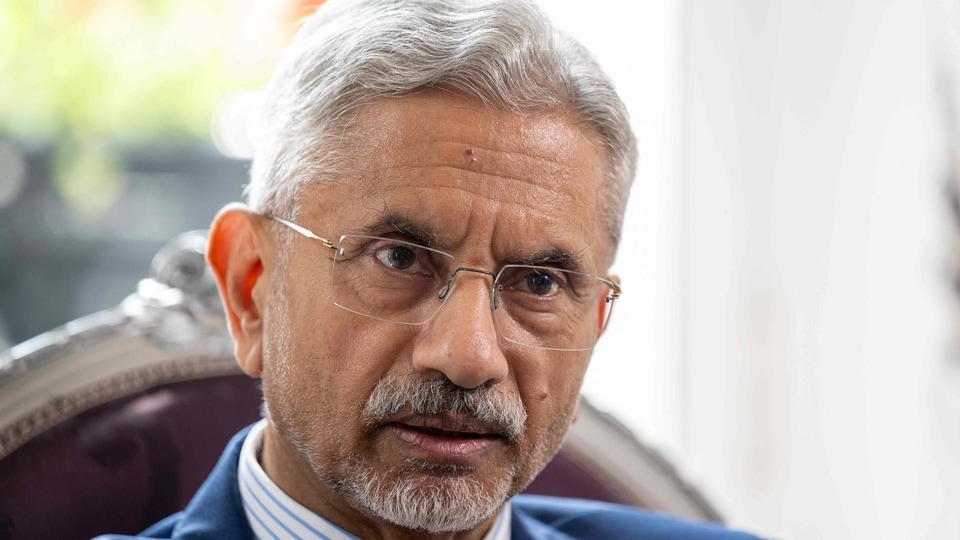
Explaining the rationale behind the move, Jaishankar said “one country” part of the SCO wanted no mention to terrorism in the joint statement, even when the organisation was formed with the purpose to fight terrorism.
"When the main purpose of the organisation is to fight terrorism, and you are not allowing a reference to that, he (Rajnath Singh) expressed his unwillingness to accept…" Jaishankar was quoted by news agency ANI.
While Jaishankar did not name the country that did not want a reference to terrorism in the outcome statement, he said “you can guess which one”, in a veiled jibe at Pakistan.
Besides India, the SCO member countries are Kazakhstan, China, Kyrgyzstan, Pakistan, Russia, Tajikistan, Uzbekistan, Iran and Belarus. India became a member of the SCO in 2017 and assumed the rotating Chairmanship in 2023.
“SCO runs with unanimity. So Rajnath ji clearly said that if there is no mention of terrorism in the statement, we will not sign it,” Jaishankar added.
Rajnath Singh who is visiting Qingdao in China, refused to sign the joint statement on Thursday, citing its failure to address terrorism-related concerns, specifically the April 22 Pahalgam terror attack that killed 26 people, mostly tourists.
Even as the joint statement omitted the Pahalgam attack mention, it referenced the Jaffar Express hijacking in Pakistan by the Balochistan Liberation Army on March 11.
With Rajnath Singh's move, the SCO defence ministers’ meeting could not issue a joint communique.
According to news agency PTI report, Pakistan's push to have the Balochistan incident included in the communique was the country's attempt to place blame on India.
In China, Rajnath Singh called for the "perpetrators, organisers, financiers and sponsors" of terrorism to be held accountable, also jabbed Pakistan for backing terrorist groups.
"Some countries use cross-border terrorism as an instrument of policy and provide shelter to terrorists. There should be no place for such double standards. The SCO should not hesitate to criticise such nations," Rajnath Singh said at the conclave in Qingdao.
Pakistan Defence Minister Khawaja Asif and Chinese Defence Minister Dong Jun were among those present.
Rajnath Singh also heaped praise on India's Operation Sindoor, the military operation targeting terror camps in Pakistan and Pakistan-occupied Kashmir, launched in response to the Pahalgam terror attack.
"The pattern of Pahalgam attack matches with LeT's previous terror attacks in India. India's zero tolerance for terrorism was demonstrated through its actions," he said.
Not only did the draft SCO statement not mention the Pahalgam terror attack, but also did not talk about India's tough anti-terrorism stance, PTI further reported on Thursday.


