
 E-Paper



SC junks Justice Varma’s plea against in-house inquiry, CJI’s recommendation
A bench of Justices Dipankar Datta and AG Masih affirmed the legality and constitutional validity of the inquiry mechanism.


The Supreme Court on Thursday dismissed the petition filed by Justice Yashwant Varma challenging the legality and findings of an in-house judicial inquiry that affirmed “strong inferential evidence” of his involvement in the discovery of sacks of charred currency at his official residence in Delhi this year.
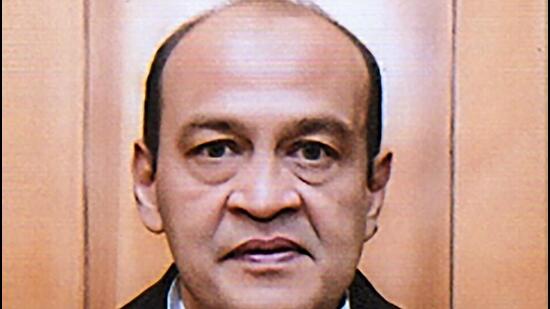
Delivering the judgment, a bench of Justices Dipankar Datta and AG Masih affirmed the legality and constitutional validity of the inquiry mechanism, holding that it did not violate fundamental rights or constitutional provisions. “With these observations, we have dismissed the petition,” Justice Datta said in court.
Also Read | It’s CJI’s duty to act, Justice Varma told
The ruling came days after the court had reserved its verdict, having heard extensive arguments from senior advocates Kapil Sibal and Mukul Rohatgi for Justice Varma.
In its ruling, the apex court framed six legal and constitutional questions and answered all against Justice Varma. While noting that his conduct “did not inspire confidence,” the bench said, even as it proceeded to examine the matter due to the important legal issues raised.
Also Read | Your conduct doesn't inspire confidence; why did you appear before panel: SC to Justice Varma
The court held that the in-house inquiry mechanism has legal backing and has been consistently upheld in earlier Supreme Court judgments. It also rejected Justice Varma’s contention that such inquiries create a parallel mechanism outside Articles 124 and 217 of the Constitution, which lay down the procedure for the removal of judges.
The bench ruled that the process followed did not infringe on Justice Varma’s constitutional or fundamental rights. Except for the release of a video showing the charred cash, which the court noted did not impact the outcome, the then Chief Justice of India (CJI), Sanjiv Khanna, and the committee “scrupulously” followed the laid-down procedure.
Also Read | 'Did you take chance…?': SC to Justice Yashwant Varma on his plea against probe into cash at his home
The court rejected the argument that the CJI’s May 8 recommendation to the President and the Prime Minister for Justice Varma’s removal was unconstitutional or made without affording him a hearing. “The in-house procedure does not contemplate a hearing before the CJI or the collegium,” the bench said.
The court also dismissed a related plea filed by advocate Mathews Nedumpara seeking registration of an FIR into the matter, saying he had placed incorrect facts before the court.
Earlier, while reserving its verdict on July 30, the court defended the role of the CJI in safeguarding institutional integrity, saying the top judge of the country is “not a mere post office” but a constitutional functionary empowered to take proactive measures.
It rejected Justice Varma’s contention that the in-house committee’s recommendation for removal overstepped its constitutional mandate. “The recommendation for removal has to go. It is more than persuasive. When the CJI recommends removal, it virtually amounts to a death knell for a judge,” Sibal argued. But the court had then said the ultimate decision rests with Parliament, which is not bound by the CJI’s recommendation.
The bench, during the July 30 hearing, also pointed out that the Judges’ Protection Act allows for non-punitive steps to be taken by judicial authorities in the interest of the institution, adding that the term “otherwise” in the law gave the court and the CJI a broad mandate to preserve judicial integrity.
Justice Varma, a former judge of the Delhi high court, came under scrutiny in March this year after sacks of charred currency were recovered from his official residence following a fire. He was stripped of judicial work and repatriated to his parent high court at Allahabad soon after.
The CJI initiated an in-house inquiry, which concluded with a finding of “strong inferential evidence” linking Varma to the incident. The May 3 report was forwarded by then CJI Khanna to the President and Prime Minister, triggering Varma’s legal challenge.
While Justice Varma’s legal team argued that principles of natural justice were violated, including denial of cross-examination and personal hearing before the CJI, the court maintained that the in-house mechanism is limited in scope and not a full-fledged trial, with the final decision on removal resting with Parliament.
The judgment now clears the way for potential parliamentary proceedings, which began with 145 Lok Sabha MPs and 63 Rajya Sabha MPs submitting notices in Parliament for his removal on July 21, the opening day of the monsoon session.
Earlier, the three-member in-house panel, comprising then high court chief justices Sheel Nagu, GS Sandhawalia, and Justice Anu Sivaraman, concluded its findings on May 3. Though it found no direct evidence linking Justice Varma to the charred currency, the report stated that his conduct “belied the trust” reposed in a constitutional judge and warranted impeachment proceedings.
Varma has denied all wrongdoing, terming the case a conspiracy, and in a letter to CJI Khanna on May 6, rejected the latter’s suggestion to resign or opt for voluntary retirement.


