
 E-Paper



SC quashes culpable homicide charges slapped on doctor over phone prescription
The Supreme Court said that the doctor may be held accountable for negligence but not under the graver Section 304 Part I of IPC (culpable homicide not amounting to murder)

 Prefer HTon Google


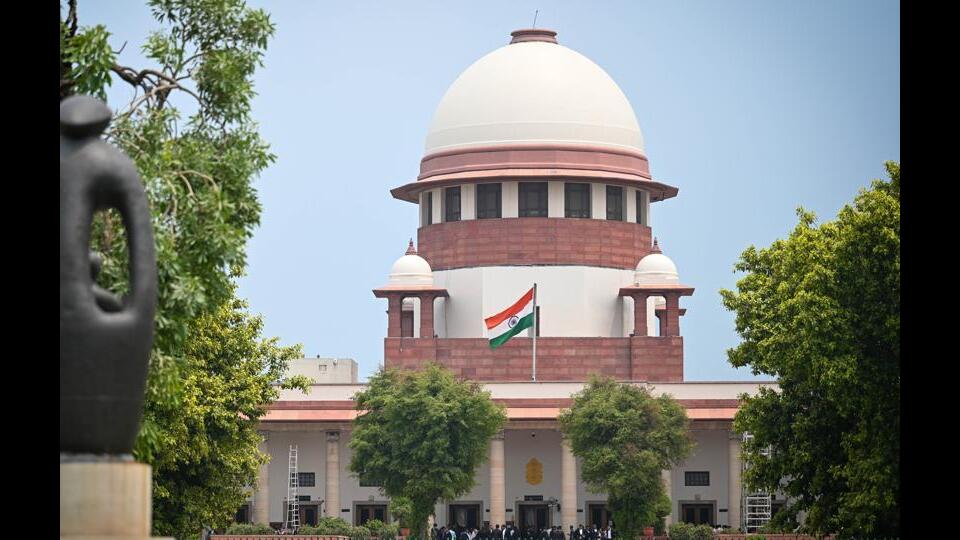
The Supreme Court has quashed culpable homicide charges against a doctor whose telephonic instruction to a nurse for administering an injection allegedly led to the death of a patient. A bench of justices Vikram Nath and Sandeep Mehta said that while the doctor may be held accountable for negligence, the charge should be under Section 304A of the Indian Penal Code (IPC) (causing death by negligence) rather than the graver Section 304 Part I of IPC (culpable homicide not amounting to murder).
Section 304 Part I carries a maximum sentence of 10 years. Section 304A is punishable by up to two years in prison.
The case originated from an incident on February 21, 2013, when a woman visited a private nursing home at Thiruvallur in Tamil Nadu with complaints of headache, vomiting, giddiness, and fever. She was reportedly attended to by a nurse, who administered injections following a telephonic conversation with the doctor in question. Shortly thereafter, the patient became semi-conscious and was referred to a government hospital, where she was declared dead, according to the prosecution. The post-mortem examination report attributed her death to an acute hypersensitive drug reaction.
After her husband lodged a complaint, the police registered a case under Section 304 Part I of IPC against the doctor and a judicial magistrate took cognisance of the case, summoning the doctor as an accused. The doctor challenged this order before the Madras high court, which, by an order dated August 11, 2021, declined to quash the proceedings. The high court said that there was prima facie material to proceed under Section 304 Part I of IPC, given that the doctor was not present when the patient was admitted and had instructed the nurse over the phone to administer injections. The nurse acted on these instructions, which, according to the prosecution, directly led to the woman’s demise.
The Supreme Court, while hearing the doctor’s appeal, relied on its 2005 judgment in the Jacob Mathew case, which delineates the threshold for criminal liability in medical negligence cases. The bench agreed with the appellant’s argument that an act of alleged medical negligence, even if resulting in death, does not automatically constitute culpable homicide unless there is intent or knowledge that death would be a likely consequence.
“Considering the facts and circumstances of this case, we are of the view that the registration of the FIR under Section 304 Part I of IPC and the subsequent submission of police report under Section 173(2) of CrPC also under Section 304 Part I IPC cannot be sustained,” the bench said in its February 12 judgment, released on Thursday.
The court directed that the accusation under Section 304 Part I of IPC be waived, and the case be proceeded with under Section 304A of IPC. The sessions judge was instructed to transmit the records to a competent magistrate for trial under the appropriate section to determine the degree of criminal negligence, if any.
This judgment reaffirms the judicial precedent that criminal liability for medical negligence should be invoked only in cases of gross recklessness or deliberate intent.
The Bolam Test — a standard that has long been recognised in medical negligence cases, has been consistently reinforced by the Supreme Court of India. Originating from the 1957 English case Bolam Vs Friern Hospital Management Committee, this test states that doctors are not negligent if they act in accordance with a practice accepted by a responsible body of medical professionals.
In the Indian context, the Supreme Court endorsed the Bolam Test in the Jacob Mathews case, holding that only if a doctor lacks requisite skills or fails to exercise reasonable competence should liability be imposed. By a judgment in October last year, the court emphasised that medical professionals cannot be held liable for negligence solely because surgery or treatment does not produce the expected results. It said the culpability of doctors must stem from clear evidence pointing to a deviation from accepted medical practices.



