
 E-Paper



SC rejects petition seeking review of collegium system
The review petition, filed last year by an organization of lawyers, National Lawyers’ Campaign for Judicial Transparency and Reforms, and six others had challenged a 1993 judgment that institutionalised the collegium system


A nine-judge bench of the Supreme Court, led by the Chief Justice of India (CJI) Ranjan Gogoi, has dismissed a petition seeking a review of the 25-year-old collegium system of selection and appointment of judges to the high courts and the apex court.
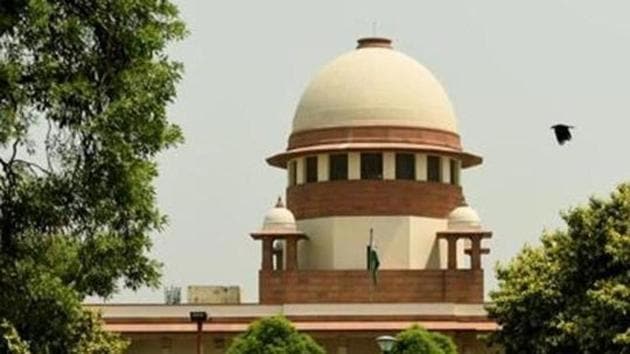
“There is an inordinate delay of 9,071 days in filing the instant petition, for which no satisfactory explanation has been given,” the court said. “The present petition is liable to be dismissed on the ground of delay itself, yet we have carefully gone through the review petition. We are satisfied that no case for review is made out... on ground of delay as well as merits.” The bench included justices SA Bobde, NV Ramana, Arun Mishra, RF Nariman, R Banumathi, UU Lalit, AM Khanwilkar and Ashok Bhushan.
The court order was passed on October 17 but made available on Wednesday, November 6.
The review petition, filed last year by an organization of lawyers, National Lawyers’ Campaign for Judicial Transparency and Reforms, and six others had challenged a 1993 judgment that institutionalised the collegium system. The 1993 judgment of the apex court was delivered by a bench of nine judges and held that the judiciary will have primacy in the appointment of judges.
The 1993 judgment interpreted the word consultation in Articles 124 and 217, which deal with the appointment of judges. Under the existing collegium system, the judiciary has the final say over all appointments. Until the 1993 judgement, the executive had primacy in the appointment and transfer of judges. The 1993 ruling accorded primacy to the CJI.
In 2014, the NDA government, through a law, set up the National Judicial Appointments Commission (NJAC) to replace the collegium system. But in October 2015, a five-judge Constitution bench struck down as “unconstitutional” Parliament’s decision to set up the NJAC. NJAC, besides including the CJI and two senior-most judges among its members, would also have comprised the Union law minister as the Central government’s representative in deciding on the appointment and transfer of judges. The law also envisaged the inclusion of two “eminent persons” as members of the NJAC.


