
 E-Paper



SC rejects PIL seeking implementation of Centre’s scholarship scheme for SC students in Bihar
Supreme Court refuses to entertain a PIL that sought implementation of the Centre’s post-matric scholarship scheme for scheduled caste students in Bihar


The courts cannot run the government, the Supreme Court said on Monday, refusing to entertain a public interest litigation that sought implementation of the Centre’s post-matric scholarship scheme for scheduled caste students in Bihar.
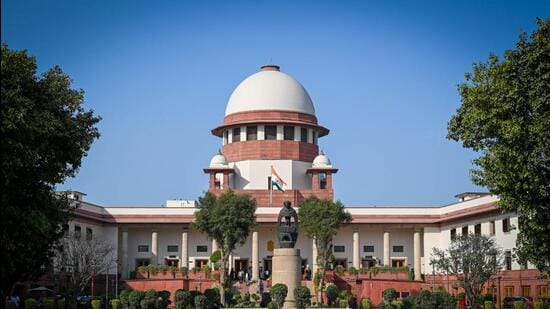
Though the issue of scholarships to students from marginalised sections was a desirable idea, the courts cannot force a government to make a fiscal allocation if the execution of the scheme is optional for the state government, according to a bench of justices Sanjiv Khanna and Dipankar Datta.
“The government says that it does not have money. Can we force the government to give scholarships? Everybody likes scholarships, especially to the SC/ST children, but we cannot force them,” the bench told senior counsel Sanjay Parikh.
Parikh, appearing for petitioner Rajeev Kumar and others, exhorted the court to take a sympathetic view in the matter, adding the Centre’s “Freeship Card” scheme must be implemented in Bihar to benefit thousands of SC students. Complaining about non-implementation of the guidelines issued by the central government, Parikh contended that the Bihar government has arbitrarily limited the maximum amount of post-matric scholarship, including tuition fees and other non-refundable fees payable to eligible beneficiaries under the scheme, and has not implemented the scheme.
But the bench retorted: “We cannot run the government...We will be breaching the separation of power if we say anything.” It suggested the petitioner should pursue a different recourse. “Take it at a different level and not judicially...It’s not a matter for the courts.”
Bihar-resident Rajeev Kumar and organisation Youth for Dalit Adivasi Rights had approached the Supreme Court against rejection of their public interest litigation by the Patna high court in August 2023.
Freeship Card, or the post-matric scholarship scheme is a flagship programme of the Union ministry of social justice and empowerment aimed at increasing the gross enrolment ratio of scheduled caste students in higher education in India, with a focus on those belonging to poorest households. Under the scheme, the beneficiaries are selected by the respective state government or Union territory. Funds sponsoring such schemes have to be borne by Centre and state respectively in a ratio of 60:40.
While refusing to issue any directive to Bihar for implementing the scheme, the high court had in its August judgment held that courts cannot by a judicial order direct implementation of any scheme formulated by the central government, which can be implemented only at the option of the state government.
“Since the matter involves the policy decision of the state’s executive, any judicial interference would lead to overstepping the wisdom of the state government,” said the court, taking on record the state’s submissions that the Bihar government has already introduced its own scheme of granting post-matric scholarship, not only for scheduled castes, but also for scheduled tribe students in the state.
Acknowledging the state government’s concerns about optimum disbursal of funds ensuring maximum coverage of all marginalized sections of society, the high court said these were all matters coming within the policy domain of the state and dismissed the lawsuit.


