
 E-Paper



SC says minority colleges not exempt from NEET
Institutions like Vellore’s Christian Medical College (CMC) have been at the forefront of efforts to ensure their right to hold separate entrance examinations.


The Supreme Court on Wednesday ruled that colleges run by religious minorities will not be exempt from the common National Eligibility Cum Entrance Test (NEET) for admissions to graduate and postgraduate medical and dental courses across India.
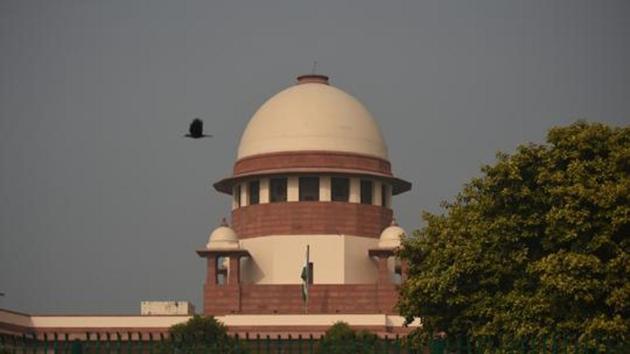
Institutions like Vellore’s Christian Medical College (CMC) have been at the forefront of efforts to ensure their right to hold separate entrance examinations. The college cited Constitution’s Articles 25, 26, which relate to the freedom of religion, and the specific right of religious minorities to administer their educational institutions under Article 30 to seek an exemption from NEET.
A host of private educational institutions and deemed universities joined the CMC in challenging the NEET, saying it violated their rights under Article 19(1)(g) that relates to the practice of any profession or to carry on any occupation, trade or business.
“Minorities are as much part of the nation as the majority, and anything that impinges upon national interest must necessarily in its ultimate operation affect the interests of all,” a bench of Justices Arun Mishra, Vineet Saran and MR Shah said in a unanimous 108-page order against the exemption.
The court noted Parliament introduced the NEET to eradicate corruption in medical admissions, whose victims were meritorious students.
The Supreme Court upheld the NEET in 2016 and the only question left for consideration was whether the common test infringed upon the minority rights. It accepted the right of religious minorities to govern their institutions but made it subject to the larger public interest to promote merit, achieve excellence, and curb malpractice prevailing in the admission process including the sale of seats.
Several Constitutional decisions have laid down strict protection for minority institutions.
The bench cited a 2016 Constitution bench ruling in Modern Dental College case in which the top court said that minority rights must give way to the larger public interest of students. Moreover, if an exception is made, there will be no end to such claims for holding multiple examinations, the bench said.
The NEET came into force within a month after the Supreme Court upheld it in April 2016. By way of amendment, it was incorporated as Section 10D in the Indian Medical Council Act and Dental Council Act.
The court ruled that rights available to minority institutions under Article 30 and that of private colleges under Article 19(1)(g) will not be impacted by imposing NEET as the uniform test is intended for the proper functioning of institutions and to ensure the maintenance of high standards of education.


