
 E-Paper



Supreme Court to hear Maharashtra CM Shinde’s plea on ‘real Sena’ on September 27
On August 23, ECI was orally asked by a previous bench to stay its hands and not proceed with Shinde’s plea on recognition of his faction as the “real” Shiv Sena.


A five-judge constitution bench of the Supreme Court will on September 27 consider Maharashtra chief minister Eknath Shinde’s plea to let the Election Commission of India (ECI) decide his petition staking claim over the “real” Shiv Sena and the party symbol, even as the Uddhav Thackeray camp demanded a complete estoppel against the proceedings before the poll body.
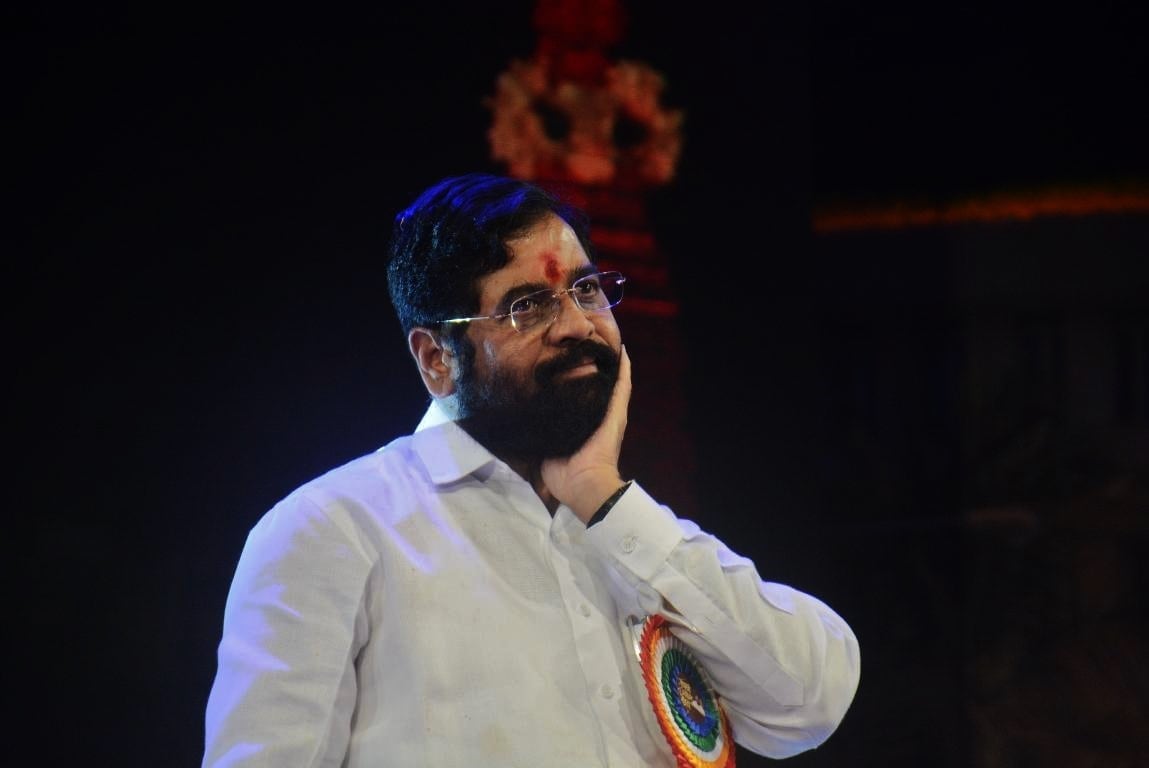
The bench led by Justice Dhananjaya Y Chandrachud said on Wednesday that the application to restrain the ECI from deciding Shinde’s plea will be taken up on September 27 to ascertain the necessity of issuing an interim direction.
“We will list this IA (interlocutory application) on September 27 and decide whether they (ECI) can go ahead or not,” the bench, which also included justices MR Shah, Krishna Murari, Hima Kohli and PS Narasimha said.
On August 23, ECI was orally asked by a previous bench to stay its hands and not proceed with Shinde’s plea on recognition of his faction as the “real” Shiv Sena and allotting it bow and arrow symbol until the constitution bench considers the matter.
Senior counsel Neeraj K Kaul, representing the Shinde faction, on Wednesday pressed for permitting ECI to go ahead. “The power of speaker or the governor has nothing to do with the election symbol dispute. The proceedings before ECI is on an intra-party dispute. Municipal elections are knocking on the door and there needs to be freezing of the symbol,” he argued.
Countering Kaul, senior counsel Kapil Sibal, who appeared for former CM Uddhav Thackeray’s camp, claimed that the proceedings before the constitution bench would be rendered meaningless if the ECI were to proceed and decide the symbol dispute.
“The reference order clearly involves a determination on the power of ECI when there is a split in a party. If this issue is independently decided before ECI, it will render our entire proceedings infructuous. Moreover, disqualified people cannot go to the Commission. Therefore, other issues require to be decided first,” he argued.
Supporting Sibal, senior advocate Abhishek Manu Singhvi, who also appeared for the Thackeray faction, added: “If this court were to disqualify the MLAs from the other side, they lose the locus to approach ECI.”
At this point, the bench replied that it will hear the counsel from both sides in detail on September 27 to figure out whether the issues are interconnected, and if any interim direction is required to be passed at this stage.
On behalf of ECI, senior advocate Arvind Datar said that the poll body is duty-bound to issue a notice to the other side once a symbol dispute is raised and therefore, it cannot be faulted for the steps taken after Shinde moved a petition. He added that ECI is not concerned with disqualification since it adjudicates disputes between members of a party and not between MLAs.
While the Shiv Sena has not split formally, the faction led by Shinde is supported by a majority of the party’s legislators; it has also claimed that it is the Shiv Sena. The Shinde camp’s rebellion forced Uddhav to resign as the Maharashtra chief minister on June 29. A day later, Shinde took over the post and proved majority on the floor of the House with the support of the Bharatiya Janata Party.
At present, there is a court-mandated restraint on the Maharashtra speaker against disqualifying lawmakers from either the Shinde or the Uddhav camp.
A three-judge bench, in the reference order on August 23, noted that the matter “raises important issues” involving the contours of disqualification proceedings and the powers of the governor and the speaker in their respective spheres.
It also doubted the correctness of the 2016 judgment by another five-judge bench in the Nebam Rabia (Arunachal Pradesh disqualification) case in holding that the speaker cannot initiate disqualification proceedings when his own removal is sought.
The raft of issues framed by the three-judge bench included the question as to whether the notice of removal of the speaker restricts him from continuing the disqualification proceedings under the Tenth Schedule (anti-defection law) of the constitution. Other issues included the maintainability of a writ petition before a high court or the Supreme Court for inviting a decision on a disqualification proceeding and whether a court can disqualify a legislator.
The reference order sought the larger bench’s decision on the sanctity of the proceedings and decisions taken in the House during the pendency of disqualification petitions against the members and after they are held to be disqualified.
It also framed a legal issue regarding the authority of the governor to invite a person to form the government and whether the same is amenable to judicial review, besides seeking mapping out the power of the speaker to determine the whip and Leader of the House of the legislative party.
The five-judge bench was also called upon to ascertain the impact of the removal of Para 3 of the Tenth Schedule, which did away with a split in a party as a defence against the disqualification of members, and the scope of the powers of the ECI with respect to determining a split within a party. “Are intra-party questions amenable to judicial review?” the smaller bench had asked.


