
 E-Paper



SC clears way for Sahara to sell assets, stresses on transparency
Sebi highlighted that not all of Sahara’s properties are unencumbered, expressing concern over the ambiguity surrounding the timeline for the group’s payment of the outstanding amount.


The Supreme Court on Tuesday clarified that there is no embargo on the Sahara group from selling its properties to deposit around ₹10,000 crore in the Sebi-Sahara refund account, aimed at returning investors’ money.
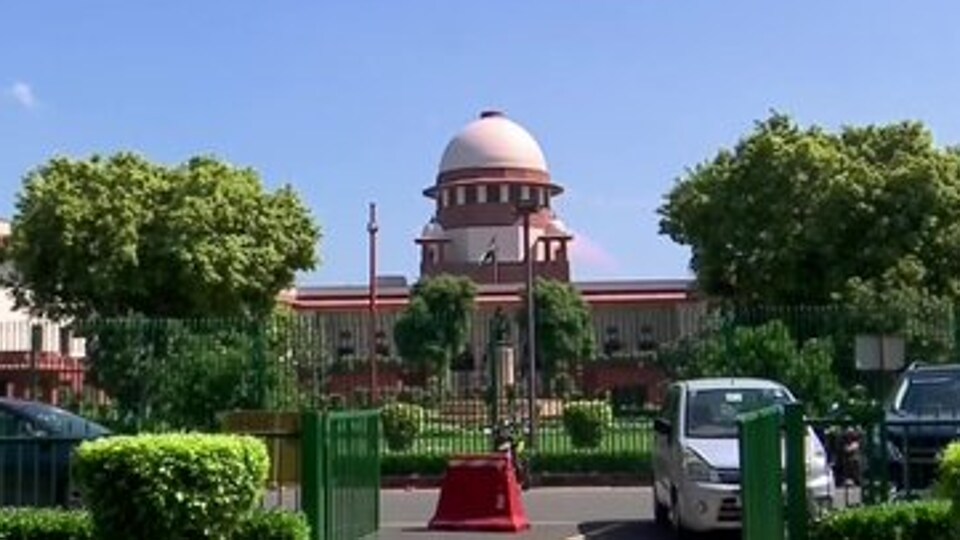
The court, while reiterating the importance of transparency, directed the conglomerate to propose a scheme detailing how unencumbered properties would be sold to meet the required deposit, and fixed the matter for consideration on September 5.
“There is no embargo on the Sahara group from selling properties. The only condition is you can sell it either at circle rate or circle rate minus 10%. If you want to sell it at a lesser value, all you must do is get the court’s permission. It’s in nobody’s interest that properties go below circle rates, but the only concern is that transactions should be fair,” a bench led by justice Sanjiv Khanna told senior counsel Kapil Sibal, who appeared for Sahara.
The bench, also comprising justices MM Sundresh and Bela M Trivedi, directed the group to adduce a list of unencumbered properties that could be put up for sale, adding that it would also involve Sebi in the process to ensure transparency and accountability.
“Let them give a list of unencumbered properties. We can then ask you what are the safeguards that you want. We will then devise a module on recovering the rest of the amount,” the bench told senior advocates Arvind Datar and Pratap Venugopal, who represented the market regulator.
The case stems from a series of directions issued by the Supreme Court on August 31, 2012, where Sahara group firms – Sahara India Real Estate Corporation Ltd (SIRECL) and Sahara Housing Investment Corporation Ltd (SHICL) – were ordered to refund the amount collected from investors, with a 15% annual interest, within three months. Despite more than a decade passing since that order, the Sahara Group is yet to fully comply, prompting the court’s continued scrutiny.
Sebi highlighted that not all of Sahara’s properties are unencumbered, expressing concern over the ambiguity surrounding the timeline for the group’s payment of the outstanding amount. The bench then urged Sibal to present a clear plan detailing how the Sahara Group intends to deposit the ₹10,000 crore and identify the specific properties that could be sold.
During the proceedings, the bench also stressed the urgency of compliance, observing that it would be “prima facie” incorrect to say that Sahara was not given enough leeway to alienate properties for depositing money. “In one sense, you are a judgment debtor... The court order to deposit ₹24,400 crore would act as a decree,” it said.
The bench also addressed various applications from flat buyers, operational creditors and other parties seeking relief, including refunds. It clarified in all the pleas that the pendency of the matter before the Supreme Court is not an impediment for any other appropriate forum to consider the matters relating to the Sahara group.
The Sebi-Sahara case has seen numerous legal twists since 2012. According to Sebi, Sahara firms have deposited ₹15,455.70 crore to date, which has been invested in fixed deposits across nationalised banks. As of September 30, 2020, the total amount in the Sebi-Sahara refund account, including interest, stands at ₹22,589.01 crore. Sebi has said that only ₹138 crore has been disbursed to investors till date.


