
 E-Paper



Jharkhand assembly clears 75% quota in private jobs for locals
The Jharkhand State Employment of Local Candidates Bill, 2021 was originally tabled in the assembly’s budget session in March, when it was referred to the panel for deeper examination.

 Prefer HTon Google


Ranchi: A select committee of the Jharkhand assembly has cleared with some changes a key piece of legislation that accords 75% reservation to locals in all existing jobs up to ₹40,000 per month in the private sector.
The Jharkhand State Employment of Local Candidates Bill, 2021 was originally tabled in the assembly’s budget session in March, when it was referred to the panel for deeper examination.
The six-member select committee, formed by the Speaker, was chaired by state labour minister Satyanand Bhokta. Among the changes made in the original Bill include adding the words “private sector” in the amended bill, changing its name to “The Jharkhand State Employment of Local Candidates in Private Sector Bill, 2021”. The new amendments also increased the salary bracket from ₹30,000 to ₹40,000, and added a new clause that brought public sector undertakings under the purview of this law.
Once notified, the Act will make Jharkhand the third state in the country, after Andhra Pradesh and Haryana, to have passed a law reserving jobs for locals in the private sector.
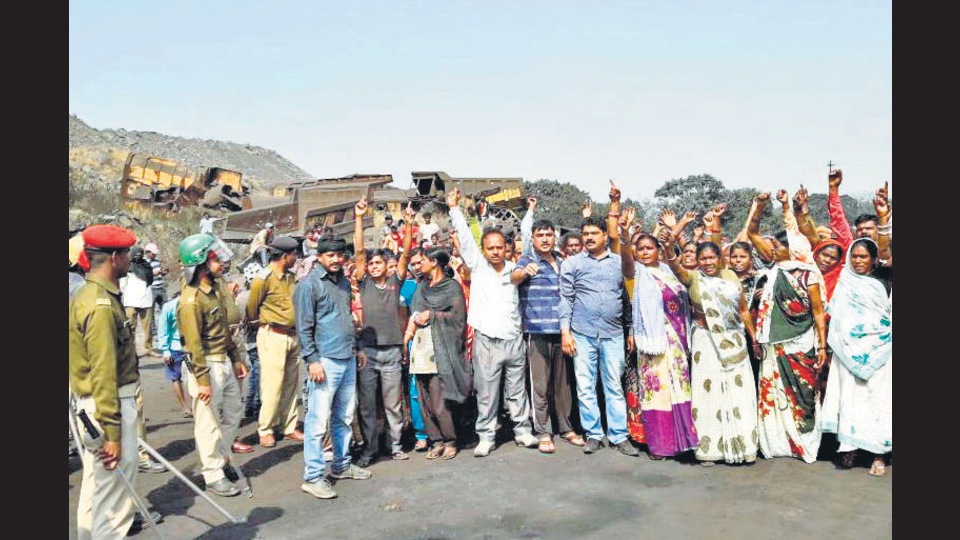
“With submission of the report, the amended bill will now be notified as an Act. The government will form the related rules and regulations to implement it. This is a landmark law as people, especially those who are displaced for setting up industry, are often forced to protest and hit the streets for jobs would now have a legal backing. Otherwise now they are often threatened with cases for raising their voice. With increasing privatisation and the Centre pushing for NMP (national monetisation pipeline), this law would prove to be boon for the locals,” said CPI (ML) legislator Binod Singh, one of the members of the select committee.
BJP legislator and former health minister Ramchandra Chandrvanshi, who was also a member of the select committee, said they cleared the Bill because it was in the interest of the state.
While the new law does not fix quota for any vulnerable groups, including displaced or social groups, as done in government jobs as part affirmative action, the amended bill adds a new clause saying that attention will be given for their representation.
“During the process of employment of the local candidates, attention will be given to the representation of the displaced due to the establishment of the concerned institution, local candidates of the concerned district and all classes of the society,” said sub-clause (ii) of Section 4 of the new law.
The amended bill also expanded the monitoring committee for implementation and addressing complaints. Now the deputy commissioner in each district will chair the committee with local MLAs, and employment and labour department officers as members of the committees. Earlier, only the deputy commissioner was given the sole right to settle disputes.
Andhra Pradesh had become the first state in 2019 to pass a Bill imposing 75% quota for locals in private industrial jobs. In June this year, Haryana passed a law , reserving 75% quota for local people in private sector jobs with monthly salary less than ₹50,000.
“This bill aims at checking the migration of work force from the state. If people get jobs here, no one would want to go out for menial jobs. Reserving jobs for locals also helps in checking people who arrive from other states and eventually settle here,” principal general secretary of ruling Jharkhand Mukti Morcha Supriyo Bhattacharya said.
Federation of Jharkhand Chamber of Commerce and Industries president Praveen Chhabra said the industry won’t find it difficult to implement the new law as majority of the work force in the lower rung consist of locals.
“Majority of the unskilled and semi skilled labours in majority of the industrial units here are anyway locals. So it shouldn’t be a problem. As far as the skilled workforce is concerned as the salary bracket is being increased, finding such hands locally won’t be a problem if the government parallelly runs skill development programmes in association with the industry,” he said.


