E-Paper



Sentenced to death in Bangladesh, where is ex-PM Sheikh Hasina?
Bangladesh’s Sheikh Hasina said she is grateful to the Indian people for providing her with a “safe haven this past year.”

 Prefer HTon Google


Former Bangladesh Prime Minister Sheikh Hasina was on Monday sentenced to death by a Dhaka court on three charges of crimes against humanity linked to last year’s student-led protests that forced her out of office and into self-exile.
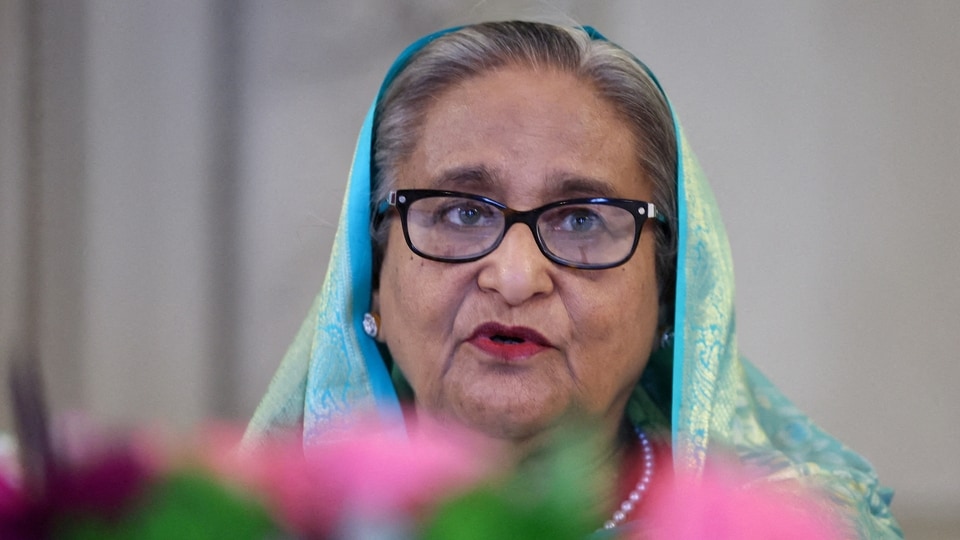
Announcing the verdict, Judge Golam Mortuza Mozumder said Hasina was “found guilty on three counts”, including incitement, order to kill and failing to take any action to prevent the atrocities.
The protests, which spiralled into a mass uprising, resulted in her government’s collapse and her dramatic escape to India. Follow Sheikh Hasina verdict LIVE
Where is Sheikh Hasina?
The Bangladeshi leader has been living in self-exile since the nationwide unrest and her subsequent ouster as PM in August 2024. Hasina has remained at a secret safe house in Delhi, where India is providing her full security, her son, Sajeeb Wazed, recently said. He added that New Delhi is treating her “like a head of state”.
Earlier, in emailed responses to Hindustan Times, the 78-year-old expressed gratitude for the sanctuary India has offered. “I must add that I am deeply grateful to the Indian people for providing me with a safe haven this past year,” she wrote.
In an October interview with news agency Reuters, Hasina said she felt relatively safe in Delhi and could move “freely,” though she remained cautious about her security. She was categorical about not returning to Bangladesh under a government she views as illegitimate.
Also Read | ‘Killings under her orders…’: Inside court’s damning verdict on Sheikh Hasina | Watch
“I would of course love to go home, so long as the government there was legitimate, the constitution was being upheld, and law and order genuinely prevailed,” she had said.
She also told Reuters that she “would not return to Bangladesh under any government formed after elections that exclude her party,” signaling her intention to remain in India for the foreseeable future.
However, the Awami League was suspended in May after the Muhammad Yunus-led interim government claimed her party posed national security risks and cited ongoing war crimes investigations against several senior leaders.
Hasina is being probed for the actions of her government during July–August 2024, when nearly 1,400 people were allegedly killed amid the unrest.
‘Biased and politically motivated,’ says Hasina
Reacting to Monday court ruling, Hasina issued a strong statement alleging that the charges against her were fabricated. She said the verdicts were “biased and politically motivated” and insisted she was willing to stand trial only before a judicial body she considers fair.
“I am not afraid to face my accusers in a proper tribunal where evidence can be weighed and tested fairly,” she said.
India–Bangladesh ties at a low
Bilateral relations have nosedived since the Yunus-led caretaker government took charge in Bangladesh. India has repeatedly criticised Dhaka for not safeguarding minorities, especially Hindus, amid ongoing unrest. Bangladesh, meanwhile, has formally requested Hasina’s extradition – a move New Delhi has not acted upon.
Tensions between New Delhi and Dhaka escalated further last week after Bangladesh’s foreign ministry summoned India’s deputy chief of mission in Dhaka.
The interim government lodged a protest over Hasina’s recent interviews with Indian media outlets, including HT, and demanded restrictions on her access to journalists.
The summon came just days after Hasina granted her first interviews to Indian media since fleeing the country. Prior to this, she had spoken to British and French outlets, yet neither London nor Paris was summoned.
Adding to the friction, Shafiqul Alam, spokesperson for interim government chief Muhammad Yunus, labelled Indian journalists who interviewed Hasina as “Indian bootlicking” reporters — remarks that drew sharp reactions in diplomatic circles.