E-Paper



Sindoor now a symbol of courage, says PM Modi
PM Modi said that the perpetrators of the April 22 Pahalgam attack targeted the country’s culture and attempted to divide the society.

 Prefer HTon Google


India will no longer tolerate a proxy war through terrorism and will respond firmly to any extremist acts, Prime Minister Narendra Modi said on Saturday, adding that “sindoor” (vermillion) has become synonymous with courage and valour after India’s military response to the Pahalgam attack.
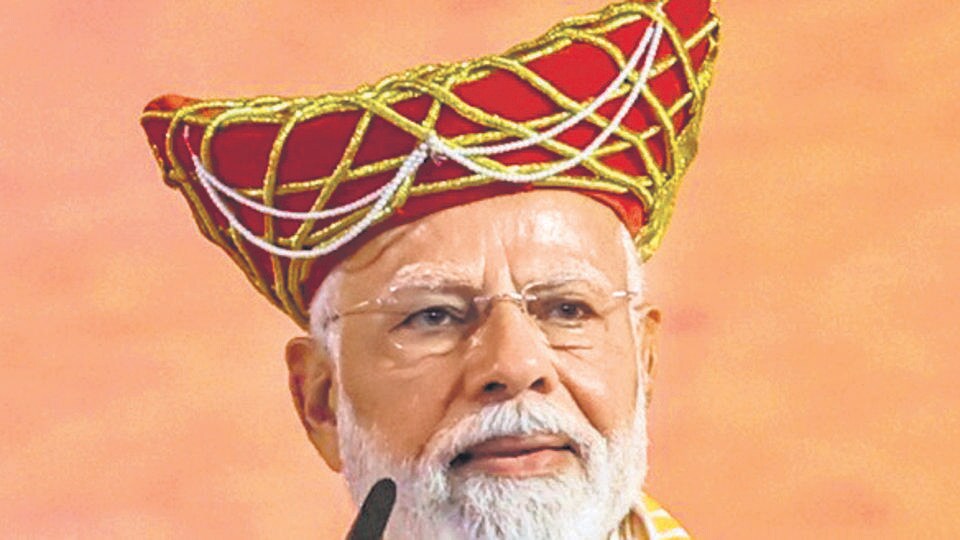
Speaking at an event to mark the 300th birth anniversary of 18th century queen Ahilyabai Holkar— a symbol of women empowerment— in Bhopal, Modi said the Indian forces were equipped to hit the backers of terrorism in their homes and make them face justice.
“We have sent a clear message that proxy wars through terrorism will not be tolerated. If you fire bullets, you will face cannons. India, a land of culture and values, sees sindoor as a symbol of women’s power. Today, that same sindoor has become a symbol of our valour and resistance to terrorism,” he said.
He said that the perpetrators of the April 22 Pahalgam attack not only shed the blood of innocent Indians but also targeted the country’s culture and attempted to divide the society. Modi said the terrorists tried to challenge India’s “nari shakti” (woman power), which proved fatal for them and their handlers, hailing Operation Sindoor as the most successful operation against terrorism in the country’s history.
“Operation Sindoor is India’s largest and most successful counter-terrorism operation in history. It stands as a testament to the strength and valour of India’s nari shakti,” he said to the gathering, consisting of thousands of women.
Operation Sindoor was India’s direct military response to the April 22 terror strike at Pahalgam in Kashmir that killed 26 civilians in what was the worst attack on civilians since the 26/11 Mumbai strikes.
India launched the operation in the early hours of May 7, bombing nine terror camps in Pakistan and Pakistan-occupied Kashmir (PoK). The pre-dawn strikes --- which killed at least 100 terrorists --- sparked a series of attacks and counter attacks across the western border, involving fighter jets, missiles, armed drones, and fierce artillery and rocket duels. In one such counterattack on the night of May 9-10, the air force struck targets at 13 Pakistani air bases and military installations. After four days of fighting, military hostilities were stopped on May 10 as the two nations reached an understanding.
Modi was addressing a public meeting after unveiling a range of development projects worth xxxx crore, ranging from the Super Priority Corridor of Indore Metro and Datia and Satna airports. Madhya Pradesh chief minister Mohan Yadav, governor Mangubhai Patel and state ministers were also present.
Modi also paid homage to Ahilyabai, hailing her as a symbol of women’s contribution to nation building. “She implemented an exemplary governance model that prioritised the welfare of the poor and marginalised. She launched numerous initiatives to boost employment and entrepreneurship by promoting agriculture, cottage industries based on forest produce, and handicrafts,” he said. During the event, Modi also released a commemorative postage stamp and a special coin dedicated to the Holkar dynasty queen.
In his speech, Modi said that his government was committed to working for the upliftment of women. “This time, 75 women have become members of Parliament. Our effort is to increase this number… The BJP government is empowering our sisters and daughters at every level and in every field,” he said.