E-Paper



Sitharaman lists three principles to widen tax base
Finance Minister Nirmala Sitharaman has urged the Income-Tax Department to prioritize transparency, objectivity, and taxpayer-friendliness to increase the tax base. She highlighted the role of technology in raising revenue collections without raising tax rates. The department saw a 17.67% YoY growth in net direct tax collections in FY23, aided by technology-driven compliance. Sitharaman also mentioned amendments to the income-tax laws to support MSMEs and cooperatives. The government aims to make tax and taxation more people-friendly and aims to make India a developed country by 2047.

 Prefer HTon Google


Union finance minister Nirmala Sitharaman on Monday asked the Income-Tax Department to follow three broad principles – transparency, objectivity and taxpayer-friendliness – to widen the tax base, and evoked Prime Minister Narendra Modi’s maxim to use technology for boosting revenues without raising tax rates or resorting to overreach.
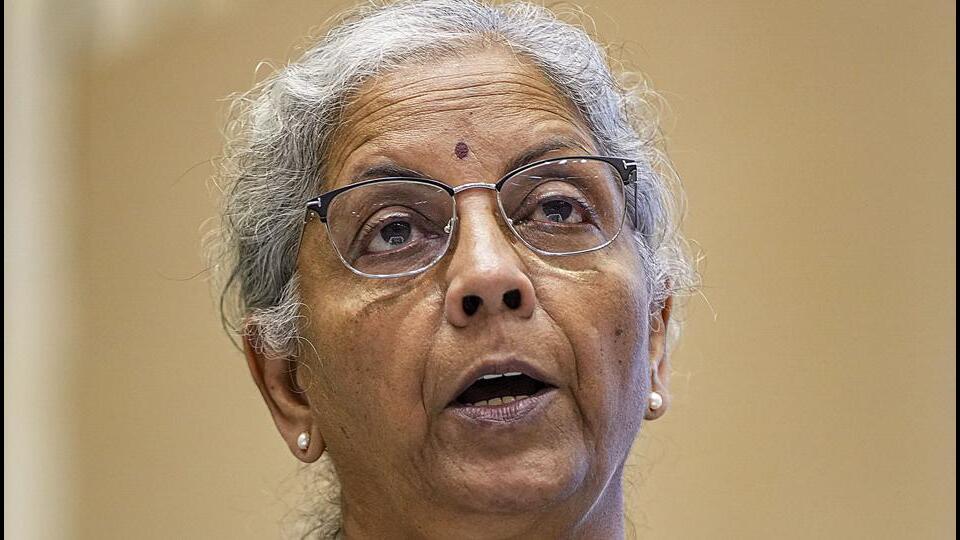
Speaking at the 164th Income Tax Day, she said pre-filled data, instant generation of the permanent account number (PAN), tax-payers charter, faster refunds and the faceless system of tax administration introduced recently have not only made tax assesses comfortable but also helped in raising revenue collections without raising tax rates. “And, that is why I refer to the Prime Minister’s statement that unless we get in technology, the three points -- transparency, objectivity, and being taxpayer friendly -- may never be achieved,” she said.
Earlier at the event, Central Board of Direct Taxes (CBDT) chairman Nitin Gupta said technology-driven compliance saw 17.67% year-on-year growth in net direct tax collections at ₹16.61 lakh crore in FY23, which surpassed both the Budget and the Revised estimates. He said by using technology, department has expedited the return processing and over 50% of the 40 million returns filed so far for FY23 have been processed and 8 million of them have been issued in the ongoing income-tax return (ITR) filing season.
She said the income-tax laws have been amended to encourage micro, small and medium enterprises (MSMEs), start-up and cooperatives. As per the amended law, big firms cannot claim tax benefits unless they actually pay the dues of their MSME vendors.
She said the approach of the income-tax department is no longer “adversarial”. “We are treating tax assessees as part of the wealth creators,” she said adding that their contributions are immense in the nation building. She said the change in approach has also helped in augmenting revenue collections without hiking tax rates. Instead, the government effectively exempted income up to ₹7,27,000 from the income-tax under the new regime.
Sitharaman said the government is constantly attempting “to make tax and taxation a lot more people friendly” by keeping tax rates low, by promoting transparency and introducing people-friendly technology. Earlier, people (tax assesses) were under constant fear that the government may reopen their previous tax details of 10 years. On instructions of the PM, not only this duration was reduced to six years, reopening of cases beyond 3 years have been made conditional, she said. As per the changed law only understated or non-fillers files for income over ₹50 crore could be re-opened for four to six year-old cases, that too with explicit permission of senior tax official.
She said there are about 1 lakh such cases and the income-tax department will process than by March 2024. After that the backlog will be over and the process will be “more predictable”, she said adding that another 55,000 “one-time cases” that arose due to the verdict of the apex court, had already been processed and completed by May 2023. “So, today [there] is not sitting over notices,” she said adding that people must pay their dues as “gaming the system doesn’t happen anymore”.
She asked taxmen to maintain the momentum with the three principles stated earlier to achieve Prime Minister Narendra Modi’s goal to make India a developed country by 2047. She asked the field formation of the taxmen to move from being investigative to inclusive, which will bring more people in the tax net willingly.