E-Paper



Below-normal monsoon rainfall likely this year: Skymet Weather
The forecaster expects the rainfall to be 94% (with an error margin of +/-5%) of the long-period average (LPA) of 868.6 mm due to an increased chance of El-Nino, which typically brings dry weather

 Prefer HTon Google


Below-normal monsoon rainfall was likely between June and September after above-normal and normal rainfall for four consecutive seasons, private forecaster Skymet Weather said on Monday.
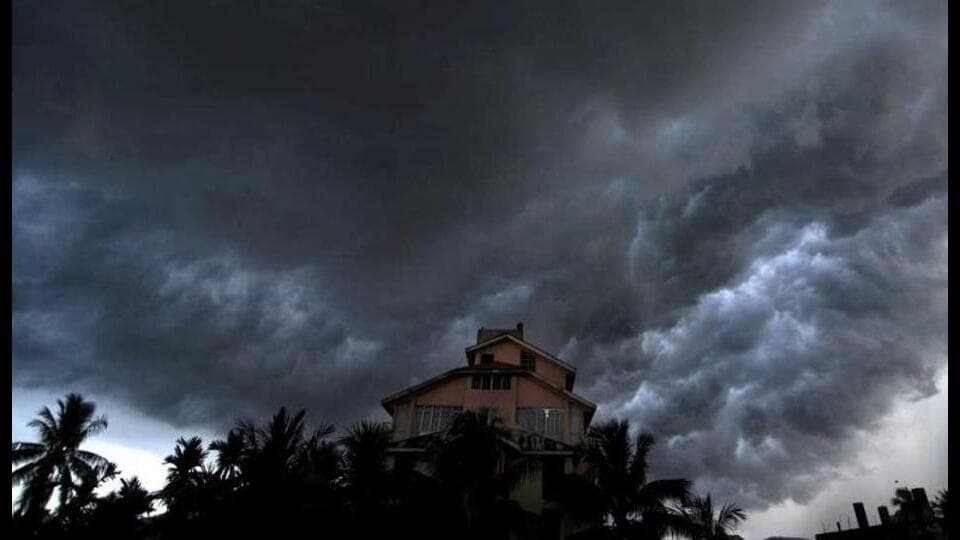
The forecaster expects the rainfall to be 94% (with an error margin of +/-5%) of the long-period average (LPA) of 868.6 mm due to an increased chance of El-Nino, which typically brings dry weather.
Rainfall between 96% and 104% of a 50-year average of 88 centimetres for the four-month monsoon season beginning June is defined as average, or normal.
Skymet said agriculture bowl Punjab, Haryana, Rajasthan, and Uttar Pradesh are likely to get less than normal rains during the second half of the season.
Farmers suffered losses as unseasonal rains and hailstorms last month damaged ripening crops such as wheat.
India Meteorological Department (IMD) is also expected to announce its annual monsoon forecast.
Nearly half of India’s farmland depends on monsoon for crops such as rice. The monsoon is crucial for summer crops as it brings about 70% of India’s annual rainfall. It is crucial to one of the mainstays of India’s economy, agriculture. Monsoon spurs farm produce and improves rural spending besides impacting inflation, jobs, and industrial demand. Good farm output keeps food inflation under check and ample harvests raise rural incomes and help inject demand into the economy.
Skymet said there is a 40% chance of below normal (between 90 to 95% of LPA), 25% of normal (between 96 to 104% of LPA), 15% of above normal (between 105 to 110% of LPA) and 0% chance of excess (over 110% of LPA) rainfall.
It said southwest monsoon was above normal and normal for the last four consecutive seasons because of Triple-Dip-La Niña. “Now, La Niña has ended. Key oceanic and atmospheric variables are consistent with ENSO[El Niño-Southern Oscillation]-neutral conditions. The likelihood of El Niño is increasing, and its probability to become a dominant category during the monsoon is growing large. El Niño return may presage a weaker monsoon,” said Skymet managing director Jatin Singh.
Skymet said other factors too were influencing the monsoon besides El Niño. “Indian Ocean Dipole (IOD) has the potential to steer monsoon and negate the ill effects of El Niño when sufficiently strong. IOD is neutral now and is leaning to turn moderately positive at the start of the monsoon. El Niño and IOD are likely to be ‘out of phase’ and may lead to extreme variability in the monthly rainfall distribution.”
In its long-range forecast, IMD has said a transition to El Niño was expected by July-September, with its chances increasing through the fall. There is a 48% chance of El Nino establishing during the June-August season and impacting the monsoon.
El Nino is characterised by an unusual warming of waters in the eastern equatorial Pacific. Its opposite, La Nina, is defined by unusually cooler waters in the same area. The phenomenon together is called the ENSO and has a high correlation with warmer summers and weaker monsoon rains in India.