
 E-Paper



Sops roll out, focus on parties’ pro-farmer policies before 2024
The doles are being seen as a test for parties on their pro-farmer politics before the 2024 Lok Sabha polls

 Prefer HTon Google


Political parties have been raining sops on farmers in four of the five poll- bound states, from loan waivers to more free electricity to higher cash flow to buy inputs material to higher minimum support price for crops. The doles are being seen as a test for parties on their pro-farmer politics before the 2024 Lok Sabha polls.
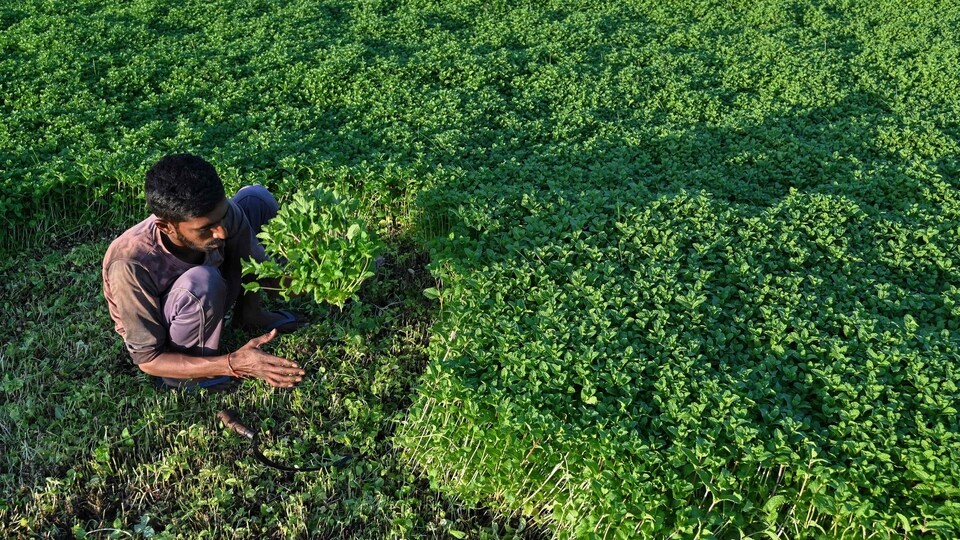
In Rajasthan, Madhya Pradesh, Chhattisgarh and Telangana, those directly or indirectly involved in farming constitute an overwhelming majority. Around 63.3% of total households in Rajasthan, 57.7% in Madhya Pradesh, 47.3% in Telangana and 55% in Chhattisgarh are directly linked with agriculture, according to a 2021 NABARD study. If the indirect linkages are taken into account, the households engaged with farming will increase by 10-15 percentage points in each of these states, the study estimated.
Among these states, Madhya Pradesh has highest share of agriculture in gross value added (GVA) to overall GVA at constant prices for 2018-19. It also recorded double-digit agricultural growth in the past decade. Rajasthan is number five among all states, Chhattisgarh number 13 and Telangana 21. Despite the highest GVA share, the monthly income of farming households in Madhya Pradesh at ₹7,919 was among the lowest in the country and about ₹1,200 less than in neighbouring Rajasthan and ₹600 less than the mineral-rich state of Chhattisgarh.
READ | In 9 years, many pro-farmer policies implemented by BJP: Shekhawat
As large populations in these states are still dependent on agriculture for livelihood despite some migrating in non-agricultural season for labour, political parties are trying to woo them, like they do before every election. State governments have spent close to ₹2 lakh crore on farmer welfare in the past five years in the states bound for elections, which includes partial farm loan waivers in Rajasthan, Chhattisgarh and Madhya Pradesh.
This time, too, farmer welfare tops the agenda of all parties.
Rajasthan
Agriculture contributes to 28.9% of the desert state’s gross value added, and around 60% of the workforce engages in this sector. The Ashok Gehlot- led Congress government waived the entire crop loan from cooperative banks worth ₹15,000 crore, benefitting around 22 lakh farmers. However, the opposition said the government has not cleared loans of nationalised banks, which the state government said comes under the purview of the central government.
In 2022, Gehlot introduced the first-ever agriculture budget, aiming to win over nearly 7.5 million people and this year has provided free 2,000 units for electricity per month to farmers at a cost of ₹27,000 crore. The state has provided subsidy to 50,000 farmers to dig farm ponds and ₹1,000 crore subsidy to 60,000 farmers for set up greenhouses and plastic mulching. The state government had also introduced the Rajasthan State Farmers Debt Relief Commission Bill 2023 that will take “appropriate measures” to redress farmers’ grievances.
Framers’ collective Sanyukt Kissan Morcha member Himmat Gujjar credited the Rajasthan government for taking up the Eastern Rajasthan Canal Project proposed brought by previous Bharatiya Janata Party government and stopping auction of farm land for failing to repay farm loans.
READ | BJP farmers’ wing to popularise double engine govt’s policies in rural U.P.
“Much more needs to be done to improve farm economy. Only small assistance has been provided,” said Ram Pal Jat, president of Kissan Mahapanchayat, another collective.
Former agriculture minister and BJP leader Prabhu Lal Saini said the farmers feel cheated. “The farmers have been cheated as the electricity supply is poor, entire loan amount has not been waived and many agriculture schemes have been closed,” he said. The Congress and BJP in Rajasthan are yet to announce their manifestos.
Madhya Pradesh
In Madhya Pradesh, which has about 7.6 million farmers, the opposition Congress has promised farm loan waiver and free electricity for agriculture. The party has also promised free fertiliser, power and water under a scheme called ‘Lagat Congress ki, munafa kisan ka’ and minimum support price for wheat at ₹2,600 per quintal and ₹2,500 per quintal for rice, setting up the state’s own insurance company to give compensation to farmers on crop losses, purchase of cow dung at ₹2 per kg and ₹5 per litre bonus on milk. The Congress has promised a minimum monthly income to farmers.
“We will also promise reduction in taxes on farm produce and supply of genuine seeds to farmers to increase agriculture production,” said Kedar Sirohi, a Congress leader.
The ruling BJP, which does not announce farm loan waivers, gave interest free farm loans provided the repayment was on time and has provided input subvention subsidy of ₹10,000 per farmer annually. A BJP functionary said that interest of up to ₹2,100 loan interest was waived in May. He also claimed that most of the beneficiaries under Ladli Behna scheme are farmer families. Under the scheme, each woman gets ₹1,000 every month, which the BJP has promised to increase to ₹1,500 per month.
“It was during the 18 years of the BJP government that farm economy grew in Madhya Pradesh due to improvement in irrigation facilities and better cost price. Today, we have double-digit agriculture growth rate,” the BJP leader said, declining to be named. There is loans worth ₹1.43 lakh crore on farmers as on March 31, 2023, of which ₹1.04 crore was crop loans, according to official data.
Sirohi said that the 15-month Congress government that came to power in 2018 was unable to fulfil its poll promise of farm loan waiver as power was snatched from Congress by the BJP. “We were working on the plan to waive off the farm loans when the BJP bought our MLAs and snatched power,” Sirohi said.
There was hardly any change in the life of farmers, irrespective of the party in power, said Anil Yadav of Bharatiya Kisan Union, a farmers’ organisation. “The poll promises are deceptive. These are announced to woo the farmers but the government does nothing later on,” he alleged.
Rahul Raj of Rashtriya Kisan Mazdoor Morcha, another collective, said the loan waiver scheme didn’t give much relief to farmers. “Until and unless there is honesty in waiving the loans and making agriculture a profitable venture in letter and spirit, nothing fruitful will happen for farmers,” he said.
Telangana
In Telangana, which has 5.6 million farmers, the ruling Bharat Rashtra Samithi (BRS), Congress and BJP have started wooing them to garner votes for the November 30 polls.
In May 2018, the BRS government led by chief minister K Chandrasekhar Rao announced a populist scheme called Rythu Bandhu, under which each registered farmer, irrespective of their landholding, would get an amount of ₹8,000 per acre per year in two instalments of ₹4,000 each for the Kharif and Rabi seasons to buy inputs like seeds, fertilisers and pesticides. Before the 2019 Lok Sabha polls, the amount was increased to ₹10,000.
The BRS also announced another scheme called Rythu Bima, benefiting families of farmers who died of distress, suffering heart attacks or by suicide because of crop failure or loss on account of natural calamities. The scheme, however, does not apply to about 2.2 million tenant farmers, a reason for anger against the BRS government, said a 2022 study by Rythu Swarjya Vedika, a non-profit.
The Congress has promised to extend the Rythu Bandhu scheme for tenant farmers and increase the money to ₹15,000 annually. The Congress also promised ₹12,000 annually for agricultural labourers and a ₹500 bonus for paddy crops above the minimum support price. Following this, the BRS in its election manifesto announced on October 15 promised an increase in the amount under the scheme to ₹16,000 per year.
The Congress has also promised to do away with the Dharani portal, introduced in October 2020 aimed at ensuring the benefits of Rythu Bandhu and other schemes go to genuine farmers. This led to large-scale complaints by farmers, as they alleged a lot of irregularities had taken place in recording the land details at the grassroots. “In the name of Dharani portal, lands of the poor were usurped by the local BRS leaders. We shall revoke the system,” Congress MP Rahul Gandhi said at a rally held at Jagityal on Friday.
BJP leaders are claiming that they would also enhance the limit under PM Kisan Yojana (similar to Rythu Bharosa) from the present ₹6,000 per year to ₹10,000 per year. Prime Minister Narendra Modi on October 1 announced constitution of a Turmeric Board to woo turmeric farmers of Nizamabad and Karimnagar districts. “The turmeric board will definitely fetch a big mileage to the BJP, as it will not only fetch a remunerative price to the turmeric farmers, but also provide storage, marketing and exporting facilities,” BJP MP Dharmapuri Arvind said.
Chhattisgarh
Soon after coming to power in 2018, the Bhupesh Baghel- led Congress government started its flagship scheme called Rajiv Gandhi Kisan Nyay Yojna, under which the government paid input subsidy of ₹21,912 crore to around 2.3 million farmers, who grow Kharif paddy.
Under this scheme, those farmers who grow any of the 14 identified crops are given an input subsidy of up to ₹9000. If farmers plant banana, papaya or any fruit tree along with 13 other crops besides paddy, then they receive an input subsidy of ₹10,000 per acre.
The state government has also implemented its promise of procuring paddy for ₹2,500 per quintal from farmers. Before the announcement of elections, the government said it would procure 20 quintals of paddy against earlier 15 quintals in the ongoing Kharif season.
The state started Godhan Nyaya Yojana (cow dung procurement scheme), in which it paid ₹580 crore to cattle owners, gauthan committees and women self-help groups to empower the rural economy and promote organic farming, according to a state government official. However, in some districts, the amount of vermicompost made by procuring cow dung exceeds the possible conversion ratio of cow dung into vermicompost, the official said on condition of anonymity.
For landless farmers, the government started the Rajiv Gandhi Gramin Bhoomi Heen Krishi Majdoor Nyay Yojna, providing an annual assistance of ₹7,000 to landless agricultural labourer families that benefit around 3.55 lakh people, as per official data.
The 2023 assembly elections will show whether these schemes have worked for Baghel or not, political commentators said. It would be interesting to see how the Congress fares in the plains of Chhattisgarh, which have the maximum beneficiaries under these schemes and where the BJP is considered strong, said Harsh Dubey, a Raipur- based political commentator. “I believe that in some regions, particularly in the central region, which has around 55 seats, it should help the Congress,” he said.
The Congress has fooled farmers as it has failed to implement most of its promises, BJP spokesperson Sacchinand Upasane said. “The farm loan waiver was not complete and paddy procurement was also very low as compared to total production, forcing the farmers to sell their produce in the open market at very low rates. There is lot of corruption in most of these schemes,” he alleged.
Congress spokesperson Shushil Anand Shukla countered him, saying that the BJP was scared of pro-farmer schemes of the state government. “Everyone in the state knows that the Congress government is working for farmers, tribal and poor. What have created an example in the country by giving maximum bonus to the paddy farmers of the state. The schemes will surely give positive results,” he said.
(With inputs from Ranjan in Bhopal, Srinivasa Rao Aparasu in Hyderabad, Sachin Saini in Jaipur and Ritesh Mishra in Raipur)


