
 E-Paper



Special representatives to forge India-China ties after Doklam standoff
After the successful visit of Chinese foreign minister, National Security Adviser Ajit Doval will play host to Councillor Yang Jiechi to share perspectives of both the countries on the strategic environment in Asia and beyond.


India and China will put aside the repercussions of the Doklam standoff and move forward to deepen bilateral ties when special representatives (SR) of the two countries on boundary resolution meet here on December 21-22.
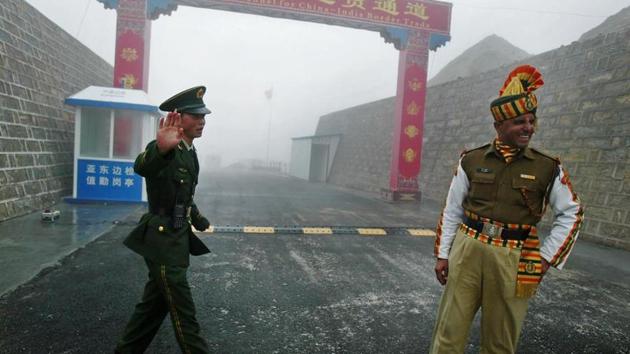
At the 20th round of talks, Chinese Politburo member and state councillor Yang Jiechi will discuss the entire gamut of bilateral relations, including the situation on the 3,488-km Line of Actual Control (LAC) with National Security Adviser (NSA) Ajit Doval. Councillor Yang will also meet Prime Minister Narendra Modi during his visit.
After the successful visit of Chinese foreign minister Wang Yi this month, Doval will play host to Councillor Yang to share perspectives of both the countries on the strategic environment in Asia and beyond, including developments in North Korea and West Asia.
Councillor Yang, who has delegated powers of the top leadership on handling bilateral ties with India, is one of the foremost diplomats of China having served as ambassador to the US in the past decade.
He is also a member of the all-powerful 19th politburo of the Chinese Communist Party.
“As boundary resolution is one of the charters of the SR dialogue, the two representatives will have extensive discussions on how to maintain peace and tranquility on the LAC and the need for the top leadership on both sides to keep in touch with each other in order to defuse any tensions,” said a senior official.
Chinese diplomatic sources based in Delhi also confirmed the SR annual meeting.
Although media reports on both sides have been hyper over Doklam even after the August 28 disengagement, top Indian Army sources confirmed that Chinese PLA has reduced its troop strength from a division-plus to merely a battalion strength, short of the Doklam plateau.
Indian commanders say that troops on both sides are patrolling on their sides of the border even as snows have set in at the plateau.
The Indian side has examined statements on Doklam after foreign minister Wang’s visit and are satisfied at the measured restraint from Chinese side.
At the special representative dialogue, both the leaders are expected to have candid discussions, assuring the other that growing India-US or China-Russia relationship will not be directed at a third country.
Although China has expressed concern over India-US relationship, Beijing has been told that its own economic ties with US have deep roots and the Quad dialogue (India-US-Japan-Australia) was no different from the China group on Afghanistan.


