
 E-Paper



British PM Keir Starmer raised issue of Christian Michel’s jailing directly with Modi
The CBI and ED extradited Christian Michel from Dubai on 4 December 2018 and have kept him in custody since

 Prefer HTon Google


British Prime Minister Sir Keir Starmer took up the matter of Briton Christian Michel’s imprisonment in India for seven years without trial “directly” with Narendra Modi, Britain’s Foreign, Commonwealth & Development Office (FCDO) said, adding that this occurred during their last meeting at the former’s country residence at Chequers.
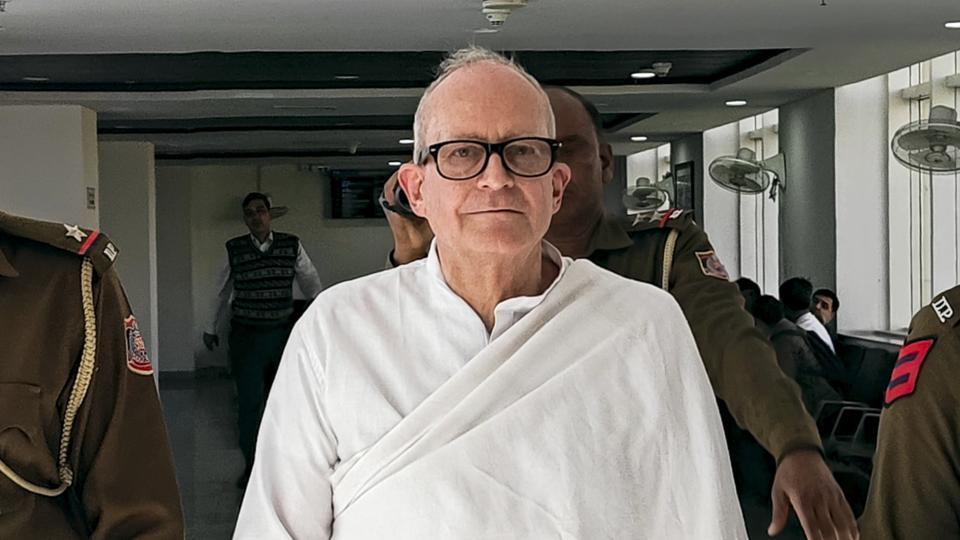
The FCDO stated: “The Prime Minister raised Mr Michel’s case directly with Prime Minister Modi on 24 July.” It is the first time a British prime minister has acknowledged discussing Michel’s extraordinary circumstance with Modi. Starmer was previously a human rights barrister.
Michel acted as a consultant to Finmeccanica, Italian owners of the English helicopter-making company AgustaWestland in the Indian government’s 2010 purchase of 12 VVIP choppers for 560 million euros. Italian courts examined in detail his role in the transaction while hearing a case of corruption (bribery to obtain the contract) against two senior Finmeccanica executives, Giuseppe Orsi and Bruno Spagnolini. In a third and final round of judgements in January 2018, the Appeal Court in Milan absolved both of guilt because there was “insufficient evidence that the facts (of culpability) exist”.
The Government of India was party to the proceedings. The three-member bench mentioned that the Indian Ministry of Defence had “requested the two defendants be convicted”. This was rejected.
Regarding Michel, the judges specifically concluded that “the investigation has not revealed any role attributable to Michel in the phase relating to determination of the operational requirements of any contract (direct or indirect)…”. They also clarified that “no significance can be attributed to the interpretation of… acronyms…“, dismissing insinuations about diary notes of a Swiss national connected with Finmeccanica that seemed to point to Indian politicians.
India’s Central Bureau of Investigation (CBI) and the Enforcement Directorate (ED) have been probing the suspicions for 12 years, but have as yet failed to bring final charges in court against anyone. They extradited Michel from Dubai on 4 December 2018 and have kept him in custody since.
A United Nations Working Group on Arbitrary Detention recorded in a report in 2020 that in January 2018, a deputy director of CBI “allegedly attempted to coerce Mr Michel into signing a 20-page pre-drafted statement admitting corruption activities related to the AW case and threatened him with prosecution if he refused to sign”.
WGAD in its opinion added: “The Working Group considers that, taking into account all the circumstances of the case, the appropriate remedy would be for the Government of India to release Mr Michel immediately…“. India’s foreign ministry has claimed the finding is not legally binding on India. The British government under Prime Minister Boris Johnson did not disagree.
Records show that the choice of helicopters – then considered to be the best in the world in its category -- was approved by Prime Minister Atal Bihari Vajpayee’s Principal Secretary and National Security Adviser, Brajesh Mishra, around 2004. The succeeding government of Prime Minister Manmohan Singh concurred with the decision and formally placed an order.
In a hand-written letter to Starmer on 14 August from Tihar Jail, where he is detained, Michel said, “Two weeks ago I completed my full sentence of 7 years, without charge without trial.”
He was referring to the fact that he was kept in jail in Dubai for four months before he was brought to India; and that India’s extradition application to the UAE was on the basis of him allegedly violating Section 420 of the Indian Penal Code, which carries a maximum sentence of seven years.
After being taken to India, he was slapped with a supplementary charge under Section 467 of the IPC, which can invite a life sentence.
In February 2023, a bench headed by the then Chief Justice of India Dhananjaya Chandrachud cited that Article 17 of the Extradition Treaty between India and the UAE said “it is evident that the person to be extradited shall not be tried or punished in the requesting State (India) except for offences for which his extradition or for offences connected therewith”.
Justice Chandrachud and his fellow judges also quoted Section 21 of the Indian Extradition Act 1962, which states that an extradited person shall not be tried in India for an offence other than “the extradition offence in relation to which he was surrendered or returned” or “the offence in respect of which the foreign State (UAE) has given its consent”.
In their order, though, the judges deferred to the new, post-extradition accusation under Section 467.
Earlier this year, Michel was granted bail in both CBI and ED cases by the special designated courts. But conditions attached to these included depositing his passport with the court. Interestingly, the passport seized from him by CBI had expired and Michel pleaded he has no permanent address, since his family home in London was sold while he has been in incarceration. The British High Commission in Delhi has refused to renew his passport with “Tihar Jail” as his address.
Continuing his letter to Starmer, Michel wrote that last month Judge Sanjay Jindal, presiding over his ED case under the PMLA Act, said “he will only release me after charges are framed” and that “only then can it be said that the sentence is completed”. He added, “Mr Jindal then went on to say that if I sign a confession he will release me at once”
In his correspondence with Starmer, Michel also took British authorities to task. “Today I was at (CBI) Central Bureau of Investigation going through my file… I met my senior investigation officer. He talked to me about my business partner – Mr D Syms – what he said can only have come from the SFO (the Serious Fraud Office in Britain) sent in error by UK government… We all have protection of double jeopardy.” He was referring to the Italian court judgement and accusing the SFO of acting to his disadvantage.
After hearing Michel’s plea for a discharge -- moved by his lawyer Aljo Joseph -- Judge Jindal on 7 August decreed, “The official record of this case does not find mention of any such period of detention undergone by the accused prior to his extradition nor there is any reliable and binding document.” So he adjudged “when the period of seven years has not yet completed, the request for release of the... accused… is not sustainable and the same is accordingly declined.”
FCDO further revealed that “the former Foreign Secretary, Rt Hon David Lammy MP (who is now Deputy Prime Minister), also discussed the matter with his Indian counterpart (Subrahmanyam Jaishankar) on several occasions, most recently on 7 June.”
On 26 August, Michel’s relatives, including his son Alois and daughter Alienor, met FCDO junior minister Catherine West, wherein, Alois said, she promised to intensify the British government’s efforts to secure their father’s release. West reportedly remarked, discussing the Michel matter with Indian diplomats was a “top priority”. Whitehall, it seems, has also kept its options open about approaching the International Court of Justice, if the Indian authorities don’t release him.
There was no mention of Starmer bringing up Michel’s issue with Modi in the media briefing by the Indian Foreign Secretary Vikram Misri on the Chequers meeting. He instead indicated Modi “sought the UK’s cooperation to bring to justice economic offenders and fugitives from Indian law.“
Michel’s long detention without trial has cast a shadow over Indian businessmen in the UK who are wanted in India being extradited. Over the years, gangsters accused of terrorism and in one instance a man said to have stolen secrets from the Indian Navy’s War Room have not been returned by British judges because of allegedly unacceptable Indian prison conditions.
India has also been demanding the return of businessmen Vijay Mallya and Nirav Modi .
Mallya, who was liable to repay Indian banks for the failure of his Kingfisher Airline, recently cited that Finance Minister Nirmala Sitharaman told the Indian parliament that about Rs14,100 crores had been recovered from the sale of his assets seized by ED; whereas the debt tribunal’s verdict against him was in the region of Rs6,250 crores plus interest.
Last month, the Karnataka High Court, following an application by Mallya, served notice on the banks concerned to provide statements to corroborate or (prove) otherwise Sitharaman’s assertion. Next month, the high court in London will hear a plea from Mallya to annul the bankruptcy order against him.


