E-Paper



Sudden braking bad: Supreme Court says abrupt stoppages on highways amount to negligence
A bench of Justices Sudhanshu Dhulia and Aravind Kumar made the observations on July 29.


The Supreme Court has held that “sudden” and “unannounced braking” on a highway can amount to negligence, particularly if it endangers other road users.
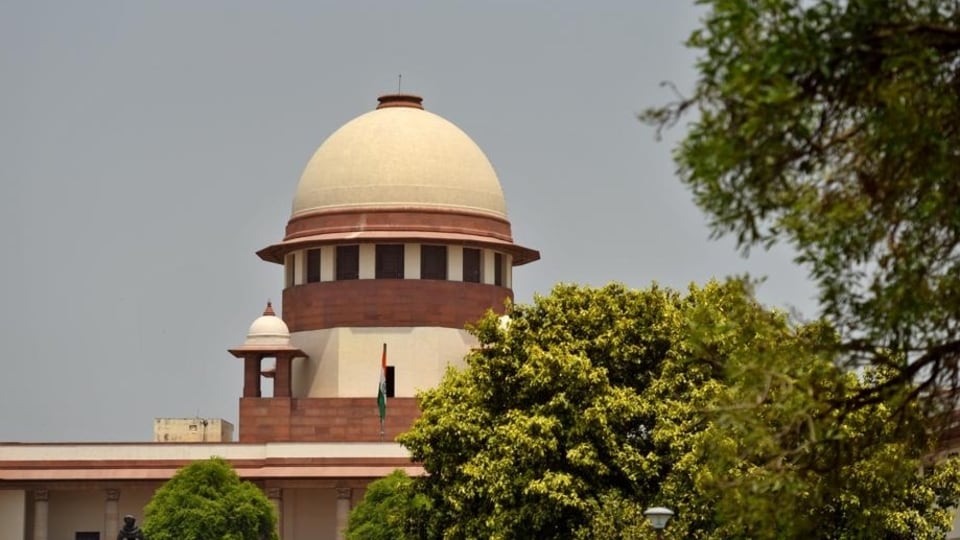
The court emphasised that motorists on highways must keep in mind that unexpected stops or maneuvers can have life-altering consequences. “On a highway, high speed of vehicles is expected and if a driver intends to stop his vehicle, he has a responsibility to give a warning or signal to other vehicles moving behind on the road,” it said.
To be sure, while the court’s observation is justified in general, and also in the case in question, it ignores the state of many of India’s highways -- even the best ones have potholes or bumps that sometimes necessitate sudden braking -- and the traffic on them. Few highways are access-controlled, and irregular traffic, including tractors being driven on the wrong side of the road, is more the norm than the exception.
A bench of Justices Sudhanshu Dhulia and Aravind Kumar made the observations on July 29, while enhancing the compensation awarded to a 20-year-old engineering student, S Mohammed Hakkim, who lost his left leg in a 2017 road accident in Coimbatore, in Tamil Nadu.
Hakkim was riding a motorcycle when the car ahead of him applied sudden brakes without warning. His motorbike rammed into the rear of the car, throwing him onto the road. A bus trailing him ran over his leg, leading to its amputation from the waist down. At the time of the accident, Hakkim was in his third year of engineering college.
The Motor Accident Claims Tribunal (MACT) initially fixed the compensation at ₹91.62 lakh but reduced it to ₹73.29 lakh after attributing 20 % contributory negligence to Hakkim, noting that he didn’t possess a valid driving licence at the time of the accident. MACT held that such amount must be paid by the bus insurer, while exonerating the car insurer of any liability.
Both the bus insurer and Hakkim challenged this before the Madras high court. The high court partly allowed the bus insurer’s appeal, and redistributed liability as 40 % to the car driver, 30 % to the bus driver, and 30 % to the appellant. The high court accordingly reduced the compensation payable to Hakkim to ₹58.53 lakh.
Hakkim then approached the Supreme Court.
The apex court noted that while Hakkim was indeed negligent as he had been riding without a valid licence and had failed to maintain safe distance from other vehicles, the root cause of the accident was the car stopping “abruptly, without warning.”
The driver of the car admitted braking suddenly because his pregnant wife felt nauseous. The Supreme Court held such defense was unreasonable, especially on a highway where high-speed traffic demands caution and advance signals when stopping.
“In our view, the concurrent finding that the appellant was definitely negligent in not maintaining a sufficient distance from the vehicle moving ahead and driving the motorcycle without a valid license is correct. But at the same time, it cannot be ignored that the root cause of the accident is the sudden brakes applied by the car driver. The explanation given by the car driver for suddenly stopping his car in the middle of a highway is not a reasonable explanation from any angle,” the court said.
It accordingly revised the liability to 50% for the car driver, 30% for the bus driver, and reduced Hakkim’s share of contributory negligence back to 20 %.
It awarded a compensation of ₹91.3 lakh and said such amount must be paid by the insurers of both the car and the bus involved in the accident.