
 E-Paper



Supreme Court refuses to lift stay on Bihar reservation law
The state sought stay of the HC’s June 20 order as the interview process for admitting candidates under the said law was already in process


The Supreme Court on Monday refused to stay the Patna high court decision striking down the 65% caste-based reservation law in jobs and admissions in Bihar even as it agreed to hear the state government’s appeal against the high court ruling in September.
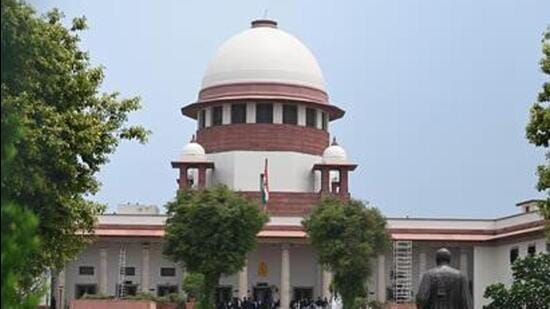
A bench headed by Chief Justice of India (CJI) Dhananjaya Y Chandrachud said, “We are issuing notice and will list these appeals filed by the state in September. But there shall be no interim relief.”
The state was represented by solicitor general Tushar Mehta and senior advocate Shyam Divan who sought stay of the HC’s June 20 order as the interview process for admitting candidates under the said law was already in process.
Mehta said, “There are thousands of interview process going on based on this Act,” while Divan pointed out that in a similar matter where a challenge to a Chhattisgarh law providing enhanced reservation in state beyond 50%, the top court had stayed the HC decision.
The bench, also comprising justices JB Pardiwala and Manoj Misra was not convinced.
It said, “We will not grant any stay. The high court has said already 68% in the state employment are from reserved categories.”
The state had approached the top court claiming that the caste survey carried out by the state adequately satisfies the social test parameters required to breach the 50% ceiling on reservation set by the top court in the 1992 Indra Sawhney judgment.
The Patna HC on June 20 had allowed a clutch of petitions challenging the Bihar Reservation of Vacancies in Posts and Services (for Scheduled Caste, Scheduled Tribes and Other Backward Classes) Amendment Act, 2023 and Bihar Reservation (in Admission to Educational Institutions) Amendment Act, 2023 and held the two laws to be violative of Articles 14 (equality), 15 (right against discrimination), and 16 (right against discrimination in employment) of the Constitution of India.
Also Read: Patna High Court ends 65% quota hike for jobs, colleges in Bihar
The Bihar government’s appeal filed through advocate Manish Kumar said, “The Amendment Acts were passed pursuant to the Bihar Caste Survey 2022-23, which clearly satisfy the social test parameters affirmed by this Court to breach the 50% ceiling of reservation.”
Such an exercise was not conducted by the Maharashtra government at the time when a five-judge bench struck down the Maratha quota law in 2021, the state argued, distinguishing its law from that passed by Maharashtra.
“Bihar is the only state which carried out this exercise and published its caste survey report on socio-economic and educational conditions of entire population,” the state told the top court.
It further added that the HC failed to note this aspect and held that the two Acts endeavour to provide proportional representation when the aim of the Acts under challenge is to provide “adequate representation” to backward classes by enhancing the reservations to 65% from the existing 50%.
One of the petitioners before the HC was represented in the top court by senior advocate Aparajita Singh who submitted that the HC held the law to be a clear instance of exclusion rather than inclusion.
The HC judgment pronounced by a bench of chief justice K Vinod Chandran and justice Harish Kumar held the legislation to be “bad in law” for violating the 50% ceiling set by the nine-judge bench of the top court in 1992 and said, “There is no requirement for an enhancement of reservations, as adequate representation now exists and there is no valid ground for breach of 50% rule, which in any way is not permissible.”
The HC ruling further held, “The fact remains that backward communities are adequately represented in public employment, by virtue of reservation and also merit, which is an indication of one or other caste or community having reaped the benefits of reservation and the various beneficial welfare schemes implemented by the state in achieving an element of social capital.”


