
 E-Paper



Supreme Court rejects Maharashtra’s report on OBC quota in local elections
The state government decided that the elections to local bodies should not be held without OBC reservation. The decision was unanimously taken during a state cabinet meeting Thursday afternoon.


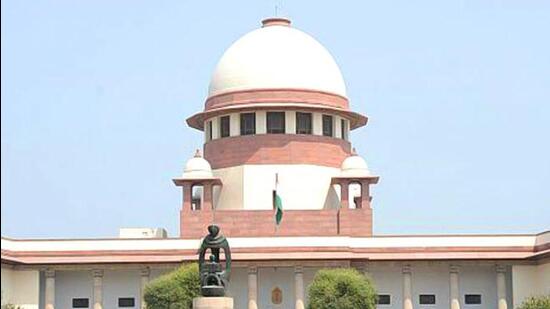
The Supreme Court on Thursday shot down yet another attempt by the Maharashtra government to reserve 27% seats for other backward classes (OBCs) in local bodies, and trashed an interim report by the state backward commission recommending reservation for OBCs over “lack of rationale” and “absence of cotemporaneous data”.
Also Read | Maharashtra govt promises to explore all options to restore OBC quota for local polls
A bench, headed by justice AM Khanwilkar, criticised the commission’s report, commenting that it lacked logic and accepted the authenticity of some data apparently only because Maharashtra chief minister Uddhav Thackeray was present at the meeting when the data was submitted to the commission in January.
The bench, which also comprised justices Dinesh Maheshwari and CT Ravikumar, restrained all authorities in the state from acting on the commission’s interim report, and directed the state election commission (SEC) to go ahead with elections to local bodies without the 27% quota for OBCs.
The court further directed that the backward commission shall continue its study on contemporaneous data, by local bodies, and submit its report with rationales that must stand the test of judicial scrutiny.
Also Read | Maharashtra seeks Supreme Court nod for OBC quota in local polls
Meanwhile, the state government decided that the elections in the local bodies should be held without OBC reservation. The decision was unanimously taken during a state cabinet meeting held on Thursday afternoon. “Elections in the local bodies in the state should not be held without OBC reservation...” said Chhagan Bhujbal, food and civil supplies minister who is also a senior OBC leader.
The government will also write a letter to the state election commission requesting it to not hold the elections without OBC quota, said a minister, wishing not to be named.
“The SC in its earlier ruling had clarified that the elections cannot be put on hold for the want of empirical data. We had received a similar letter from the state government requesting to put the polls of district council, nagar panchayat elections on hold. We followed the SC orders and held the elections in January,” an official from the SEC said.
“The SC has already quashed our ordinance issued for the up to 27% reservation for the OBCs in local body polls a few months ago. We are tapping if another amendment in the respective laws backed with the fresh data was possible. The option appears to be untenable as the apex court has already turned down our earlier attempt and it has come down heavily on the interim data submitted by us,” said a cabinet minister after the meeting.
Also Read | Maharashtra Governor Koshyari gives assent to OBC reservation bill
“The interim report (of the commission) cannot deviate from the parameters and the principles laid down by this court,” added the SC bench in its order, passed by it following severe strictures against the manner in which the commission came out with an interim report last month to recommend 27% OBC reservation in the upcoming elections to the local bodies in Maharashtra.
Armed with the commission’s report, the state government last week urged the court to reserve the seats for OBCs -- a move that was stayed by the court in December citing lack of recommendation of the commission.
“Where is the rationale behind these findings? Show us where is the reasoning? An interim report does not mean all the exercise laid down by this court will be dispensed with…this report does not even have a date. Also, at one place, it states that there is no authenticity of the data given to it by the state but the commission still relied on. How does the commission know it is authentic?” the bench asked senior advocate Shekhar Naphade, who appeared for the state government.
Naphade replied that nobody has disputed the authenticity of the data and that it was given in the presence of the state chief minister.
The response irked the bench. “Is this how official work is undertaken? Just because it is given in the presence of someone, it has to be treated as authentic? Mr Naphade, if you hand over something, does it become authentic unless you give an affidavit in support of it? Remember, this exercise is independent of state machinery,” it retorted.
The court added: “Some discipline has to be there. Just because someone is sitting there, a report is prepared. What does it show? How do we know there is an independent application of mind. We have our doubts about the recommendations of the commission if this is how the report is prepared.”
On his part, Naphade tried to persuade the bench that the commission’s exercise is ongoing and that the interim report has been submitted given the exigency that the OBC community would go unrepresented in the upcoming polls to municipal councils and gram panchayats.
This argument was opposed by senior advocate Vikas Singh, who appeared for petitioners challenging reservation of seats without collecting empirical data and in breach of the previous judgments of the top court that laid down triple test for reserving seats in local body polls.
The triple condition, laid down by a constitution bench in 2010, envisages setting up a dedicated commission to conduct contemporaneous rigorous empirical inquiry into the nature and implications of the backwardness qua local bodies within the state; to specify the proportion of reservation required to be provisioned local body wise in light of recommendations of the commission so as not to fall foul of overbreadth; and mandates that in any case such reservation shall not exceed aggregate of 50% of the total seats reserved in favour of SCs/STs/OBCs taken together.
Accepting Singh’s objections to the report, the bench told Naphade that apart from data, the report also lacks logic. “What is the analysis? What is the consideration? Rationale is not spelt out at all. Where is the logic? There has to be a logic spelt out how this entire exercise has worked out qua every local body. There is not even a semblance of why a certain percentage for a particular local body should be reserved. How can we accept it?” it told the state’s lawyer.
Naphade requested the bench to let the state go ahead with 27% OBC quota in local bodies as an interim measure while the backward commission could carry on its assessment further but the court turned down the plea.
“We expected the commission to do a comprehensive exercise in the spirit of the judgment of the Supreme Court judgment in 2010 and our judgment in March 2021. But the interim report is against the judgment of this court. The report makes a recommendation even saying this is in the absence of empirical data. This report deviates from what said. We clearly said contemporaneous empirical data. Where is that? We will not allow you to proceed on the basis of such an interim report. Let it take one month or a year but we cannot allow you to do something in contravention of our judgments,” said the court.
It also agreed with Singh’s contention that the state government was supposed to submit to the commission statistics on the representatives from OBC category that have held positions in local bodies but the numbers were not given. “This was imperative. How many people were there? There is no data on political participation,” said the bench.
The court then passed a short order, recalling its previous directions in December 2021 and January 2021 when it made it clear that elections to local bodies will be held without any reservation for OBCs.
“You notify the election process. Don’t wait for anything and start the process six months prior to expiry of the present term of such bodies…Without OBC reservation. We have already said it. Only SC/ST (Schedules Castes/Scheduled Tribes) reservation will be there,” it told the lawyer for the state election commission.
On December 6 last year, the court stayed till its further orders the local body election in Maharashtra on seats reserved for the OBCs, while rebuking the state government for introducing 27% reservation for OBCs through an ordinance in October without collecting data. Ten days later, the court directed the SEC to convert 567 seats reserved for OBCs (out of a total of 2,100) to general category.
Again, on January 19 this year, the court declined to recall its December order on staying OBC reservations while declaring that no state or Union territory can be permitted to hold local body elections with 27% reservation for OBCs until they gather empirical data on population and representation of OBCs. The bench noted that it for the backward commissions to examine the data on OBC as submitted by states and UTs, and then take a suitable view.
Following the submission of an interim report by the commission, the Maharashtra government approached the court again last week, claiming it has substantially complied with the triple test conditions enumerated by the court and is therefore, entitled to reserve seats in local bodies for OBCs.

Stay updated with all the Breaking News and Latest News from Mumbai. Click here for comprehensive coverage of top Cities including Bengaluru, Delhi, Hyderabad, and more across India along with Stay informed on the latest happenings in World News.


