
 E-Paper



Tamil Nadu minister Senthil Balaji, arrested by ED, advised to undergo CABG surgery. What is it?
Balaji, 47, was hospitalised following his arrest. Chief minister MK Stalin and at least 15 ministers rushed to see him.

 Prefer HTon Google


The Kauvery Hospital in Tamil Nadu's Chennai on Friday issued an update on the health of minister V Senthil Balaji, who was hospitalised Wednesday in dramatic circumstances after being arrested by the Enforcement Directorate on money laundering charges. While Balaji's colleagues claimed torture by the central agency, the hospital advised the Dravida Munnetra Kazhagam leader and TN power minister undergo early Coronary Artery Bypass Graft Surgery.
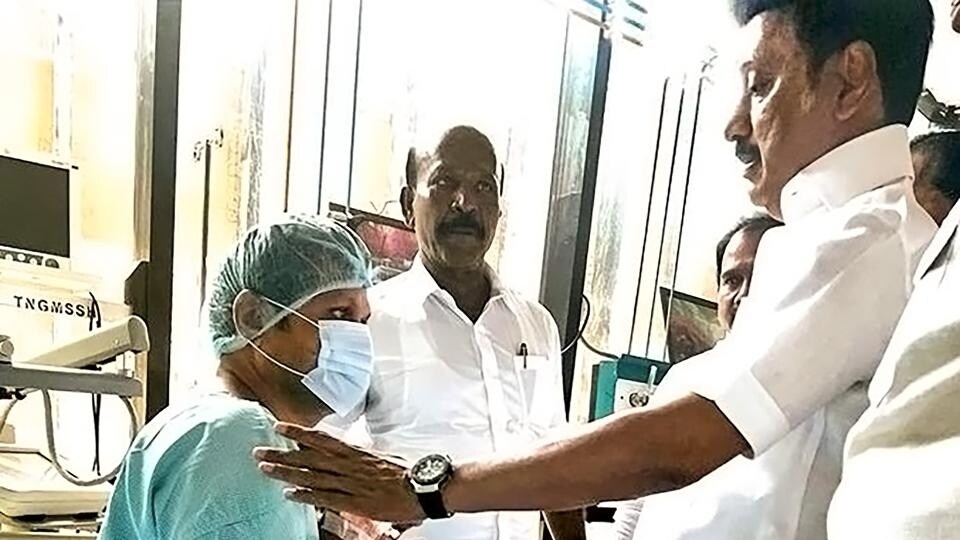
The hospital statement, signed by the hospital's executive director, Dr Aravindan Selvaraj, said the minister had a 'history of cardiac symptoms' and that 'he is undergoing further tests to assess fitness for anaesthesia... based on the assessment, surgery will be planned'.
V Senthil Balaji - widely seen as influential political figure from western Tamil Nadu, and whose clout could be key for the ruling DMK in next year's Lok Sabha election - is being treated in the Intensive Care Unit by a multidisciplinary team, the hospital said.
What is Coronary Artery Bypass Graft surgery?
According Johns Hopkins Medicines this is a surgical procedure used to treat Coronary Artery Disease (CAD), which leads to narrowing of coronary arteries - these are the blood vessels responsible for supplying oxygen and nutrients to heart muscles.
CAD is usually the result of the build-up of fatty material' in artery walls. This narrows the insides of the arteries and limits the oxygen-rich blood supply to the heart muscle.
The surgery helps in diverting blood around narrowed and clogged parts of major arteries and helps in improving blood flow. One way to treat this disease is to bypass blocked parts of the artery with pieces from a healthy blood vessel from elsewhere in the body, such as pieces of a vein from the leg or an artery in the chest or from the wrist.
Read Here: Senthil Balaji named officials who assaulted him, says TN SHRC member; ED denies
Symptoms of CAD may include (but are not limited to) chest pain, extreme fatigue and/or palpitations, abnormal heart rhythms, shortness of breath, swelling in the hands and feet, and indigestion. There are unfortunately, fewer symptoms in the disease's early stages.
Among the possible risks of this surgery are bleeding during or after, blood clots that may elad to a heart attack, stroke, or lung problems, an infection at the incision site, pneumonia, pancreatitis or kidney failure. There may also be instances where the graft fails or when the patient dies in or after surgery. According to Johns Hopkins there may be other risks that depend on individual patients' medical conditions.


