
 E-Paper



Telangana stares at acute shortage of water as reservoirs dry up
With almost all major reservoirs in Telangana being on the verge of drying up, the state is witnessing acute water shortage for irrigating the standing crops during the ongoing Rabi season and also drinking water crisis in several parts of the state

 Prefer HTon Google


With almost all major reservoirs in Telangana being on the verge of drying up, the state is witnessing acute water shortage for irrigating the standing crops during the ongoing Rabi season and also drinking water crisis in several parts of the state.
According to a report submitted by the state agriculture department to the state government on March 27, the state is witnessing a near drought situation due to below normal rainfall during the northeast monsoon season.
The average normal rainfall of the northeast monsoon from October to December is 113.20 mm, but the actual rainfall is 52.70 mm, a deficit rainfall of –53.45%. During the winter season, the actual rainfall received from January to February was only 1.1 mm as against normal of 12 mm with deviation of -90.83%.
“Between March and May, 2024, which is considered a hot season, the normal rainfall should be around 3.9 mm, but so far, only 0.2 mm rainfall is received,” the reports said.
As a result of which the water levels in almost all major reservoirs — Jurala, Srisailam and Nagarjunasagar in Krishna basin, Sriramsagar, Sripadasagar, Nizamsagar, Mid-Manair, Lower Manair and Kadem — have gone to the rock bottom.
For instance, the water availability in Nagarjunasagar at present is only 137.76 thousand million cubic feet (TMC), as against the total capacity of 312.04 TMC. In Srisailam, the water availability is only 34.65 TMC, as against the total capacity of 215.8 TMC. At Sripada Sagar Yellampalli project in Godavari basin, only 8.15 TMC of water is available, compared to the total capacity of 20.175 TMC.
“The cumulative storage in all the major reservoirs as on March 27 is 287.06 TMC, compared to 432.13 TMC on the same day last year,” the report said.
A senior official of the irrigation department said due to serious damages caused to Medigadda barrage and engineering lapses in Annaram and Sundilla barrages constructed as part of Kaleshwaram project on Godavari river, water could not be stored in these barrages but was let out to enable the experts to carry out inspections.
“This resulted in lack of irrigation facilities for the crops under the Kaleshwaram project this season. Whatever water that had come to Sripadasagar Yellampalli reservoir, Mid-Manair and Lower Manair dams during the last rainy season, there is no water availability in the Godavari basin,” the official said.
As a result, the farmers are being forced to depend largely on groundwater irrigation, which led to depletion of groundwater levels as well. According to the agriculture department report, the average groundwater level in the state fell from 7.34 ft in February 2023 to 8.70 ft in February 24.
The farmers as usual went in for sowing of high-water consuming crops like paddy and maize. As against the normal cropping area of 4.05 million acres for paddy, the farmers raised paddy in 5.13 million acres, though it is a lesser area compared to 5.64 million acres during the previous Rabi season.
Drinking water crisis
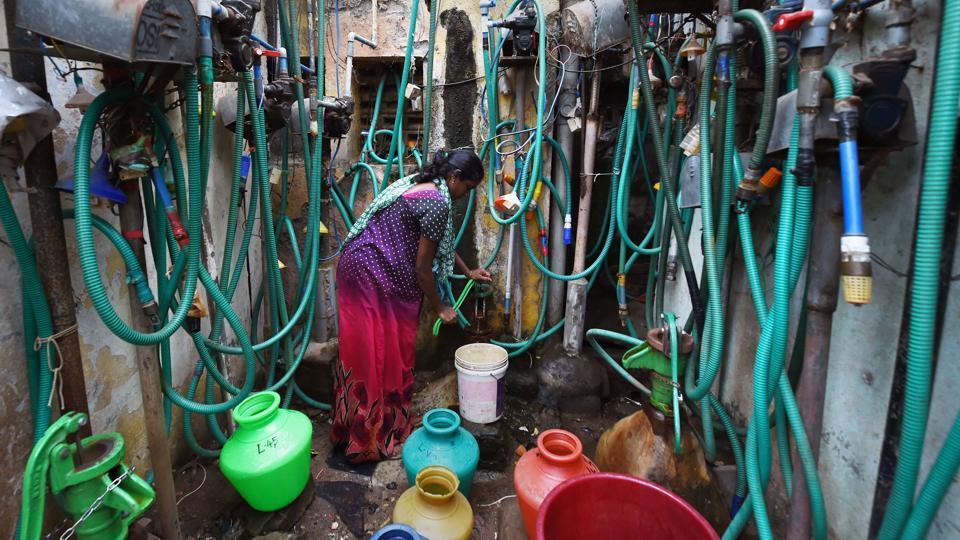
The poor water levels in reservoirs and lack of rainfall have also resulted in severe drinking water crisis across Telangana. Especially in north Telangana districts like undivided Adilabad, Karimnagar and Nizamabad, there are reports of acute drinking water shortage due to lack of sufficient supplies through Mission Bhagiratha (piped water supply to every household).
In Karimnagar, the authorities are forced to supply drinking water once in two days. However, state transport minister Ponnam Prabhakar, who hails from Karimnagar, said there was no need to panic as authorities are making contingency plans. “There is no water crisis till July,” he said.
The state government has released ₹140 crore for summer contingency plan to mitigate the drinking water crisis and also directed that the district collectors use their discretionary funds to see that there is no drinking water problem in the rural areas.
In the state capital of Hyderabad, the twin reservoirs of Osman Sagar and Himayat Sagar on the outskirts have come to the rescue of the citizens, with the reservoirs under Krishna and Godavari basin going dry.
These are the two reservoirs which the previous Bharat Rashtra Samithi (BRS) government said would cease to be drinking water sources for the city, due to adequate water supply from Kaleshwaram project. The previous government even revoked the government order which prevented all types of constructions within 10 km radius of these reservoirs, so as to prevent the water bodies, which have been serving as major drinking water sources.
On Saturday, there was an availability of 2.67 TMC of water in Osman Sagar, as against the total capacity of 3.9 TMC and in Himayat Sagar, 2.17 TMC of water was available as against the total capacity of 2.96 TMC.
“Besides, there is supply of drinking water from Singur and Akkampalli reservoirs. As of now, there is no major drinking water crisis in Hyderabad,” an official of the Hyderabad Metro Water Supply and Sewerage Board said.


